
 Azerbaijan
Gobustan Rock Art Cultural Landscape
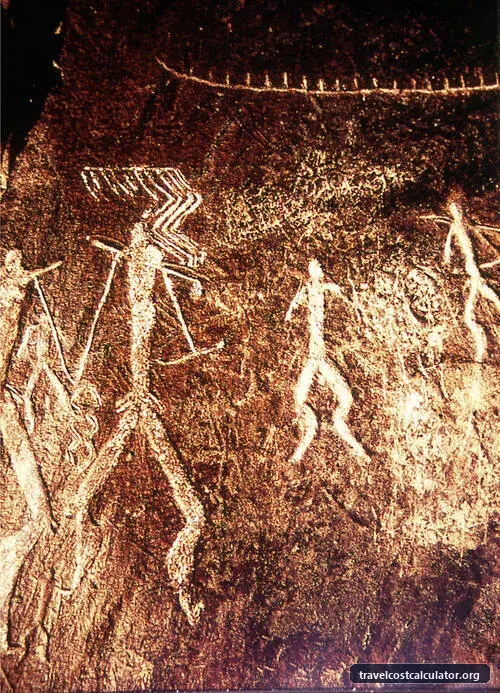
Gobustan Rock Art Cultural Landscape covers three areas of a plateau of rocky boulders rising out of the semi-desert of central Azerbaijan, with an outstanding collection of more than 6,000 rock engravings bearing testimony to 40,000 years of rock art.
Gobustan Rock Art Cultural Landscape
🏛️ Overview & Historical Significance
Rising dramatically from the semi-desert landscape along the western coast of the Caspian Sea, the Gobustan Rock Art Cultural Landscape is one of the world's most astonishing open-air galleries of prehistoric human civilization. Located roughly 64 kilometers (40 miles) southwest of Azerbaijan’s capital city, Baku Travel Budget, this extraordinary archaeological reserve covers over 537 hectares of rocky boulders, limestone caves, and eroded plateau ridges.
In 2007, UNESCO designated Gobustan a World Heritage Site under Criterion (iii), recognizing it as an exceptional testimony to prehistoric human activity. The site contains an extraordinary collection of over 6,000 petroglyphs spanning nearly 40,000 years of human history, tracing a continuous timeline from the Upper Paleolithic era through the Middle Ages. The engravings depict a vivid archive of prehistoric life: ritual dances (including early forms of the traditional Azerbaijani Yallı dance), hunting scenes featuring extinct wild oxen (aurochs), gazelles, and lions, as well as reeds-and-plank boats. Notably, Norwegian explorer Thor Heyerdahl visited Gobustan in the late 20th century and posited that the petroglyphs' distinctive boat engravings closely resembled Scandinavian Viking ships, suggesting trans-continental maritime connections in deep antiquity.
Beyond the rock art, Gobustan shelters human habitation caves, ancient burial mounds (kurgans), and the famous Gaval Dash—a massive, naturally resonant stone slab that functions as a percussion instrument when struck with smaller stones, used by ancient tribes during ceremonial gatherings. Additionally, near the foot of Mount Boyukdash lies a carved Latin inscription left by the 12th Fulminata Legion of the Roman Army during Emperor Domitian’s reign in the 1st century AD, representing the easternmost Roman military footprint ever discovered. Today, a state-of-the-art, interactive 3D museum at the site entrance provides crucial contextual depth before visitors venture onto the stone trails.
🎟️ Entrance Fees, Opening Hours & Ticket Booking Tips
Visiting Gobustan in 2026 remains highly affordable for international travelers. Tickets cover entry to both the multi-level interactive Visitor Center Museum and the outdoor Petroglyph Reserve trail.
-
✦
Foreign Adult Ticket: 10 AZN (~$5.90 USD)
-
✦
Students & Youth (with valid ID): 5 AZN (~$2.95 USD)
-
✦
Local Citizens: 3 AZN (~$1.75 USD)
-
✦
Children under 6: Free
-
✦
Official On-Site Tour Guide (English/Russian/Azerbaijani): 15 AZN – 20 AZN (~$8.80 – $11.75 USD) per group
Operating Hours (2026 Schedule):
-
✦
Summer Season (May – October): Daily from 9:00 AM to 7:00 PM (Ticket booth closes at 6:15 PM)
-
✦
Winter Season (November – April): Daily from 9:00 AM to 5:00 PM (Ticket booth closes at 4:15 PM)
Ticket Booking & Insider Tips:
Advance online booking is rarely necessary unless you are visiting with a large tour group during peak spring holidays (such as Novruz in late March). The main ticket counter at the museum accepts both contactless credit/debit cards and cash in Azerbaijani Manat (AZN). However, always carry 30–50 AZN in physical cash if you plan to hire a local taxi driver at the site to take you to the nearby Mud Volcanoes, as off-grid drivers do not take cards.
🚌 How to Get There & Local Transit Costs
Gobustan is easily accessible from Baku. Travelers can choose between budget-friendly public transport, ride-hailing apps, or organized day excursions.
Option 1: Public Bus + Local Taxi Connection (Budget Route)
This is the most cost-effective option for independent travelers:
-
✦
Take the Baku Metro to 28 May Station or Sahil Station, then board BakuBus #125 heading south to the 20th Field (20-ci Sahə) transit hub (Cost: 0.50 AZN / ~$0.30 USD via BakiKART).
-
✦
At 20th Field, transfer to Regional Bus #195 bound for the village of Qobustan (Cost: 1.00 AZN / ~$0.60 USD).
-
✦
Disembark at the main highway junction near Qobustan village. From here, the Petroglyph Reserve is still 5 km uphill. Hire a local taxi waiting at the junction to take you to the museum, wait while you explore, drive you to the nearby Mud Volcanoes, and drop you back at the bus stop. Negotiated rate: 25 AZN – 35 AZN (~$15 – $21 USD) total per vehicle.
Option 2: Ride-Hailing App / Private Taxi (Comfort Route)
Using app-based services like Bolt or Uber AZ from downtown Baku directly to Gobustan costs approximately 25 AZN to 35 AZN ($15 – $21 USD) one-way. However, getting a return app-ride from the remote park back to Baku can be difficult. It is far better to negotiate a full-day private driver in Baku (or negotiate with your Bolt driver) for a round trip. Expect to pay 60 AZN – 80 AZN (~$35 – $47 USD) total for a private driver who will transport you from Baku, wait 3 hours at the reserve and mud volcanoes, and return you to your hotel.
Option 3: Small-Group Day Tours
Comprehensive 2026 day tours departing from Baku (combining Gobustan Petroglyphs, Mud Volcanoes, Bibi-Heybat Mosque, and the Ateshgah Fire Temple) range from $30 to $55 USD per person, including air-conditioned transport, English-guided commentary, and entry fees.
📸 Best Photography Spots & Insider Visit Hacks
Prime Photography Spots
-
✦
The Upper Petroglyph Plateau: Walk past the initial cave shelters to the higher walking trail. Frame the prehistoric rock carvings in the foreground against the vast backdrop of the Caspian Sea coastline.
-
✦
Gaval Dash (The Musical Stone): Capture close-ups of the distinctive cupules (cupped depressions) carved into this legendary ringing stone. Ask the local guard to demonstrate its metallic sound.
-
✦
The Roman Inscription: Located near the base of Mount Boyukdash, this rock face requires a side detour. Use a polarizing filter to make the Latin lettering ("IMP DOMITIANO CAESARE AVG GERMANICO...") pop against the sunlit rock.
-
✦
The Mud Volcanoes of Dashgil: Located 20 minutes past the reserve, these bubbling, grey mud mounds create surreal, lunar-like landscape photos. Use wide-angle lenses for bubbling craters with oil-rich mud reflections.
Insider Hacks for an Optimal Visit
-
✦
Timing is Everything: Visit early in the morning (around 9:30 AM) or late in the afternoon (3:30 PM – 5:00 PM). Midday sun flattens the light, making the rock engravings harder to distinguish. The low angle of late afternoon light creates shadows inside the grooves, making petroglyphs dramatically sharp for photos.
-
✦
Seasonal Strategy: Spring (April to May) and Autumn (September to October) offer ideal temperatures around 18°C – 25°C. Avoid July and August, when ambient temperatures on the exposed, shade-less rocks regularly exceed 38°C (100°F).
-
✦
Footwear Caution: The trail consists of uneven limestone pathways, metal stairways, and natural rock surfaces. Wear sturdy hiking shoes with good grip. Avoid flip-flops or smooth-soled street shoes.
-
✦
Mud Volcano Vehicle Tip: Standard sedan cars cannot cross the unpaved, rutted dirt tracks leading to the mud volcanoes, especially after rain. You will need to hire a local driver operating a vintage Soviet Lada or 4x4 vehicle at the park entry (approx. 20 AZN per vehicle).
🏨 Nearby Accommodation & Daily Budget Allocation
Because Gobustan is located just under an hour from Baku, nearly all travelers stay in Baku and visit Gobustan as a day trip. Below is a breakdown of recommended Baku accommodation hubs and realistic daily travel budgets for 2026.
Where to Stay in Baku (Base Camp)
-
✦
Budget Pick: Sahil Hostel & Hotel (Central Baku near Metro Sahil). Vibrant atmosphere, spotless dorms, and private rooms. Dorm beds from $14 – $22 USD/night.
-
✦
Mid-Range Pick: Shah Palace Heritage Hotel or Courtyard by Marriott Baku. Located within walking distance of Old City (Icherisheher). Double rooms from $75 – $130 USD/night.
-
✦
Luxury Pick: Four Seasons Hotel Baku or JW Marriott Absheron Baku. World-class luxury overlooking the Caspian Promenade. Rooms from $260 – $480 USD/night.
Estimated Daily Budget Allocation (2026 Standards)
| Traveler Style | Accommodation | Food & Dining | Transport & Sightseeing | Total Daily Budget |
|---|---|---|---|---|
| Backpacker / Budget | $15 - $22 USD (Hostel Dorm) | $12 - $18 USD (Local Qutab stalls, Doner kebab, local tea houses) | $10 - $15 USD (Public bus + shared taxi to Gobustan) | $37 - $55 USD / day |
| Mid-Range Explorer | $75 - $130 USD (3/4-Star Hotel) | $30 - $50 USD (Sit-down Azerbaijani restaurants: Plov, Dolma, Kebabs) | $25 - $40 USD (Bolt app or shared small tour) | $130 - $220 USD / day |
| Luxury Traveler | $260 - $480 USD (5-Star Hotel) | $90 - $160 USD (Fine dining on the Caspian waterfront) | $70 - $120 USD (Private chauffeured Mercedes day tour) | $420 - $760+ USD / day |
Local Dining Recommendation: After finishing your tour of Gobustan, stop by a local roadside Çayxana (Tea House) in Qobustan village for traditional Azerbaijani black tea served in pear-shaped Armudu glasses alongside fresh herb flatbreads (Qutab) and homemade fig jam.
Frequently Asked Questions
Essential visitor FAQs for Gobustan Rock Art Cultural Landscape
What is the entrance fee for Gobustan Rock Art Cultural Landscape?
How much time do you need to explore Gobustan Rock Art Cultural Landscape?
How do I get to Gobustan Rock Art Cultural Landscape from the nearest city?
📊 Heritage Quick Specs
Visiting Azerbaijan on a Budget?
Calculate your full daily travel budget for Azerbaijan — including hotel costs, local transport, food, and sightseeing expenses.
View Azerbaijan Daily Travel Costs →Explore more UNESCO World Heritage Sites
🏛️ All 1,200+ Heritage Sites →