
 Sudan
Gebel Barkal and the Sites of the Napatan Region
These five archaeological sites, stretching over more than 60 km in the Nile valley, are testimony to the Napatan (900 to 270 BC) and Meroitic (270 BC to 350 AD) cultures, of the second kingdom of Kush.
Gebel Barkal and the Sites of the Napatan Region
🏛️ Overview & Historical Significance
Rising abruptly from the flat desert plains of Northern Sudan, Gebel Barkal ("The Pure Mountain") is a striking 98-meter-tall red sandstone mesa that served as the supreme religious hub of Ancient Nubia. In 2003, UNESCO inscribed Gebel Barkal and the Sites of the Napatan Region as a World Heritage site, recognizing five distinct archaeological zones along a 60-kilometer stretch of the Nile Valley: Gebel Barkal, El-Kurru, Nuri, Sanam, and Zuma.
For over a millennium (spanning the Napatan culture from roughly 900 BCE to 300 BCE and continuing into the Meroitic era), this region was the cradle of the Kingdom of Kush. Egyptian pharaohs of the New Kingdom, including Thutmose III and Ramesses II, first declared Gebel Barkal the southern residence of Amun-Ra, believing the deity inhabited the mountain itself. The natural pinnacle on the mountain's cliff face was interpreted as a royal uraeus (cobra wearing the White Crown of Upper Egypt), cementing its status as a cosmic center of divine kingship.
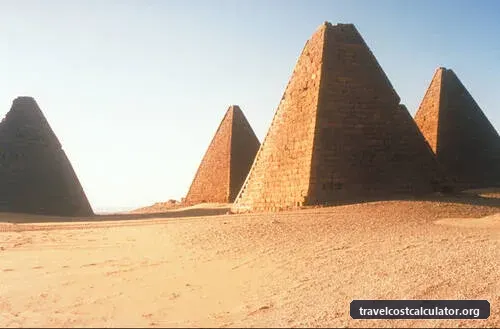
During the 8th century BCE, native Nubian kings—most notably King Piye and King Taharqa—marched north from Napata to conquer Egypt, establishing the legendary 25th Dynasty ("The Black Pharaohs"). They restored traditional pharaonic traditions, erected monumental temples, and revived royal pyramid burials. The ruins surrounding Gebel Barkal feature monumental hypostyle halls, rock-cut sanctuaries decorated with vivid reliefs, and majestic clusters of steep-sided Nubian pyramids. Visiting this UNESCO complex offers a rare, crowds-free window into an empire that rivaled, conquered, and ruled Ancient Egypt.
🎟️ Entrance Fees, Opening Hours & Ticket Booking Tips
Visiting Gebel Barkal and its associated sites remains an authentic desert expedition. Tickets are purchased on-site in local currency (Sudanese Pounds, SDG) or cash USD at official ticket kiosks near the Gebel Barkal Museum and key tomb entrances.
2026 Estimated Entrance Fees
-
✦
Gebel Barkal Archaeological Zone & Site Museum: $10 – $15 USD (approx. 6,000 – 9,000 SDG) for international non-resident visitors.
-
✦
El-Kurru Royal Tombs (Includes entrance to subterranean painted tombs): $8 – $12 USD (approx. 4,800 – 7,200 SDG).
-
✦
Nuri Pyramid Field: $8 – $10 USD (approx. 4,800 – 6,000 SDG).
-
✦
Combined Napatan Region Pass (Multi-site access): $25 – $30 USD.
-
✦
Camera & Tripod Permits: Standard mobile phone photography is included; professional DSLR gear or video recording may incur an extra fee of $5 – $10 USD at the site manager's discretion.
Opening Hours & Logistics
-
✦
Daily Hours: 8:00 AM – 5:00 PM. During the holy month of Ramadan, sites may close earlier around 3:00 PM.
-
✦
Payment Method: Cash only. Credit cards, mobile pay, and foreign digital transfers are non-functional at local ticket booths. Bring crisp, undamaged USD bills (printed post-2013) or local bank notes exchanged in major urban hubs.
-
✦
Guiding & Tomb Access: The underground tombs of El-Kurru (such as King Tanwetamani's tomb) are kept locked to preserve the wall paintings. The local guardian (ghaffir) will unlock them for you; standard etiquette involves leaving a tip of 1,000 – 2,000 SDG ($2 – $3 USD) to the keyholder.
🚌 How to Get There & Local Transit Costs
The primary transit hub for Gebel Barkal is the town of Karima, situated directly at the foot of the mountain in Northern State, approximately 400 kilometers north of Khartoum Travel Budget and 330 kilometers south of Dongola.
Step-by-Step Transport Options
-
✦
Long-Distance Coach/Minibus from Khartoum: Modern air-conditioned coaches depart daily from terminals such as Al-Dhahabi or Souq Al-Mawqif Al-Aam in Khartoum. The journey takes 5 to 7 hours along a smooth, paved desert highway crossing the Bayuda Desert.
- Bus Fare: $12 – $18 USD (approx. 7,000 – 11,000 SDG) one-way.
- Charter Cost: $120 – $180 USD per day (including driver allowance; fuel costs fluctuating based on regional market rates).
- Auto-Rickshaw (Raksha / Tuk-Tuk): Ideal for getting from Karima town center to the base of Gebel Barkal (2 km). Expect to pay $2 – $4 USD (1,200 – 2,500 SDG) per trip.
📸 Best Photography Spots & Insider Visit Hacks
The stark contrasts of golden Nubian sand dunes, deep red rock, ancient dark granite ruins, and the lush green ribbon of the Nile create exceptional photographic opportunities.
Top Photography Angles
-
✦
The Summit of Gebel Barkal at Sunset: The 20-minute climb up the loose sand trail on the mountain's eastern slope brings you to the flat plateau. From here, shoot westward as the sun dips behind the desert horizon, illuminating the 9 standing pyramids at the base in rich golden light.
-
✦
The Pinnacle (Cobra Spire): Frame the colossal 98-meter cliff face from the ruins of the Temple of Amun. Use a wide-angle lens to capture the base ruins alongside the towering natural rock pillar.
-
✦
Tomb of Tanwetamani (El-Kurru): Descend into the rock-cut staircases of El-Kurru to photograph ultra-vivid ceiling paintings featuring stars, deities, and sacred funerary barges that have retained their brilliance for over 2,600 years.
-
✦
Nuri Pyramid Field: Shoot the row of towering, step-sided pyramids (including the tomb of Taharqa) early in the morning when the low sun casts long, dramatic shadows across the sand dunes.
Insider Travel Hacks
-
✦
Best Season to Visit: Plan your trip between November and February, when daytime desert temperatures average a comfortable 22°C to 28°C (72°F – 82°F). Avoid June through August, when temperatures routinely exceed 45°C (113°F).
-
✦
Beating the Desert Heat: Start your site explorations at 8:00 AM sharp to explore the roofless Amun Temple before midday heat radiates off the sandstone walls. Save the summit climb for the final hour before sunset.
-
✦
Sand & Gear Protection: Desert winds can kick up fine silica dust without warning. Carry camera bodies in sealed dry-bags, use protective lens filters, and carry a headlamp for exploring dark tomb chambers.
-
✦
Cultural Etiquette: Dress modestly (covering shoulders and knees) out of respect for local Nubian communities. Always ask permission before photographing local residents or traditional river fishermen.
🏨 Nearby Accommodation & Daily Budget Allocation
Accommodation around Karima ranges from traditional home-style Nubian guesthouses to standard boutique desert lodges. Booking ahead through specialist regional tour operators is recommended.
Recommended Accommodation Options
-
✦
Budget (Nubian Guesthouses / Local Rest Houses): Simple, clean rooms in Karima offering authentic Nubian hospitality, shared bathrooms, and home-cooked meals.
- Price Range: $20 – $40 USD per night (includes breakfast).
- Price Range: $130 – $190 USD per night (half-board basis).
Daily Budget Estimates (Per Person for 2026)
-
✦
Backpacker / Independent Travel: $35 – $50 USD / day
- Includes local guesthouse accommodation, public bus/tuk-tuk transit, street food meals (ful medames, fresh Nile fish, falafel, flatbread), and standard entry tickets.
- Includes boutique desert lodge accommodation, private 4x4 transport with driver, guided tomb entries, and full-service local dining.
Frequently Asked Questions
Essential visitor FAQs for Gebel Barkal and the Sites of the Napatan Region
What is the entrance fee for Gebel Barkal and the Sites of the Napatan Region?
How much time do you need to explore Gebel Barkal and the Sites of the Napatan Region?
How do I get to Gebel Barkal and the Sites of the Napatan Region from Khartoum?
📊 Heritage Quick Specs
Visiting Sudan on a Budget?
Calculate your full daily travel budget for Sudan — including hotel costs, local transport, food, and sightseeing expenses.
View Sudan Daily Travel Costs →Explore more UNESCO World Heritage Sites
🏛️ All 1,200+ Heritage Sites →