
 China
China
Fujian Tulou
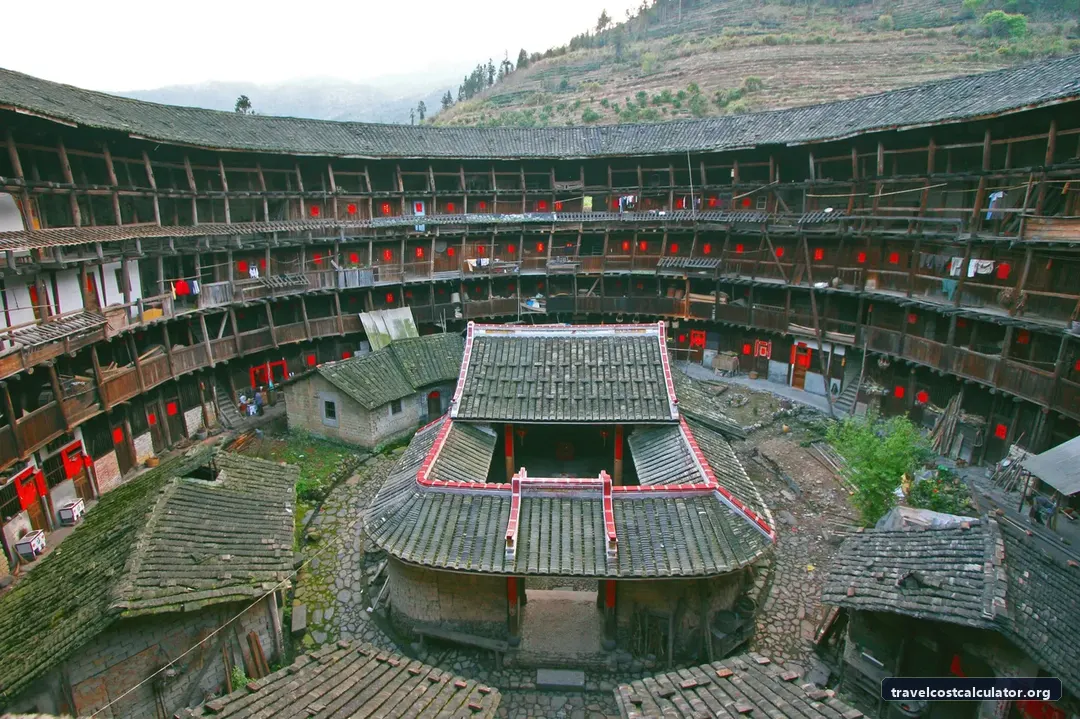
Fujian Tulou is a property of 46 buildings constructed between the 15th and 20th centuries over 120 km in south-west of Fujian province, inland from the Taiwan Strait.
Fujian Tulou
🏛️ Overview & Historical Significance
Nestled amid the lush, subtropical tea plantations and bamboo-forested mist of southwestern Fujian Province, the Fujian Tulou (福建土楼) represent one of the world's most unique communal architectural marvels. Designated as a UNESCO World Heritage Site in 2008, these magnificent earth structures were recognized for their exceptional architectural tradition, defensive design, and harmonious integration into the surrounding natural landscape.
Constructed primarily between the 15th and 20th centuries by the Hakka (Guest People) and Minnan populations, a Tulou is a large, enclosed, multi-story building—often circular or rectangular—designed to house an entire clan of up to 80 families (several hundred people) under a single roof. Historical turmoil, migrations, and rural banditry compelled these communities to engineer self-contained defensive fortresses. The exterior walls, constructed from rammed earth mixed with sandy soil, clay, bamboo splints, sticky rice, and brown sugar, are up to 2 meters (6.5 feet) thick and stand four stories high. With only one heavily fortified iron-clad entrance gate and no windows on the lower levels, the Tulou proved virtually impenetrable to outside invaders.
Beyond defense, the interior layout reflects a deeply egalitarian social structure based on clan kinship and Feng Shui (风水) principles. Each family shared vertical sections of the building, from ground-floor kitchens to upper-story grain stores and living quarters. At the heart of every Tulou lies an open central courtyard housing the ancestral shrine, serving as the spiritual and social focal point of daily life. In 2026, visitors can experience a living heritage site where descendants still farm tea, weave bamboo, and maintain centuries-old Hakka traditions alongside modern sustainable tourism practices.
🎟️ Entrance Fees, Opening Hours & Ticket Booking Tips
Visiting the Fujian Tulou area requires understanding that the sites are distributed across two main counties: Nanjing County (南京县) and Yongding District (永定区). Ticket sales operate by scenic clusters rather than a single site-wide pass.
Key Cluster Ticket Prices (2026 Estimates)
-
✦
Tianluokeng Tulou Cluster (Nanjing): 90 RMB (~$12.50 USD / €11.50). Ticket includes the iconic "Four Dishes and One Soup" cluster, Yuchang Lou ("The Tilting Building"), and Taxia Village.
-
✦
Yunshuiyao Scenic Area (Nanjing): 90 RMB (~$12.50 USD / €11.50). Covers Hegui Lou (the swamp-built Tulou), Huaiyuan Lou, and the historic streamside banyan tree promenade.
-
✦
Hongkeng Tulou Cluster (Yongding): 90 RMB (~$12.50 USD / €11.50). Includes Zhencheng Lou ("The Prince of Tulou"), Kuiju Lou, and Fuyu Lou.
-
✦
Gaobei Tulou Cluster (Yongding): 50 RMB (~$7.00 USD / €6.50). Home to Chengqi Lou ("The King of Tulou"), featuring four concentric ring structures.
-
✦
Chuxi Tulou Cluster (Yongding): 55 RMB (~$7.70 USD / €7.00). Ideal for travelers seeking raw, uncrowded authenticity.
-
✦
Scenic Sightseeing Shuttle Buses: 15–20 RMB (~$2.10–$2.80 USD) per cluster (mandatory for navigating between scattered villages within Nanjing/Yongding scenic areas).
Opening Hours & Digital Ticketing Logistics
Ticket offices and scenic turnstiles open daily from 07:30 to 17:30 year-round. However, visitors staying overnight inside the villages can wander the pathways freely 24 hours a day.
Booking Tips for 2026: China operates under a strict digital booking system. Real-name passport verification is required for all international visitors. You can purchase tickets via official scenic mini-programs on WeChat/Alipay or through international OTAs like Trip.com to secure your reservation. Booking 1 to 3 days in advance is strongly recommended during peak travel months (April, May, September, and October).
🚌 How to Get There & Local Transit Costs
The primary international transit hub for visiting the Fujian Tulou is the coastal metropolis of Xiamen (厦门). Travelers entering China can take advantage of Xiamen’s 144-hour visa-free transit policy before heading inland.
Option 1: High-Speed Train + Scenic Bus (Fastest & Most Popular)
-
✦
Xiamen to Nanjing Railway Station: Catch a high-speed bullet train (CRH) from Xiamen North (Xiamenbei) to Nanjing (Fujian) Railway Station. High-speed trains depart hourly, take 40 to 50 minutes, and cost approximately 25–35 RMB ($3.50–$5.00 USD) one-way.
-
✦
Nanjing Station to Tulou Clusters: Upon arrival at Nanjing Station, local scenic shuttle buses directly connect to Tianluokeng or Yunshuiyao. Transit takes 45–60 minutes and costs 20 RMB (~$2.80 USD). Alternatively, local taxis charge around 100–120 RMB ($14–$17 USD) per vehicle.
Option 2: Direct Long-Distance Express Bus from Xiamen
Direct long-distance tourist coaches depart daily from Xiamen Hubin South Bus Station (湖滨南长途汽车站) or Fangcun Bus Station straight to Nanjing Tulou Bus Terminal or Yongding. The journey takes roughly 3 to 3.5 hours and costs 45–60 RMB (~$6.50–$8.50 USD) per ticket.
Option 3: Private Car Charter / Guided Day Tour
-
✦
Private Car Charter (Full Day): Renting a private car with driver from Xiamen for a 10-hour day trip costs between 700 RMB and 1,000 RMB ($98–$140 USD) total per car. This is the most efficient option for families or groups wanting to visit multiple clusters across Nanjing and Yongding in a single day.
-
✦
Small Group Day Tours: English-guided day tours departing Xiamen average $55–$85 USD (400–600 RMB) per person, inclusive of round-trip transport, guide, and entrance tickets.
📸 Best Photography Spots & Insider Visit Hacks
Top Photography Locations
-
✦
Tianluokeng Upper Viewpoint ("Four Dishes and One Soup"): The classic signature photo of Fujian. Position yourself at the top viewing deck looking down at the cluster consisting of three round, one oval, and one square Tulou arrangement. Golden Hour tip: Shoot at dusk when red lanterns light up and internal lights glow through wood-framed windows.
-
✦
Yuchang Lou Interior: Position your wide-angle lens (14–24mm equivalent) in the central courtyard looking upward. Capture the dramatic 15-degree tilt of the 700-year-old timber supporting posts, which have survived multiple major earthquakes.
-
✦
Yunshuiyao Riverbank Promenade: Frame Hegui Lou across the stream framed by 1,000-year-old banyan trees and ancient stone waterwheels. Early morning mist rising from the stream offers ethereal lighting condition between 06:30 and 08:00 AM.
-
✦
Chengqi Lou Inner Rings: Walk into the center ring of this massive 4-ring earth building in Gaobei. Look straight up to frame circular concentric layers of timber balconies against the open sky.
Insider Visit Hacks for 2026
-
✦
The "Upper-Floor Access" Rule: Due to heritage preservation laws, casual day-trippers are generally forbidden from walking up the stairs to the upper floors of famous public Tulous like Chengqi Lou or Zhencheng Lou. However, if you book a stay at a traditional Tulou guesthouse (such as Fuyu Lou), guests are permitted floor access to photograph the upper timber walkways.
-
✦
Avoid the Midday Tour Bus Wave: Bus tours from Xiamen flood the main sites between 10:30 AM and 14:30 PM. Plan your visit to major sites before 09:00 AM or after 15:30 PM to experience quiet, serene courtyards.
-
✦
Best Seasonal Window: The ultimate time to visit is September through November. Autumn brings mild temperatures (18°C–25°C), low rainfall, crisp skies, and local harvests where residents dry persimmons and red chilies in bamboo trays across central courtyards. Spring (March to May) offers green tea harvests, though high humidity and mist are common.
🏨 Nearby Accommodation & Daily Budget Allocation
To fully absorb the atmosphere, spend at least one night in the rural countryside rather than rushing back to Xiamen on a day trip.
Accommodation Recommendations
-
✦
Traditional Tulou Stay (Budget / Cultural): Fuyu Lou Changtan Inn (Yongding) or local family homestays inside Taxia Village. Basic timber rooms with shared or private facilities offer an authentic taste of Hakka life. Cost: 140–280 RMB ($20–$40 USD) per night.
-
✦
Mid-Range / Boutique Village Hotel: Qingming House or boutique riverside inns in Taxia Village or Yunshuiyao. These offer modern plumbing, soundproofing, heating, air conditioning, and private bathrooms set inside renovated Hakka architecture. Cost: 350–700 RMB ($50–$100 USD) per night.
-
✦
Luxury Eco-Resort: Tsingpu Tulou Retreat (Baisha Village). A high-end luxury resort integrated into preserved traditional earth structures, offering cultural workshops, fine dining, and guided heritage walks. Cost: 1,750–3,000 RMB ($250–$420 USD) per night.
Dining & Hakka Culinary Expenses
Hakka cuisine is hearty, aromatic, and savory. Essential dishes to try include Hakka Stuffed Tofu (酿豆腐), Salt-Baked Chicken (盐焗鸡), stir-fried fresh mountain bamboo shoots, and local river fish. Dining in village eateries is reasonably priced, averaging 50–90 RMB ($7–$13 USD) per meal per person.
Estimated Daily Budget Profiles (2026)
-
✦
Backpacker / Low-Budget: $35–$50 USD (250–350 RMB) per day (Using trains/buses, staying in standard homestays, eating at simple family diners, visiting 1–2 main clusters).
-
✦
Flashpacker / Mid-Range: $80–$140 USD (560–980 RMB) per day (Taking high-speed rail, staying in private boutique inns, visiting multiple clusters, enjoying sit-down Hakka feasts).
-
✦
Luxury Traveler: $280–$450+ USD (2,000–3,200+ RMB) per day (Private car charter from Xiamen, luxury resort stay, private English tour guides).
Frequently Asked Questions
Essential visitor FAQs for Fujian Tulou
What is the entrance fee for Fujian Tulou?
How much time do you need to explore Fujian Tulou?
How do I get to Fujian Tulou from the nearest city?
📊 Heritage Quick Specs
Visiting China on a Budget?
Calculate your full daily travel budget for China — including hotel costs, local transport, food, and sightseeing expenses.
View China Daily Travel Costs →Explore more UNESCO World Heritage Sites
🏛️ All 1,200+ Heritage Sites →