
 Netherlands
Frontiers of the Roman Empire – The Lower German Limes
Following the left bank of the Lower Rhine River for approximately 400 km from the Rhenish Massif in Germany to the North Sea coast in the Netherlands, the transnational property consist of 102 components from ...
Frontiers of the Roman Empire – The Lower German Limes
🏛️ Overview & Historical Significance
In 2021, UNESCO officially designated the Frontiers of the Roman Empire – The Lower German Limes as a World Heritage site, recognizing a 400-kilometer stretch of military fortifications, watchtowers, civilian settlements, and naval bases along the Lower Rhine River. While the Limes stretches from the Rhineland in Germany to the North Sea, the Dutch section represents one of the most technologically sophisticated river-frontier defense networks of antiquity, operating continuously from 15 BCE until the mid-5th century CE.
What makes the Dutch portion of the Lower German Limes globally unique is its exceptional state of organic preservation. Because the northern boundary of the Roman Empire ran through the waterlogged delta of the Old Rhine (Oude Rijn) and the Waal rivers, the anaerobic soil conditions preserved perishable artifacts that have disintegrated elsewhere in the Mediterranean world. Excavations across the Netherlands have unearthed perfectly preserved wooden fort foundations, leather boots, military equipment, and complete Roman river patrol vessels—most notably the famous De Meern 1 barge displayed today in Utrecht.
The Dutch UNESCO site is not a single isolated monument, but a network of 44 component locations distributed across the provinces of Gelderland, Utrecht, and South Holland. Key strongholds along this ancient line include Noviomagus (modern-day Nijmegen, the oldest city in the Netherlands and a primary legionary base), Traiectum (beneath the current Domplein square in Utrecht), Matilo (Leiden), and the coastal terminus fort near Katwijk aan Zee. Walking or cycling along this frontier allows travelers to trace the exact boundary line where classical Roman civilization met the unconquered Germanic tribes of northern Europe.
🎟️ Entrance Fees, Opening Hours & Ticket Booking Tips
Because the Lower German Limes is an expansive landscape site, exploring the physical outdoor locations—such as earthworks, reconstructed fort outlines, and archaeological parks—is generally free. However, accessing the world-class museums and subterranean archaeological zones housing the excavated artifacts requires paid entry. Here are the realistic estimated entry fees and booking guidelines for key sites:
Key Museum Entry Costs
-
✦
Castellum Hoge Woerd (De Meern, Utrecht): Free admission to the museum and courtyard. Audio guide rental costs approximately €5.00 (~$5.40 USD). Open Tuesday to Sunday, 10:00 AM – 5:00 PM.
-
✦
DOMunder (Utrecht Domplein): General admission is €16.50 (~$17.80 USD) for adults and €11.00 (~$11.90 USD) for children (ages 6–17). Open Tuesday to Sunday, 10:00 AM – 4:30 PM. Pre-booking a specific time slot online is mandatory due to tight underground cavern capacity.
-
✦
Museum Het Valkhof (Nijmegen): Adults: €16.50 (~$17.80 USD); Students/Youth: €8.50 (~$9.20 USD). Open Tuesday to Sunday, 11:00 AM – 5:00 PM.
-
✦
Rijksmuseum van Oudheden (National Museum of Antiquities, Leiden): Adults: €15.50 (~$16.70 USD); Youth under 18: Free. Open Tuesday to Sunday, 10:00 AM – 5:00 PM. Contains the premier collection of Dutch Limes antiquities.
-
✦
Museum Archeon (Alphen aan den Rijn): Living history park featuring a reconstructed Roman Limes garrison town. Adults: €26.50 (~$28.60 USD); Children (4–11): €21.50 (~$23.20 USD). Open daily during peak season (April–October) from 10:00 AM – 5:00 PM.
Budget & Booking Insider Tips
If you plan to visit three or more fee-paying sites during your stay in the Netherlands, purchasing a Museumkaart (Dutch Museum Pass) is highly cost-effective. Available to international travelers at major museum ticketing desks, it costs €79.00 (~$85.00 USD) and grants unlimited free admission to over 400 Dutch museums, including Het Valkhof, Rijksmuseum van Oudheden, DOMunder (reservation fee may apply), and Castellum Hoge Woerd. Always book weekend time slots at DOMunder at least two weeks in advance, as group entries are strictly limited to keep atmospheric conditions safe for the subterranean Roman ruins.
🚌 How to Get There & Local Transit Costs
The Dutch section of the Limes is exceptionally well-connected by public transportation operated by NS (Nederlandse Spoorwegen) trains and regional bus lines. The strategic central hubs for exploring the UNESCO site are Utrecht, Nijmegen, and Leiden.
Transporting from Amsterdam Travel Budget to Key Limes Hubs
-
✦
To Utrecht Centraal: Direct intercity trains run every 10 minutes from Amsterdam Centraal. Journey time: 25 minutes. One-way 2nd class ticket costs approximately €9.50 (~$10.30 USD).
-
✦
To Nijmegen Centraal: Direct intercity trains depart every 30 minutes from Amsterdam Centraal. Journey time: 80 minutes. One-way 2nd class ticket costs approximately €23.00 (~$24.80 USD).
-
✦
To Leiden Centraal: Direct trains run every 15 minutes. Journey time: 35 minutes. One-way 2nd class ticket costs approximately €11.20 (~$12.10 USD).
Reaching Specific Limes Locations
-
✦
Castellum Hoge Woerd (Utrecht): Take Bus line 28 (towards Vleuten) directly from Utrecht Centraal station to the De Meern, High Woerd stop. Journey time: 20 minutes. Bus fare via OVpay costs approximately €3.20 (~$3.45 USD) one-way.
-
✦
Archaeological Park Matilo (Leiden): From Leiden Centraal, take Bus line 4 (towards Zoetermeer) to the Leiden, Roomburg stop. Journey time: 12 minutes. Bus fare: €2.80 (~$3.00 USD).
-
✦
Museum Archeon (Alphen aan den Rijn): Train from Utrecht Centraal or Leiden Centraal to Alphen a/d Rijn station (~€7.50–€9.00 / ~$8.10–$9.70 USD), followed by a 15-minute marked walking path to the park entrance.
Payment Logistics Note: Cash is rarely accepted on Dutch transit. Use OVpay by tapping your contactless credit card, debit card, or smartphone at station turnstiles and bus entry gates. Always remember to check out with the same card upon arrival to avoid penalty charges.
📸 Best Photography Spots & Insider Visit Hacks
Capturing the scale of an ancient river frontier requires knowing where Roman architecture meets modern Dutch design and natural landscapes. Here are the top photo spots and photography advice for visiting the Lower German Limes:
Top Photography Locations
-
✦
Castellum Hoge Woerd (Utrecht): Photograph the striking modern architectural enclosure, designed as a life-sized interpretation of a Roman fort on its original footprint. Inside, capture wide-angle shots of the 2,000-year-old De Meern 1 Roman vessel from the elevated viewing gallery.
-
✦
Hunnerpark & Valkhof Park (Nijmegen): Shoot sweeping panoramas of the River Waal from the elevated bluff of Valkhof Park, where Roman legions once monitored river traffic. Capture the ancient St. Nicholas Chapel standing alongside surviving medieval and Roman-era foundations.
-
✦
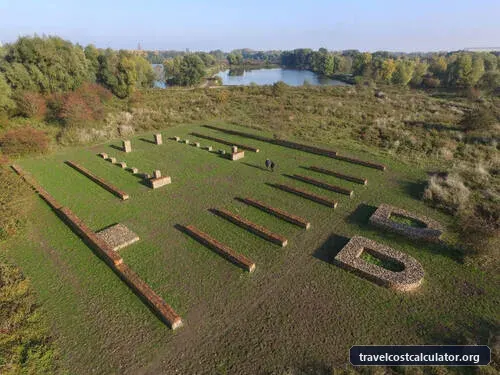
Archaeological Park Matilo (Leiden): Frame photos of the earthwork ramparts and white-metal bridge structures that delineate the exact contours of the former Roman fort of Matilo against the lush green landscape.
-
✦
DOMunder Subterranean Route (Utrecht): Utilize high-ISO settings (flash photography is strictly forbidden) to capture the atmospheric spotlighting on authentic 1st-century Roman fortress walls buried 5 meters beneath the bustling Domplein square.
Insider Visit & Weather Hacks
Ideal Season & Lighting: Visit between late April and early October. Long daylight hours allow for extended outdoor exploration, while lush summer greenery enhances the earthwork outlines of former forts. Late afternoon golden hour along the Waal River in Nijmegen or the Old Rhine canal near Leiden produces stunning contrast lighting for outdoor archaeological parks.
The Limes Cycle Route (Limes Fietsroute): The absolute best way to experience the Limes is on two wheels. Rent an e-bike or traditional bicycle at Utrecht Centraal or Nijmegen Centraal for approximately €12.00 to €25.00 (~$13.00 to $27.00 USD) per day. Follow the well-signposted LF Limesroute, a dedicated cycling path that traces the ancient Roman border past watchtower reconstructions, river bends, and scenic Dutch countryside.
🏨 Nearby Accommodation & Daily Budget Allocation
To experience the full scope of the Dutch Lower German Limes, staying central in either Utrecht or Nijmegen provides the perfect base. Below are regional accommodation suggestions and realistic daily cost estimates for three travel styles:
Accommodation Options
-
✦
Budget: Stayokay Hostel Utrecht Centrum (Utrecht) – Modern, highly rated hostel situated on Neude Square, within walking distance of DOMunder. Dorm beds: €35 - €50 (~$38 - $54 USD) per night; Private rooms: €90 - €120 (~$97 - $130 USD) per night.
-
✦
Mid-Range: Hotel Manna or Blue Inspired by Manna (Nijmegen) – Stylish boutique hotel located in a historic building near Valkhof Park and Roman archaeological sites. Double rooms: €130 - €185 (~$140 - $200 USD) per night including breakfast.
-
✦
Luxury: Grand Hotel Karel V (Utrecht) – A historic 5-star hotel featuring expansive private gardens near the southern city center. Double rooms: €250 - €420 (~$270 - $450 USD) per night.
Daily Budget Breakdown
1. Budget Backpacker: ~€75 - €95 / $80 - $103 USD per day
-
✦
Lodging: Hostel dorm bed in Utrecht/Nijmegen (~€40 / $43 USD)
-
✦
Food & Drink: Supermarket meals (Albert Heijn), street-food stroopwafels, and casual Dutch cafe lunches (~€25 / $27 USD)
-
✦
Transportation: Single-zone local bus tickets or rented city bike via OVpay (~€12 / $13 USD)
-
✦
Sightseeing: Free entry to Castellum Hoge Woerd & Park Matilo (~€0 / $0 USD)
2. Mid-Range Traveler: ~€175 - €260 / $190 - $280 USD per day
-
✦
Lodging: 3-star or 4-star boutique hotel room (Split Travel Budget between two people: ~€75 - €100 / $81 - $108 USD per person)
-
✦
Food & Drink: Sit-down lunch at a canal-side cafe and dinner at a Dutch craft brewery pub like De Oudaen (~€60 / $65 USD)
-
✦
Transportation: Regional intercity train fares between Utrecht, Leiden, and Nijmegen (~€20 / $22 USD)
-
✦
Sightseeing: Pre-booked entry to DOMunder and Museum Het Valkhof (~€30 / $33 USD)
3. Luxury & Culture Enthusiast: ~€420 - €650 / $455 - $700 USD per day
-
✦
Lodging: Premium room at Grand Hotel Karel V (~€200 - €300 / $215 - $325 USD per person)
-
✦
Food & Drink: Multi-course dinner pairing local Dutch culinary specialties with fine wines (~€120 - €180 / $130 - $195 USD)
-
✦
Transportation: First-class NS train travel or private taxi hires (~€50 - €80 / $54 - $87 USD)
-
✦
Sightseeing: Museumkaart pass, private guided walk of Roman Nijmegen, and DOMunder tour (~€50 - €90 / $54 - $97 USD)
Frequently Asked Questions
Essential visitor FAQs for Frontiers of the Roman Empire – The Lower German Limes
What is the entrance fee for Frontiers of the Roman Empire – The Lower German Limes?
How much time do you need to explore Frontiers of the Roman Empire – The Lower German Limes?
How do I get to Frontiers of the Roman Empire – The Lower German Limes from the nearest city?
📊 Heritage Quick Specs
Visiting Netherlands on a Budget?
Calculate your full daily travel budget for Netherlands — including hotel costs, local transport, food, and sightseeing expenses.
View Netherlands Daily Travel Costs →Explore more UNESCO World Heritage Sites
🏛️ All 1,200+ Heritage Sites →