
 Germany
Erzgebirge/Krušnohoří Mining Region
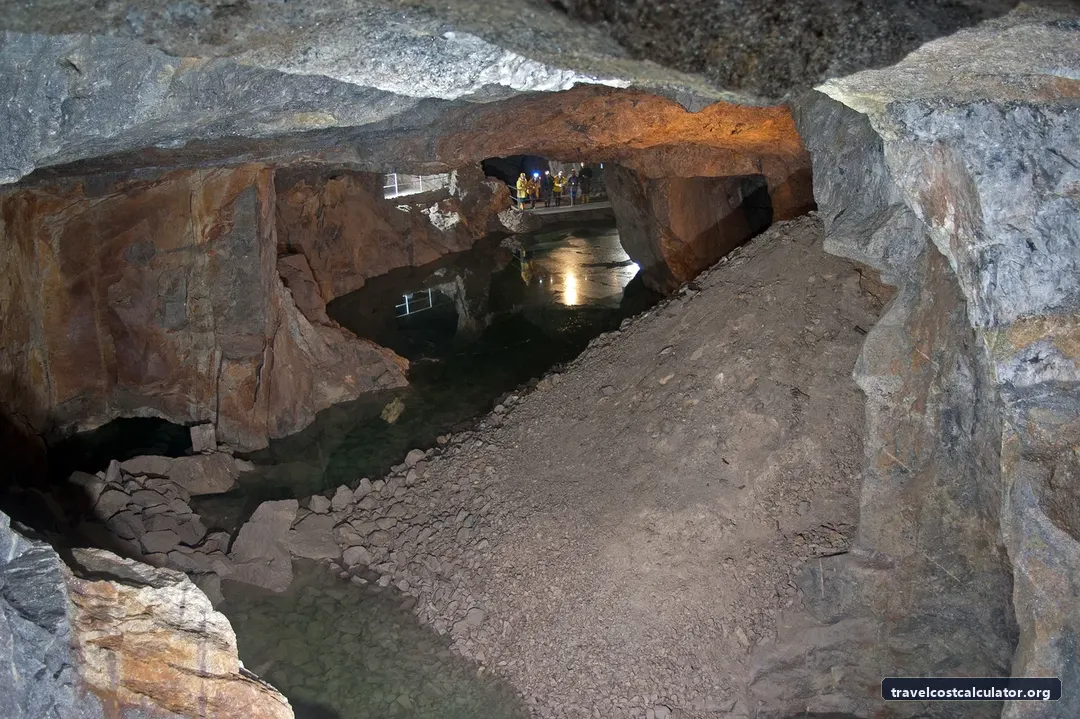
Erzgebirge/Krušnohoří (Ore Mountains) spans a region in south-eastern Germany (Saxony) and north-western Czechia, which contains a wealth of several metals exploited through mining from the Middle Ages onwards.
Erzgebirge/Krušnohoří Mining Region
🏛️ Overview & Historical Significance
Inscribed as a UNESCO World Heritage site in 2019, the Erzgebirge/Krušnohoří Mining Region (Ore Mountains) represents an unprecedented transboundary landscape bridging Saxony in southeastern Germany and North Bohemia in the Czech Republic. Spanning 22 distinct component sites—17 on the German side and 5 on the Czech side—this cultural landscape bears exceptional testimony to over 800 years of continuous mining history, from the 12th century straight through to the late 20th century.
The region’s designation stems from its monumental role as an engine of technological, scientific, and administrative innovation. The discovery of rich silver veins in Freiberg in 1168 sparked the first "Berggeschrey" (silver rush), turning the Ore Mountains into the principal source of silver in Europe during the Middle Ages and Renaissance. Subsequent centuries saw the extraction of tin, cobalt, iron, and eventually 20th-century uranium. This wealth financed the grandeur of the Saxon Electorate and catalyzed pioneering advancements in mining technology, water management systems, and smelting techniques that were exported globally.
Beyond engineering, Erzgebirge shaped modern financial and cultural systems. The silver minted in the bohemian town of Jáchymov (Joachimsthal) created the historic Joachimsthaler coin, which was later shortened to "Thaler"—the direct linguistic ancestor of the modern word "Dollar." Furthermore, the historic Freiberg Academy of Mining Sciences, established in 1765, served as the global cradle of mineralogy and geological science. When mining began to decline in the 17th and 18th centuries, unemployed miners adapted their precision woodworking skills to create world-famous folk art, including nutcrackers, incense smokers (Räuchermänner), and Christmas pyramids, embedding deep-rooted folk traditions into the region's living heritage.
🎟️ Entrance Fees, Opening Hours & Ticket Booking Tips
Because the UNESCO site comprises an entire mountain region spanning dozens of historic towns, underground mines, and outdoor industrial monuments, there is no single entry ticket for the overall region. Walking through historical town squares, viewing mountain panoramas, and exploring exterior water structures is completely free. However, entry fees apply to individual visitor mines, museums, and historic hammers.
Key Sites: Estimated 2026 Ticket Prices & Hours
-
✦
Terra Mineralia (Freiberg): Located inside Schloss Freudenstein, housing one of the world's finest private mineral collections.
- Adult Admission: ~$14.50 USD (€13.50 EUR)
-
✦
Concession / Student: ~$9.50 USD (€8.50 EUR)
-
✦
Opening Hours: Tuesday–Sunday, 10:00 AM – 6:00 PM (Closed Mondays).
- Adult Guided Underground Tour: ~$17.00 USD (€16.00 EUR)
- Adult Admission: ~$8.50 USD (€8.00 EUR)
- Adult Admission: ~$10.00 USD (€9.50 EUR)
- Adult Admission: ~$9.00 USD (210 CZK / €8.50 EUR)
Insider Booking & Ticket Tips for 2026
-
✦
Advance Underground Reservations: Underground mine tours (such as Markus Röhling Stolln or Zinngrube Ehrenfriedersdorf) limit group sizes for safety. Booking your slot online 3–5 days in advance is highly recommended during peak summer months and the December holiday season.
-
✦
Combined Regional Cards: If you plan to visit multiple castles and museums across Saxony, consider purchasing the Schlösserland Sachsen Pass (10 days for ~$48 USD / €45 EUR), which grants free or discounted access to several affiliated properties in the mining network.
-
✦
Temperature Prep: Show mine tickets often stipulate mandatory sturdy footwear and warm clothing. Underground temperatures remain a chilling 8°C to 10°C (46°F to 50°F) year-round regardless of exterior weather.
🚌 How to Get There & Local Transit Costs
The primary gateway cities for exploring the German side of the Erzgebirge are Dresden and Chemnitz. For the Czech side (Krušnohoří), Prague Travel Budget or Karlovy Vary Travel Budget serve as optimal launchpads.
1. From Dresden to Freiberg & Annaberg-Buchholz (By Train/Bus)
Dresden Central Station (Dresden Hbf) offers fast, frequent regional connections into the heart of Saxony’s mining district.
-
✦
Dresden to Freiberg: Board the regional express train RE3 (direction Zwickau/Hof) or regional train RB30. Journey time is approximately 32 minutes. Single ticket cost: ~$10.50 USD (€9.80 EUR).
-
✦
Dresden to Annaberg-Buchholz: Take the RE3 to Chemnitz Hbf, then transfer to regional line RB80 (Erzgebirgsbahn) directly to Annaberg-Buchholz Unterer Bahnhof. Total travel time is around 1 hour 45 minutes. Combined fare: ~$18.00 USD (€16.50 EUR) one-way.
2. Money-Saving Transit Passes (2026 Pricing)
-
✦
Sachsen-Ticket (Saxony Day Ticket): Best value for regional day-trippers. Costs ~$34 USD (€31.50 EUR) for a single traveler, plus ~$8.50 USD (€8 EUR) per additional traveler up to 5 people. Valid for unlimited regional trains (RE, RB) and local buses across Saxony, Thuringia, and Saxony-Anhalt for one day.
-
✦
Deutschlandticket (Germany-wide Pass): If traveling extensively in Germany, the monthly subscription rate (estimated at ~$63 USD / €58 EUR in 2026) covers all local trains (RE/RB) and regional buses within the Erzgebirge zone seamlessly.
3. Self-Drive & Rental Car Logistics
Because the 22 UNESCO component sites are scattered across rural valleys and mountain ridges, renting a car provides maximum freedom. Rental cars from Dresden Airport or Dresden Hbf average $35 to $60 USD (€32–€55 EUR) per day in 2026. Driving via the B101 (known as the Silver Road / Silberstraße) connects major sites including Freiberg, Brand-Erbisdorf, Annaberg-Buchholz, and Schneberg seamlessly.
📸 Best Photography Spots & Insider Visit Hacks
Top 5 Photography Locations
-
✦
St. Anne’s Church (St. Annenkirche), Annaberg-Buchholz: Photograph the soaring Late Gothic interior vaulted ceilings and the famous 1521 Mountain Altar (Bergaltar), depicting vivid mining scenes. Climb the church tower for panoramic views over historic rooftops.
-
✦
Frohnauer Hammer Forge Exterior: Position yourself near the mill stream to capture the timber-framed forge alongside the historic hammer-master's house (Hammerherrenhaus), framed by mountain woods.
-
✦
Fichtelberg Railway (Fichtelbergbahn): Capture the historic narrow-gauge steam locomotive as it chugs across steel viaducts near Cranzahl and Oberwiesenthal, particularly striking when atmospheric steam billows in autumn or winter.
-
✦
Terra Mineralia inside Schloss Freudenstein: Capture macro shots of glowing mineral crystals under artistically designed museum display lighting.
-
✦
Jáchymov Svornost Mine Lookout (Czechia): Shoot the dramatic Bohemian slopes surrounding the world’s oldest continuously operating uranium and radium mine site.
Insider Visit Hacks
-
✦
Timing for Christmas Magic vs. Crowd Avoidance: The region is world-famous during Advent (late November through December) for traditional mine-worker parades (Bergparaden) and festive markets. While magical, hotel prices surge and crowds are heavy. To experience crisp hiking weather, golden autumn foliage, and uncrowded underground mine tours, visit between late September and late October.
-
✦
Language Barrier Navigation: Guided mine tours inside active historic tunnels are conducted primarily in German. However, most main visitor centers (Freiberg, Annaberg, Jáchymov) offer downloadable English audio apps or printed translation booklets upon request at the front desk.
-
✦
Crossing the Border: Since both Germany and Czechia are part of the Schengen Zone, crossing the border between Oberwiesenthal (DE) and Loučná pod Klínovcem / Boží Dar (CZ) is seamless. Keep your physical passport on hand and remember Czechia uses the Czech Koruna (CZK), though credit cards are widely accepted.
🏨 Nearby Accommodation & Daily Budget Allocation
Base yourself in Freiberg for culture, history, and museum access, or in Annaberg-Buchholz for deep mining lore, woodcarving workshops, and central mountain access.
Accommodation Options (2026 Rates)
-
✦
Budget: Local Guesthouses (Pensionen) or youth hostels in Freiberg/Annaberg.
- Estimated Cost: $50 – $75 USD (€46 – €69 EUR) per night for a clean double room including breakfast.
- Estimated Cost: $100 – $155 USD (€92 – €142 EUR) per night.
- Estimated Cost: $190 – $320 USD (€175 – €295 EUR) per night.
Dining & Regional Culinary Costs
Savor traditional Saxon mountain comfort food. Don't miss Erzgebirgische Klöße (local potato dumplings), Rauchemaad (savory grated potato pancakes), fresh trout from mountain streams, and local brews like Freiberger Brauhaus beer.
-
✦
Budget Meal (Bakery / Imbiss): ~$6.00 – $10.00 USD (€5.50 – €9.00 EUR) for bratwurst, potato soups, or fresh pretzels.
-
✦
Mid-Range Traditional Gasthof Dining: ~$18.00 – $32.00 USD (€16.50 – €29.50 EUR) per person for a main course with local draft beer.
Daily Budget Summary Table (Per Person in 2026)
| Traveler Style | Accommodation | Food & Drinks | Transport & Transit | Attractions/Mines | Total Daily Budget |
|---|---|---|---|---|---|
| Backpacker / Low-Budget | $30 USD (€28) | $22 USD (€20) | $12 USD (€11) | $15 USD (€14) | ~$79 USD (€73 EUR) |
| Mid-Range Traveler | $65 USD (€60) | $45 USD (€41) | $20 USD (€18) | $30 USD (€27) | ~$160 USD (€146 EUR) |
| Luxury / Wellness | $140 USD (€128) | $95 USD (€87) | $45 USD (€41) | $50 USD (€46) | ~$330 USD (€302 EUR) |
Frequently Asked Questions
Essential visitor FAQs for Erzgebirge/Krušnohoří Mining Region
What is the entrance fee for Erzgebirge/Krušnohoří Mining Region?
How much time do you need to explore Erzgebirge/Krušnohoří Mining Region?
How do I get to Erzgebirge/Krušnohoří Mining Region from the nearest city?
📊 Heritage Quick Specs
Visiting Germany on a Budget?
Calculate your full daily travel budget for Germany — including hotel costs, local transport, food, and sightseeing expenses.
View Germany Daily Travel Costs →Explore more UNESCO World Heritage Sites
🏛️ All 1,200+ Heritage Sites →