
 India
India
Elephanta Caves
The 'City of Caves', on an island in the Sea of Oman close to Mumbai, contains a collection of rock art linked to the cult of Shiva.
Elephanta Caves
🏛️ Overview & Historical Significance
Rising dramatically from the brackish waters of Mumbai Travel Budget Harbour, Elephanta Island (historically known as Gharapuri, or "the City of Caves") houses one of humanity's most breathtaking rock-cut architectural feats. Designated as a UNESCO World Heritage site in 1987, this complex of sculpted basalt caves represents the high watermark of Indian rock-cut art and medieval Hindu iconography, primarily dedicated to the Shaivite tradition of Lord Shiva.
Constructed between the mid-5th and late 8th centuries CE—most likely under the patronage of the Kalachuri and Rashtrakuta dynasties—the main cave complex (Cave 1) spans over 60,000 square feet carved directly into solid trap-rock. UNESCO recognized Elephanta Caves for its masterpiece of creative human genius and its profound representation of Indian religious aesthetics. The central sanctuary features monumental high-relief sculptures that blend classical Gupta artistic elegance with dynamic medieval expressionism.
The Legend of the Monoliths & Portuguese Legacy
The island acquired its modern name in the 16th century when Portuguese explorers landed on its shores and discovered a massive, hand-carved stone elephant near the landing dock. Though Portuguese soldiers used the caves for target practice during their occupation—damaging several pillars and reliefs—the core spiritual masterpieces inside remain remarkably intact. (The original elephant sculpture was relocated in the 19th century and now stands at the Jijamata Udyaan zoo in Mumbai).
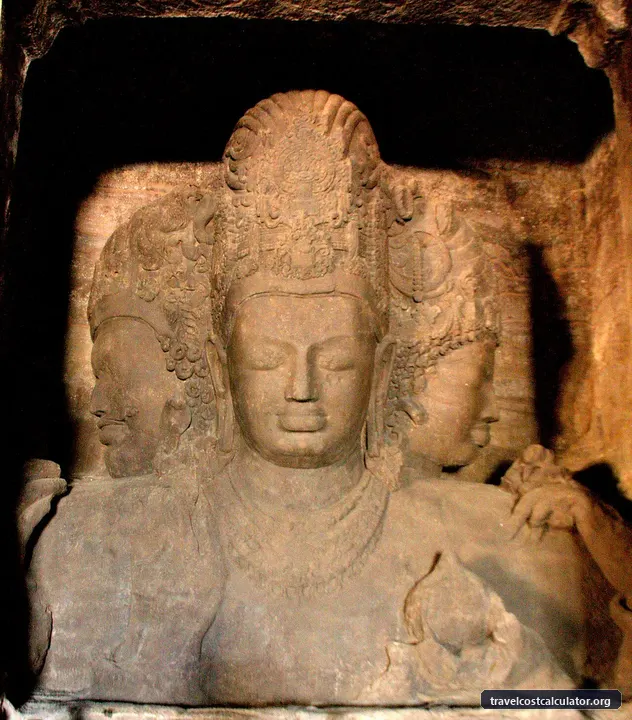
The crown jewel of Elephanta is the Maheshamurti (Trimurti), a majestic 20-foot-tall (6-meter) relief sculpture depicting Shiva in three distinct manifestations:
-
✦
Aghora (The Destroyer): Portrayed on the left profile with a fierce, stern expression, holding a cobra.
-
✦
Tatpurusha/Vamadeva (The Creator/Preserver): The serene center face exhibiting absolute peace, meditation, and cosmic balance.
-
✦
Sadyojata (The Gentle/Nurturer): Portrayed on the right profile, soft and feminine, holding a lotus bud symbolizing life.
Beyond the Trimurti, iconic wall panels depict dramatic mythological episodes, including Ardhanarishvara (Shiva as half-man, half-woman), Gangadhara (Shiva receiving the holy River Ganges in his matted hair), and Nataraja (the Cosmic Dancer).
🎟️ Entrance Fees, Opening Hours & Ticket Booking Tips
Planning your visit requires understanding that travel to Elephanta involves two distinct payments: the government heritage entry ticket and the boat transit fare across the harbour.
Opening Hours & Schedule
-
✦
Operating Days: Open Tuesday through Sunday.
-
✦
Closed Day: CLOSED EVERY MONDAY (Ferries do not run for sightseeing, and the monument is locked).
-
✦
Visiting Hours: 9:30 AM to 5:30 PM (First ferry leaves Gateway of India at 9:00 AM; last return ferry leaves Elephanta Island at 5:30 PM).
2026 Ticket Prices & Additional Fees
Below are the official estimated costs for visiting the site in 2026:
-
✦
Foreign Tourists (ASI Ticket): ₹600 INR (~$7.20 USD)
-
✦
Indian Citizens & SAARC / BIMSTEC Visitors: ₹40 INR (~$0.48 USD)
-
✦
Children (Under 15 years old): Free entry to the monument.
-
✦
Village Gram Panchayat Tax: ₹10 INR (~$0.12 USD) per person (collected upon stepping off the ferry pier).
-
✦
Return Ferry Ticket (Economy Class): ₹260 – ₹300 INR (~$3.15 – $3.60 USD) per adult.
-
✦
Upper Deck Ferry Upgrade: +₹20 – ₹30 INR (~$0.25 – $0.35 USD) paid onboard for open-air views.
-
✦
Toy Train (Pier to Hill Base): ₹20 INR (~$0.25 USD) round-trip per person.
-
✦
Palanquin / Doli Service (For mobility-impaired guests): ₹1,000 – ₹1,500 INR (~$12.00 – $18.00 USD) negotiated on-site with local bearers.
Pro Booking & Money-Saving Tips
-
✦
Book Online to Skip Lines: You can purchase your Archaeological Survey of India (ASI) entry ticket online via the official ASI portal prior to your visit. This saves up to 30 minutes in line at the hilltop ticket counter.
-
✦
Cash is Still King on the Island: While ASI ticket counters accept digital payments, network connectivity on the island can be spotty. Carry at least ₹1,000 – ₹1,500 in physical Indian Rupees for the ferry, village entry tax, snacks, and local vendors.
-
✦
Avoid Ferry Scams: Purchase ferry tickets directly from the official Maharashtra Tourism Development Corporation (MTDC) counters or authorized private booths located along the plaza surrounding Gateway of India. Avoid street touts claiming to offer "VIP Express Boats."
🚌 How to Get There & Local Transit Costs
The journey to Elephanta Caves is an adventure in itself, combining urban land transit through historic South Mumbai with a scenic 1-hour voyage across the Arabian Sea.
Step 1: Reaching Gateway of India (The Departure Point)
All public ferries to Elephanta Island launch from Jetty No. 1 behind the iconic Gateway of India monument in Colaba, South Mumbai.
-
✦
By Mumbai Suburban Railway (Local Train):
- Take the Western Line to Churchgate Station or the Central Line to Chhatrapati Shivaji Maharaj Terminus (CSMT). Train tickets cost between ₹5 and ₹15 INR ($0.06 – $0.18 USD) for standard class, or ₹50 – ₹150 INR for AC local trains.
-
✦
From either station, Gateway of India is approximately 2.5 km away. Take an iconic black-and-yellow meter taxi (approx. ₹50 – ₹80 INR / $0.60 – $0.95 USD) or a 20-minute walk through historic Fort.
- From Suburban Mumbai (Bandra/Andheri): ₹450 – ₹850 INR ($5.40 – $10.20 USD) depending on traffic via the Bandra-Worli Sea Link / Coastal Road.
Step 2: The Ferry Ride across Mumbai Harbour
Ferries depart every 30 minutes from Gateway of India starting at 9:00 AM until 2:00 PM (outbound). The return boats run continuously from Elephanta back to Gateway until 5:30 PM.
The boat ride takes roughly 60 to 70 minutes. Along the route, passengers enjoy views of the Mumbai skyline, cargo container ships navigating the shipping channels, and historic navy installations like Butcher Island (Jawahar Dweep).
Step 3: Navigating Elephanta Island
Once your boat berths at the long Elephanta Jetty, you have three micro-transit steps:
-
✦
The Jetty Walk or Toy Train: The concrete pier extends nearly 800 meters over the mudflats. You can walk it in 10 minutes or ride the charming miniature Toy Train for ₹20 INR.
-
✦
The Village Gate: Pay the local Gharapuri Gram Panchayat tax of ₹10 INR at the village boundary.
-
✦
The Hill Climb: Ascend approximately 120 stone steps to reach the cave entrance plateau. The pathway is flanked by colorful handicraft shops, marble statues, and souvenir stalls.
📸 Best Photography Spots & Insider Visit Hacks
Prime Photography Angles
-
✦
The Maheshamurti Shrine (Cave 1): The undisputed hero shot. The relief sits inside a dim recess; capture it without flash by setting your smartphone/camera to a low shutter speed or Night Mode. The soft ambient light filtering through the stone columns creates a dramatic, ethereal glow on Shiva's central face.
-
✦
Nataraja Panel (Entrance Frame): Capture the intricate detail of Shiva performing the cosmic dance of destruction near the entrance of Cave 1, using the massive carved basalt pillars to frame your composition.
-
✦
The East Wing Courtyard: A quieter open-air court featuring a circular shrine pedestal framed by carved stone lions and lush tropical foliage.
-
✦
Cannon Hill (Top Elevation): Hike past Cave 5 up to the summit of the island (Cannon Hill). Here, two old British-era military cannons overlook panoramic vistas of the Arabian Sea and industrial Mumbai harbor.
-
✦
Golden Hour Ferry Skyline: On the return ferry journey (aim for the 4:30 PM or 5:00 PM boat), stand on the upper deck to capture sunset over the Mumbai skyline, framing the Taj Mahal Palace Hotel and Gateway of India in golden light.
Essential Visit Hacks & Rules
-
✦
Catch the First Boat (9:00 AM): Arriving at Gateway of India by 8:30 AM allows you to board the earliest ferry. You will arrive at the caves before the heat peaks and before large tour buses flood the site, giving you quiet, uncrowded photos inside Cave 1.
-
✦
Beware the Macaque Monkeys: The island is home to hundreds of bold rhesus macaques. Never walk with exposed food, plastic bags, or open water bottles in hand. Keep snacks tucked inside zipped backpacks, and hold onto your sunglasses and phone tightly.
-
✦
Ideal Weather Window: The best months to visit are November to February when Mumbai's weather is pleasant, dry, and cool (20°C to 30°C / 68°F to 86°F).
-
✦
Monsoon Warning (June – September): Heavy monsoon rains can cause rough seas. While the caves remain open, ferry schedules become unpredictable and can be suspended at short notice during marine storms.
-
✦
Footwear Matters: Wear comfortable, slip-resistant walking shoes or hiking sandals. The stone steps and interior cavern floors are uneven and can become slick from moisture.
🏨 Nearby Accommodation & Daily Budget Allocation
Overnight stays are strictly prohibited on Elephanta Island for tourists. Visitors must stay in Mumbai and take a half-day excursion to the island. Staying in South Mumbai (Colaba, Fort, or Marine Drive) places you within minutes of the Gateway of India ferry point.
Accommodation Options in South Mumbai
-
✦
Budget Hostels ($15 – $35 USD / night):
- Zostel Mumbai (Colaba): Popular social hostel within walking distance of Gateway of India. Clean dorm beds, air conditioning, and vibrant common areas (₹1,400 – ₹2,500 INR/night).
-
✦
Backpacker Panda Colaba: Simple budget dorms and private rooms situated right in the heart of Colaba Market.
- Abode Bombay: A stylish, eco-friendly boutique hotel featuring vintage furniture and authentic Mumbai charm, located just 300 meters from the ferry dock (₹6,500 – ₹11,000 INR/night).
- The Taj Mahal Palace, Mumbai: The legendary 5-star flagship hotel located directly across from Gateway of India. Offers world-class luxury, historical dining rooms, and unobstructed views of the harbour.
Dining Recommendations
-
✦
On Elephanta Island: Grab a fresh green coconut (₹50 – ₹80 INR) from local fruit stalls. For lunch, the state-run MTDC Restaurant Chalukya near the cave entrance offers basic vegetarian thalis, chilled beverages, and panoramic sea views.
-
✦
Post-Excursion in Colaba: After returning on the ferry, dine at historic South Mumbai landmarks:
- Café Leopold or Café Mondegar: Iconic retro cafes serving cold beer, Indo-Chinese dishes, and continental pub fare.
-
✦
Britannia & Co. (Fort): Famous heritage Parsi cafe serving legendary Berry Pulav and Sali Boti.
-
✦
Bademiya: World-famous late-night street food stall serving charcoal-grilled kebabs and baida rotis.
Daily Budget Allocation (2026 Estimates)
Below is a realistic breakdown of total daily expenses for a trip to Elephanta Caves including South Mumbai accommodation and meals:
-
✦
Budget Backpacker ($35 – $50 USD / day):
- Hostel Dorm Bed: ₹1,600 INR ($19.20)
-
✦
Return Ferry + Local Transit: ₹350 INR ($4.20)
-
✦
ASI Ticket (Foreigner) + Island Tax: ₹610 INR ($7.30)
-
✦
Meals & Street Food: ₹1,000 INR ($12.00)
-
✦
Total: ~$42.70 USD
- 3-Star Boutique Hotel (Per Person sharing): ₹5,000 INR ($60.00)
- 5-Star Heritage Hotel Stay: ₹30,000 INR ($360.00)
Frequently Asked Questions
Essential visitor FAQs for Elephanta Caves
What is the entrance fee for Elephanta Caves?
How much time do you need to explore Elephanta Caves?
How do I get to Elephanta Caves from the nearest city?
📊 Heritage Quick Specs
Visiting India on a Budget?
Calculate your full daily travel budget for India — including hotel costs, local transport, food, and sightseeing expenses.
View India Daily Travel Costs →Explore more UNESCO World Heritage Sites
🏛️ All 1,200+ Heritage Sites →