
 China
China
Cultural Landscape of Old Tea Forests of the Jingmai Mountain in Pu’er
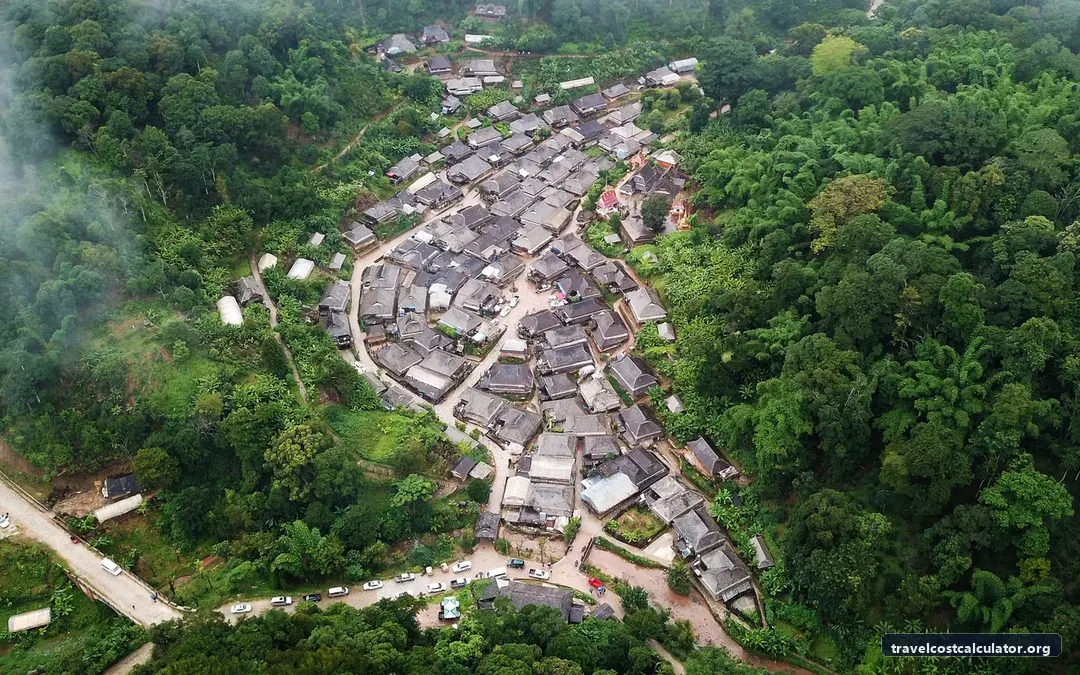
Located on Jingmai Mountain in southwestern China, this cultural landscape was developed over a thousand years by the Blang and Dai peoples following practices that began in the 10th century.
Cultural Landscape of Old Tea Forests of the Jingmai Mountain in Pu’er
🏛️ Overview & Historical Significance
Inscribed as a UNESCO World Heritage site in September 2023, the Cultural Landscape of Old Tea Forests of the Jingmai Mountain in Pu’er holds the global distinction of being the world's first tea-themed UNESCO World Heritage site. Situated in Lancang Lahu Autonomous County within Yunnan Province, Southwestern China, this breathtaking 19,000-hectare cultural landscape represents over 1,000 years of sustainable agroforestry perfected by the indigenous Blang (Bulang) and Dai peoples.
Unlike modern industrial tea plantations structured in geometric terraced rows, Jingmai Mountain features five vast ancient tea forest groves nestled beneath native forest canopies, integrated alongside nine traditional wooden villages and three protective barrier forests. Between the 10th and 14th centuries, ancestors of the Blang people—led by the revered cultural figure Pa Ai Leng—discovered wild tea trees in the high-altitude misty forests (ranging between 1,100 and 1,500 meters above sea level) and developed an ingenious under-story cultivation method.
This ecological management system involves selectively clearing underbrush while preserving high canopy trees to create natural shade, maintain moisture, retain soil fertility, and attract natural predators to suppress pests without chemical fertilizers or pesticides. As a vital source for organic Pu’er tea and a historic starting point of the Ancient Tea Horse Road (Cha Ma Gu Dao), Jingmai Mountain stands as a living testament to human harmony with nature and an irreplaceable cultural treasure of global botanical history.
🎟️ Entrance Fees, Opening Hours & Ticket Booking Tips
To preserve the fragile ecosystem and village heritage, management of Jingmai Mountain limits vehicular traffic while keeping general access accessible. Below are the estimated fee structures and operational details updated for 2026 travel planning.
2026 Pricing & Entry Costs
-
✦
General Area Entrance Fee: Free / 0 CNY ($0 USD). There is currently no compulsory entry fee just to visit the public mountain areas or historic villages.
-
✦
Eco-Shuttle Sightseeing Bus Pass: 50 CNY – 80 CNY (approx. $7.00 – $11.20 USD) for a 24 to 48-hour pass. Private external vehicles must be parked at the primary Huamin Visitor Center, requiring visitors to transfer to designated electric eco-shuttles.
-
✦
Heritage Exhibition Center Entrance: Free (Registration with valid passport or mainland ID required at entry).
-
✦
Guided Tea Harvesting & Processing Workshop: 120 CNY – 350 CNY (approx. $17.00 – $49.00 USD) per person, including hands-on tea leaf plucking, wok-frying (Shaqing), rolling, and a private tasting session of single-tree ancient arbor Pu’er tea.
Opening Hours & Reservation Logistics
The ancient tea forests and historic villages remain accessible 24/7 to overnight guests. However, official visitor facilities operate on the following schedule:
-
✦
Visitor Service Centers & Shuttle Services: 08:30 – 17:30 daily.
-
✦
Village Museums & Cultural Centers: 09:00 – 17:00 daily (closed select Monday afternoons).
Booking Tip: Foreign travelers must present a physical passport for security checkpoints entering the scenic area. It is highly recommended to reserve visitor shuttle passes in advance via the official WeChat mini-program "Jingmai Mountain Smart Tourism" (景迈山智慧旅游) or through verified China travel platforms like Trip.com, especially during peak spring harvesting months.
🚌 How to Get There & Local Transit Costs
Jingmai Mountain lies in Southern Yunnan, roughly halfway between Pu'er City and Xishuangbanna (Jinghong). Traveling here involves combining China's high-speed rail network with scenic mountain transfers.
Route 1: Via Xishuangbanna / Jinghong (Recommended Route)
Xishuangbanna offers the closest high-speed train terminal and major airport (Xishuangbanna Gasa Airport - JHG) to Jingmai Mountain.
-
✦
Step 1 (Bullet Train): Take the China-Laos Railway bullet train from Kunming South to Xishuangbanna Station (2.5 to 3 hours; 175 CNY – 210 CNY / $24.50 – $29.50 USD).
-
✦
Step 2 (Bus or Private Transfer):
- Chartered Taxi / Didi Ride: Direct travel from Jinghong to Jingmai Mountain takes ~2.5 hours (130 km). Expect a one-way fare of 400 CNY – 550 CNY ($56.00 – $77.00 USD).
-
✦
Express Coach: Board a long-distance bus from Jinghong Passenger Bus Station to Huamin Town (惠民镇) (2.5 hours; 45 CNY – 55 CNY / $6.30 – $7.70 USD). From Huamin, take a local mountain shuttle bus up to Wengji or Nuogang village (45 minutes; 20 CNY – 30 CNY / $2.80 – $4.20 USD).
Route 2: Via Lancang Jingmai Airport (JMJ)
For direct air travelers, Lancang Jingmai Airport operates domestic flights connecting directly from Kunming, Guangzhou, and Chengdu.
-
✦
Airport Transfer: A taxi or pre-arranged hotel shuttle from Lancang Airport directly to Jingmai Mountain villages takes about 50–60 minutes (55 km) and costs 120 CNY – 180 CNY ($17.00 – $25.00 USD).
📸 Best Photography Spots & Insider Visit Hacks
Capturing the ethereal beauty of Jingmai Mountain requires matching your location with the right light and seasonal atmospheric conditions.
Top Photography Locations
-
✦
Wengji Ancient Dai Village (翁基古寨): Famous for its dry-column traditional wooden rooflines, ancient cypress trees, and tranquil Buddhist temple. Capture the early morning light as smoke rises from traditional hearths through the tea-leaf drying racks on rooftops.
-
✦
Nuogang Ancient Blang Village (诺干古寨): A tucked-away Blang village in a bowl-shaped valley. Head to the Nuogang Upper Viewing Deck at dawn to photograph the entire village emerging from a dense sea of morning clouds.
-
✦
Da Hei Shan (Big Black Mountain) Viewing Platform: The ultimate panorama spot situated at 1,500 meters elevation. Ideal for shooting 360-degree sunrise views of the cloud ocean rolling across the ancient forest canopy.
-
✦
Ai Leng Mountain Ancient Tea Forest: Walk along the cobblestone heritage paths between 08:30 and 10:30 AM to catch dramatic light rays (Tyndall effect) filtering through high shade-tree canopies onto mossy 500-year-old tea trees.
Insider Travel Hacks
-
✦
Best Seasonal Window: Mid-March to Mid-May is the coveted Spring Tea Harvesting season (Spring Plucking / 头春茶), offering vibrant cultural energy and fresh leaf processing. October to February provides the clearest weather and the highest probability of experiencing the phenomenal "Sea of Clouds" phenomenon. Avoid the torrential monsoon rains of July and August.
-
✦
Footwear Matters: Ancient stone paths in the villages become slippery when covered in morning dew or light rain. Sturdy, waterproof hiking shoes with slip-resistant treads are essential.
-
✦
Authentic Tea Etiquette: Village elders often invite travelers into their wooden homes for tea. Accept gracefully; it is customary to lightly tap two fingers on the wooden table to express silent gratitude when your host refills your tea cup.
🏨 Nearby Accommodation & Daily Budget Allocation
Staying directly inside the heritage buffer zone within traditional villages provides an unforgettable immersive experience, while staying down in Huamin Town offers modern resort-style comfort.
Accommodation Options (2026 Prices)
-
✦
Budget Heritage Homestays (Village Guesthouses): 180 CNY – 320 CNY ($25.00 – $45.00 USD) per night. Located inside Wengji or Nuogang villages. Features simple private rooms in authentic timber houses, basic modern plumbing, and warm family hospitality.
-
✦
Mid-Range Boutique Tea Inns: 500 CNY – 900 CNY ($70.00 – $126.00 USD) per night. Stylishly renovated traditional properties featuring panoramic balconies, underfloor heating, premium tea-ware, and complimentary tea tastings.
-
✦
Luxury Eco-Resorts (e.g., Brilliant Resort & Spa Jingmai): 1,600 CNY – 3,500 CNY ($224.00 – $490.00 USD) per night. Upscale retreats offering infinity pools looking over tea fields, private tea sommeliers, spa treatments, and fine dining.
Estimated Daily Budget Allocation
To help plan your trip expenses, here is a breakdown of estimated daily budgets per traveler for 2026:
-
✦
Backpacker / Low Budget: $45 – $65 USD (320 – 465 CNY) / day
- Stay: Local village homestay ($25 - $35)
-
✦
Meals: Local village eateries, fried rice, rice noodles ($10 - $15)
-
✦
Transit & Fees: Public bus + shared eco-shuttle ($10 - $15)
- Stay: Boutique village tea inn ($70 - $110)
- Stay: 5-star Eco-Resort villa ($250 - $450)
Frequently Asked Questions
Essential visitor FAQs for Cultural Landscape of Old Tea Forests of the Jingmai Mountain in Pu’er
What is the entrance fee for Cultural Landscape of Old Tea Forests of the Jingmai Mountain in Pu’er?
How much time do you need to explore Cultural Landscape of Old Tea Forests of the Jingmai Mountain in Pu’er?
How do I get to Cultural Landscape of Old Tea Forests of the Jingmai Mountain in Pu’er from the nearest city?
📊 Heritage Quick Specs
Visiting China on a Budget?
Calculate your full daily travel budget for China — including hotel costs, local transport, food, and sightseeing expenses.
View China Daily Travel Costs →Explore more UNESCO World Heritage Sites
🏛️ All 1,200+ Heritage Sites →