
 China
China
Cultural Landscape of Honghe Hani Rice Terraces
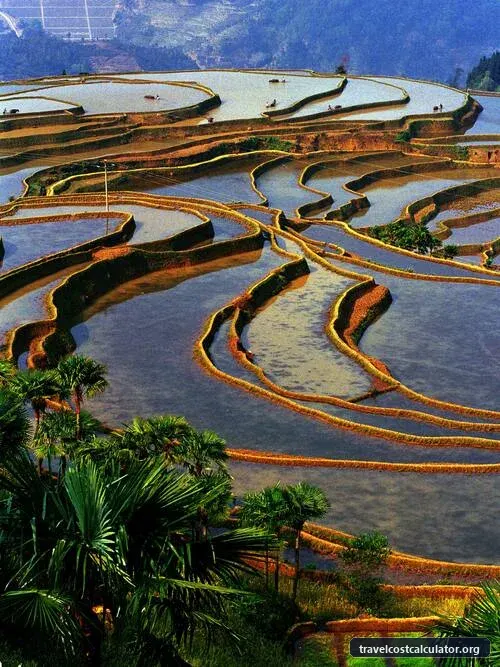
The Cultural Landscape of Honghe Hani Rice Terraces, China covers 16,603-hectares in Southern Yunnan.
Cultural Landscape of Honghe Hani Rice Terraces
🏛️ Overview & Historical Significance
Cascading down the steep slopes of the Ailao Mountains in southern Yunnan, China, the Cultural Landscape of Honghe Hani Rice Terraces represents one of the most astonishing human-engineered ecological systems on Earth. Inscribed as a UNESCO World Heritage site in 2013, this 16,603-hectare landscape is the result of over 1,300 years of meticulous land management by the Hani people. Driven south from the Tibetan Plateau during the Tang Dynasty, the Hani turned seemingly inhospitable mountain terrain into a soaring, food-producing paradise that climbs from the banks of the Red River to over 2,000 meters above sea level.
What sets the Honghe Hani Terraces apart—and what earned them UNESCO recognition—is their complete reliance on a resilient, four-fold ecological system: Forests, Villages, Terraces, and Water systems. High mountain forest catchments trap mist and rain, which flow down through engineered wooden channels into mountain villages. The water is then channeled into thousands of tiered rice fields before eventually draining into the Red River valley, where evaporation regenerates rain clouds to reset the hydrologic cycle.
Unlike industrial agricultural systems, this landscape operates entirely without modern dams or synthetic fertilizers. The Hani people raise ducks and fish directly inside flooded paddies, naturally fertilizing the crops while controlling pests. Visiting the terraces in 2026 offers travel photojournalists and conscious travelers a rare glimpse into a living ancient culture where daily life, spiritual worship, and agricultural engineering remain inextricably linked.
🎟️ Entrance Fees, Opening Hours & Ticket Booking Tips
Visiting the Honghe Hani Rice Terraces in 2026 requires navigating an official ticket system managed by the Yuanyang Rice Terraces Scenic Area Administration. The main viewing platforms (Duoyishu, Bada, Laohuzui, and Qingkou) are gated, while the walking trails between villages remain open.
2026 Estimated Ticket Pricing & Pass Options
-
✦
Standard 3-Day Pass: 70 RMB – 100 RMB (approx. $10 – $14 USD / €9 – €13). Includes entry to Duoyishu (Sunrise), Bada (Sunset), Laohuzui (Sunset), and Qingkou Folk Village. Valid for 3 consecutive calendar days.
-
✦
Single Scenic Spot Ticket: 30 RMB – 40 RMB (approx. $4.20 – $5.70 USD) per platform if purchased individually.
-
✦
Annual Pass: 180 RMB (approx. $25 USD) for travelers planning multi-week photography stays.
-
✦
Children & Senior Discounts: Children under 1.2 meters enter free. Seniors aged 60+ receive 50% off or free entry depending on current provincial policies (passport required).
Opening Hours & Operating Logistics
-
✦
Duoyishu Platform (Sunrise): Open daily from 06:00 to 19:30. Opening times shift to 05:30 during winter peak photographic months.
-
✦
Bada & Laohuzui Platforms (Sunset): Open daily from 06:00 to 19:30.
-
✦
Qingkou Folk Village: Open 08:30 to 17:30.
Pro Booking Tips for 2026
China operates entirely on real-name digital ticketing. Foreign visitors should purchase tickets on-site using their original passport or pre-book via the official WeChat Mini-Program (search "阳元阳梯田" or "Yuanyang Terraces") or major foreign platforms like Trip.com. Cash is rarely accepted at smaller gates; ensure your WeChat Pay or Alipay account is linked to an international credit card prior to arrival.
🚌 How to Get There & Local Transit Costs
Reaching the Honghe Hani Rice Terraces requires traveling into the mountains of Southern Yunnan. The primary gateway for international visitors is Kunming, the capital of Yunnan Province.
Step 1: High-Speed Train from Kunming to Mengzi or Jianshui
China’s expanding High-Speed Rail (HSR) network makes reaching Southern Yunnan efficient. From Kunming South Railway Station (Kunmingnan), board an HSR train to Mengzi Railway Station or Jianshui Railway Station.
-
✦
Travel Time: 1.5 to 2 hours.
-
✦
Ticket Cost: ~60 RMB – 90 RMB ($8.50 – $13 USD / €8 – €12) one-way for a second-class seat.
Step 2: Bus/Van from Mengzi or Jianshui to Yuanyang Xinjie Town
From Mengzi Bus Terminal or Jianshui Coach Station, take a long-distance bus or shared shuttle to Xinjie Town (新街镇), also known as Old Yuanyang Town.
-
✦
Travel Time: 2 to 2.5 hours winding through mountain highways.
-
✦
Fare: ~35 RMB – 50 RMB ($5 – $7 USD) per seat.
Step 3: Local Transit from Xinjie Town to Upper Terrace Villages
Xinjie Town serves as the hub, but most scenic accommodation is located 15–25 kilometers further up the mountain in villages like Pugao Zhai (Duoyishu) or Shengcun.
-
✦
Shared Minivan (Mianbaoche / 面包车): 15 RMB – 25 RMB ($2 – $3.50 USD) per seat from Xinjie to Duoyishu.
-
✦
Private Taxi/Hired Car: 100 RMB – 150 RMB ($14 – $21 USD) one-way. Booking a private driver for a full day of platform hopping costs roughly 300 RMB – 450 RMB ($42 – $63 USD).
📸 Best Photography Spots & Insider Visit Hacks
Top Photographic Platforms
-
✦
Duoyishu (多依树): The premier spot for sunrise. As day breaks, light catches the flooded terraces, reflecting pastel hues of pink, orange, and purple through mountain fog. Position yourself on the highest viewing tier by 06:15 AM.
-
✦
Bada (坝达): The vastest terrace complex, featuring over 3,000 continuous steps. Bada is the definitive sunset location. As the sun dips behind the horizon, the water turns into liquid gold.
-
✦
Laohuzui / Tiger Mouth (老虎嘴): Famous for intense, dramatic gradients and steep drops. (Note: Always check gate status locally, as viewing platforms undergo periodic repairs following rainstorms).
-
✦
Qingkou Village & Terraces: Ideal for mid-day cultural landscape photography featuring traditional Hani "mushroom houses" (thatched roof dwellings) nestled among rice fields.
Seasonal Weather & Seasonal Highlights
-
✦
Water-Filled Season (Best Overall): November to April. Terraces are flooded with water, acting as giant sky mirrors. January and February offer peak reflection beauty alongside seasonal sea-of-cloud phenomena.
-
✦
Green Growing Season: May to August. Terraces transform into vibrant emerald staircases. Expect higher rain and humidity.
-
✦
Golden Harvest: September to October. Waves of yellow rice cover the mountainsides right before harvest festivals start.
Insider Travel Hacks
1. The Mountain Fog Factor: Thick fog can completely obscure the terraces for entire days, especially between December and February. Always build at least 3 full days into your itinerary to buffer against bad weather.
2. Dress in Layers: Mountain temperatures drop dramatically overnight. Early morning photography at Duoyishu in January can sit around 4°C–8°C (39°F–46°F), rising to 20°C (68°F) by afternoon.
🏨 Nearby Accommodation & Daily Budget Allocation
To maximize your time for sunrise and sunset photography, avoid staying in Xinjie Town. Book your stay directly in Pugao Zhai Village (near Duoyishu) or Shengcun Village, allowing you to walk to sunrise spots.
Accommodation Options in 2026
-
✦
Budget Hostels & Guesthouses: 100 RMB – 200 RMB ($14 – $28 USD) per night for clean private rooms in local Hani family-run stays with basic amenities.
-
✦
Mid-Range Boutique Lodges: 350 RMB – 700 RMB ($50 – $100 USD) per night. Options like Jacky's Guesthouse or Sun Spring Resort offer floor-to-ceiling terrace views, heating, and English-speaking staff.
-
✦
Luxury Eco-Resorts: 900 RMB – 1,600 RMB ($125 – $225 USD) per night. High-end mountain retreats offering floor heating, infinity pools, and private guided photography treks.
Daily Budget Breakdown (Per Person in 2026)
Backpacker Budget Planner: ~$30 – $45 USD / day
-
✦
Dorm/Basic Room: $15
-
✦
Local Noodle Shops & Street Food: $10
-
✦
Shared Minivans: $5
-
✦
Prorated Ticket Cost: $4
Flashpacker / Mid-Range Budget: ~$80 – $140 USD / day
-
✦
Boutique Terrace View Hotel: $50 (shared between two)
-
✦
Sit-down Hani Dining (Cured pork, wild herbs, rice wine): $25
-
✦
Shared Driver for Day Trips: $20
-
✦
Prorated Ticket Pass: $5
Luxury / Private Tour Budget: ~$250 – $400 USD / day
-
✦
Luxury Mountain Retreat: $180
-
✦
Private Vehicle & English-Speaking Guide: $150
-
✦
Fine Local Dining: $40
Frequently Asked Questions
Essential visitor FAQs for Cultural Landscape of Honghe Hani Rice Terraces
What is the entrance fee for Cultural Landscape of Honghe Hani Rice Terraces?
How much time do you need to explore Cultural Landscape of Honghe Hani Rice Terraces?
How do I get to Cultural Landscape of Honghe Hani Rice Terraces from the nearest city?
📊 Heritage Quick Specs
Visiting China on a Budget?
Calculate your full daily travel budget for China — including hotel costs, local transport, food, and sightseeing expenses.
View China Daily Travel Costs →Explore more UNESCO World Heritage Sites
🏛️ All 1,200+ Heritage Sites →