
 Iran
Iran
Cultural Landscape of Hawraman/Uramanat
The remote and mountainous landscape of Hawraman/Uramanat bears testimony to the traditional culture of the Hawrami people, an agropastoral Kurdish tribe that has inhabited the region since about 3000 BCE.
Cultural Landscape of Hawraman/Uramanat
🏛️ Overview & Historical Significance
Nestled deep within the rugged fold mountains of the Zagros range across Kurdistan and Kermanshah provinces in western Iran lies the Cultural Landscape of Hawraman/Uramanat. Inscribed as a UNESCO World Heritage site in 2021, this breathtaking mountainous domain is a testament to the extraordinary adaptability of the indigenous Kurdish Hawrami people, who have thrived in harmony with an uncompromising alpine environment for millennia, with archaeological records dating human occupation back to the Stone Age and Iron Age.
The site encompasses two core regions: the Central-Eastern Valley (Zhawaro and Takht in Kurdistan Province) and the Western Valley (Lahon in Kermanshah Province). UNESCO designated Hawraman as a World Heritage landscape due to its exceptionally preserved cultural traditions, ancient transhumance pastoralism (Kooch), and its world-renowned dry-stone terraced architecture. Because of the extreme verticality of the mountainsides, villages such as Hawraman Takht, Hajij, and Palangan are constructed using an ingenious technique called Chilaneh—stacked stone masonry built without mortar. In these vertical villages, the flat earthen or stone roof of one home serves directly as the courtyard or street for the residence above it.
Beyond its dramatic engineering, Hawraman preserves a living cultural ecosystem. The local population speaks Hawrami (Gorani), an archaic Northwestern Iranian language featuring distinct linguistic roots. The region is also celebrated for ancient spiritual ceremonies—most famously the bi-annual Pir Shalyar festival—as well as centuries-old sustainable agriculture (terracelands of pomegranate, walnut, and grape orchards irrigated by mountain springs) and traditional handicrafts like Klash (breathable cotton-and-leather footwear woven by hand).
🎟️ Entrance Fees, Opening Hours & Ticket Booking Tips
Unlike contained monuments or enclosed archaeological parks, the Cultural Landscape of Hawraman/Uramanat is an expansive open region comprising dozens of inhabited villages, valleys, and mountain passes. Consequently, there is no master entrance gate or overall admission fee to enter the Hawraman region.
2026 Ticket Pricing & Entry Costs
-
✦
Valley & Village Access: Free (Open 24/7, year-round access via public mountain roads).
-
✦
Historic Shrine Precincts & Heritage Houses (e.g., Pir Shalyar Tomb, Local Cultural Exhibits): Nominal preservation fees ranging from 500,000 IRR to 1,500,000 IRR (~$1.00 USD – $3.00 USD) per site.
-
✦
Local Boat Rides (Daryan Dam / Sirwan River Lake near Hajij): Approximately 1,500,000 IRR – 3,000,000 IRR (~$3.00 – $6.00 USD) per boat charter/group trip.
Crucial 2026 Money & Booking Hacks
-
✦
No International Credit Cards: Due to financial sanctions, international Visa, Mastercard, and American Express cards do not function anywhere in Iran. You must carry physical foreign cash (USD or EUR) and exchange it upon arrival in Tehran Travel Budget, Sanandaj, or Kermanshah. Alternatively, purchase a prepaid Iranian Tourist Card (such as MahCard or DaricPay) at major entry airports to swipe at local shops and guest houses.
-
✦
Currency Confusion (Rial vs. Toman): Official prices are quoted in Iranian Rials (IRR), but locals quote everything in Tomans (1 Toman = 10 Rials). Always clarify whether a price quote is in Rials or Tomans before completing payments.
-
✦
Operating Hours: Outdoor villages are accessible all day, but local eco-museums and shrine interior spaces generally open from 8:30 AM to 6:00 PM. Plan your village walking tours during daylight hours, as steep, unlit stone staircases can be treacherous after dusk.
🚌 How to Get There & Local Transit Costs
The primary transit hubs for entering Hawraman are Sanandaj (the capital of Kurdistan Province) and Kermanshah. The closer regional gateway city is Marivan, situated along Lake Zarivar, just 65 km north of Hawraman Takht.
Step-by-Step Routes from Major Cities
-
✦
Tehran to Sanandaj or Marivan:
- By Air: Daily domestic flights operate from Tehran (THR) to Sanandaj (SNJ). Flight time is roughly 1 hour; tickets cost between $30 USD and $50 USD one-way in 2026.
-
✦
By VIP Bus: Luxury VIP buses depart hourly from Tehran’s West Bus Terminal (Terminal-e Gharb) to Sanandaj (approx. 7 hours) or directly to Marivan (approx. 9 hours). Fares range from $8 USD to $14 USD.
-
✦
Sanandaj/Marivan to Hawraman Takht (The Heart of the Valley):
- Shared Taxi (Savari) / Minibus: Shared taxis operate from Sanandaj to Marivan (~$4 USD), and local minibuses run intermittently between Marivan and Hawraman Takht (~$2 – $4 USD). Minibuses depart when full, primarily in the morning.
-
✦
Private Taxi Charter (Darbast): The most efficient way to navigate the mountain roads and stop at multiple terraced villages (e.g., Hawraman Takht, Hajij, Kamal-e Sar) is to hire a private driver for the day. A full-day private taxi charter from Marivan or Sanandaj costs between $25 USD and $45 USD total.
Navigating the Mountain Passes
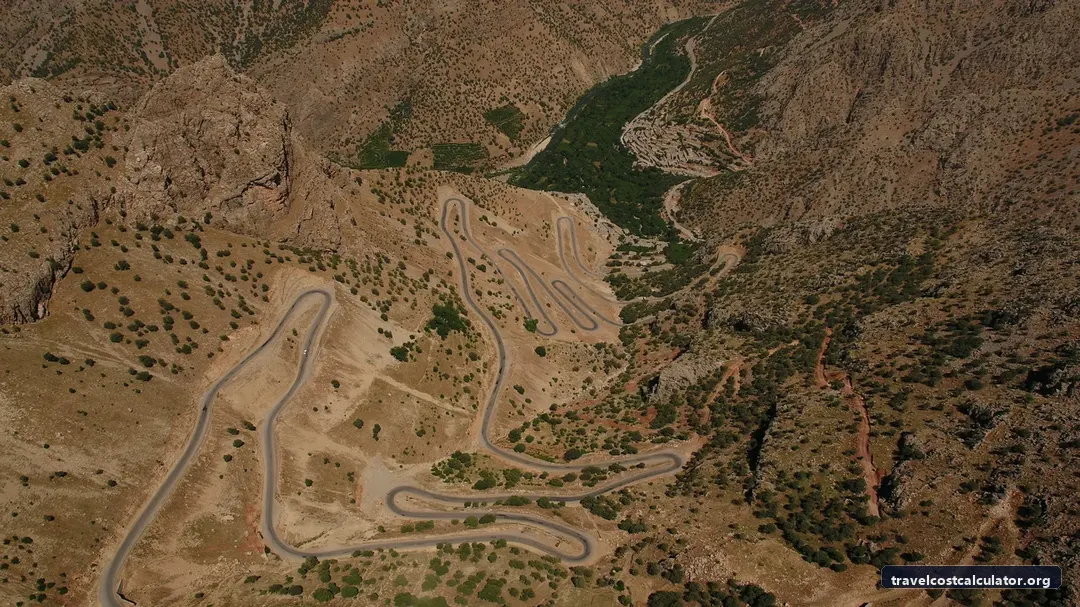
The roads navigating the Zagros peaks (such as the Zhalaneh Pass) feature sharp switchbacks and dramatic drop-offs. In winter (December through March), heavy snowfall can close high passes; snow chains and experienced local drivers are mandatory. During spring and summer, roads are fully paved and well-maintained.
📸 Best Photography Spots & Insider Visit Hacks
Top Photography Angles
-
✦
Hawraman Takht Central Panorama: Stand on the opposite hillside lookout across the valley (near the main entrance road) an hour before sunset. The warm golden light illuminates the multi-tiered stone facade of the village as chimney smoke rises above the flat roofs.
-
✦
Palangan River Gorge: Located in the southern Hawraman region, Palangan features two giant cliff faces of stacked houses flanking a rushing mountain stream. Capture photos from the footbridge at dusk when yellow lanterns light up the stone staircases.
-
✦
Hajij Village & Daryan Dam Lake: Shoot from the cliffside highway overlooking Hajij, where the terraced grey stone buildings contrast dramatically against the turquoise waters of the reservoir below.
-
✦
Spring Blooms in Zhawaro Valley: Mid-April offers vibrant emerald pastures filled with wild red poppies set against snow-capped peaks in the background.
Insider Hacks for an Authentic Experience
-
✦
Respect Local Etiquette & Customs: Hawrami culture is deeply hospitable yet conservative. Dress modestly (loose clothing covering arms and legs; women should wear a lightweight headscarf/hijab in public areas). Always ask permission before photographing local residents, particularly village elders and women working in the orchards.
-
✦
Footwear is Critical: Hawraman villages have virtually no flat streets; public pathways consist of uneven, steep stone stairways. Leave rolling luggage at your base hotel and carry a durable backpack along with sturdy, broken-in hiking boots or trail runners.
-
✦
Timing Your Trip for Cultural Events:
- Pir Shalyar Ceremony: Held twice a year (the mid-winter festival occurs in early February, and the spring event Kumsar happens in mid-May). These ancient rites feature traditional Kurdish group dances (Chopi), daf drumming, and communal feasts. Book accommodations 3–4 months in advance if visiting during these events.
-
✦
Pomegranate Harvest Festival: Held every October across Hawraman villages like Selin and Hajij, featuring vibrant displays of fresh fruit, local syrups, and folk music.
🏨 Nearby Accommodation & Daily Budget Allocation
To fully experience Hawraman, stay overnight in a traditional eco-lodge (Bume-gardi) inside the terraced villages rather than commuting daily from larger cities.
Accommodation Options
-
✦
Budget Homestays & Village Guesthouses: Basic private rooms in local Hawrami homes with shared bathrooms and authentic home-cooked breakfast. Cost: $10 – $18 USD per night.
-
✦
Mid-Range Heritage Eco-Lodges: Beautifully restored stone houses featuring private bathrooms, traditional Kurdish rugs, mountain views, and local dining (e.g., Hawraman Eco-Lodge or boutique stays in Hajij and Selin). Cost: $25 – $45 USD per night.
-
✦
City Hotels (Marivan / Sanandaj): Standard 3-star and 4-star modern accommodations, such as Hotel Zarivar overlooking Zarivar Lake in Marivan. Cost: $40 – $65 USD per night.
Food & Dining Highlights
Sampling regional cuisine is a highlight of visiting Hawraman. Try Kabab-e Mahi (fresh river trout grilled over open coals), Kelaneh (a crisp, traditional flatbread stuffed with wild mountain chives and brushed with homemade butter), fresh pomegranate molasses stews, and local goat cheese paired with mountain thyme tea. Meal prices at local village restaurants range from $3.00 to $7.00 USD per person.
Estimated Daily Budget Breakdowns (2026 Rates)
-
✦
Backpacker Budget Planner: $20 – $30 USD / day
- Minibus transit ($3)
-
✦
Homestay accommodation ($12)
-
✦
Street food, Kelaneh, and local diners ($8)
-
✦
Incidentals & site tips ($2)
- Private taxi charter Split Travel Budget between travelers ($15–$20)
- Dedicated full-day private driver & English-speaking Kurdish guide ($60–$80)
Frequently Asked Questions
Essential visitor FAQs for Cultural Landscape of Hawraman/Uramanat
What is the entrance fee for the Cultural Landscape of Hawraman/Uramanat?
How much time do you need to explore Hawraman/Uramanat?
How do I get to Hawraman/Uramanat from Tehran or Sanandaj?
📊 Heritage Quick Specs
Visiting Iran on a Budget?
Calculate your full daily travel budget for Iran — including hotel costs, local transport, food, and sightseeing expenses.
View Iran Daily Travel Costs →Explore more UNESCO World Heritage Sites
🏛️ All 1,200+ Heritage Sites →