
 Germany
Collegiate Church, Castle and Old Town of Quedlinburg
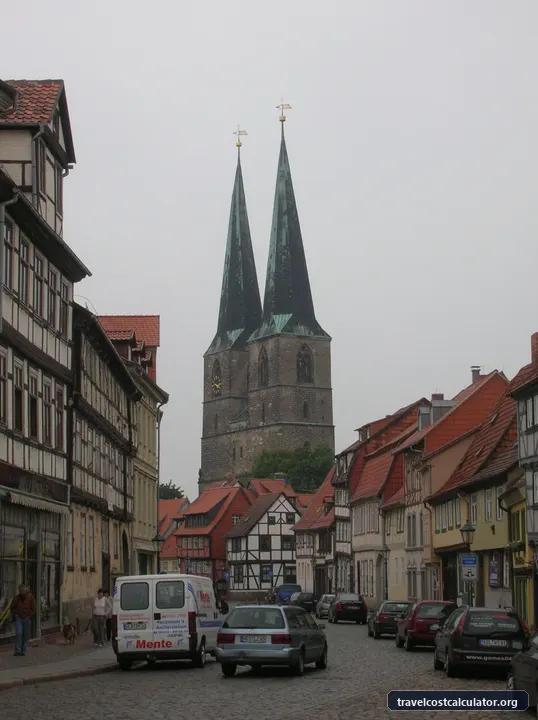
Quedlinburg, in the Land of Sachsen-Anhalt, was a capital of the East Franconian German Empire at the time of the Saxonian-Ottonian ruling dynasty.
Collegiate Church, Castle and Old Town of Quedlinburg
🏛️ Overview & Historical Significance
Nestled at the northern edge of the Harz Mountains in the state of Saxony-Anhalt, Germany, the Collegiate Church, Castle and Old Town of Quedlinburg represents one of the most remarkably intact medieval and Renaissance urban settlements in Europe. In 1994, UNESCO inscribed Quedlinburg on the World Heritage List under criterion (iv), designating it an exceptional example of a European medieval city that has preserved its historic street plan and an extraordinary density of timber-framed architecture (*Fachwerkhäuser*) across more than eight centuries.
Quedlinburg’s history is inextricably linked to the birth of the medieval German state. In the early 10th century, King Henry I (Henry the Fowler) established a royal residence (*Pfalz*) on Castle Hill (*Schlossberg*). Upon his death in 936, his widow, Queen Mathilde, founded an aristocratic secular abbey for noblewomen (*Damenstift*) atop the hill to preserve his memory. For over eight centuries, this powerful abbey operated as an imperial free institute directly subject to the Holy Roman Emperor, governed exclusively by high-ranking abbesses who exercised sovereign political and judicial power over the city.
The city's architectural landscape serves as an open-air museum of Western European timber architecture. Quedlinburg boasts over 2,060 timber-framed houses spanning five distinct architectural epochs, from the early 14th-century post-and-beam construction (*Ständerbauweise*) through the ornate Gothic, Renaissance, Baroque, and Classicist periods. Perched dramatically on Castle Hill is the Collegiate Church of St. Servatius (*Stiftskirche St. Servatius*), a masterwork of Romanesque architecture built between 1070 and 1129. Its subterranean crypt houses the royal tombs of King Henry I and Queen Mathilde, featuring rare 10th-to-12th-century frescoes and Ottonian stone capitals.
St. Servatius is also world-renowned for housing the Quedlinburg Domschatz (Cathedral Treasury)—an extraordinary collection of Ottonian holy relics, gold reliquaries, ivory caskets, and the famous 12th-century Samuhel Gospel. The history of this treasury is compelling: several priceless artifacts were looted by an American army lieutenant during World War II and kept hidden in Texas for decades before being dramatically recovered and returned to Quedlinburg in the 1990s.
🎟️ Entrance Fees, Opening Hours & Ticket Booking Tips
Visiting the historic streets and public plazas of Quedlinburg is entirely free. However, ticketed admission is required for Castle Hill attractions, church interiors, and municipal museums. Prices and operating schedules are updated for the 2026 travel season.
2026 Ticket Pricing Breakdown
-
✦
St. Servatius Collegiate Church & Treasury (Stiftskirche & Domschatz): Adults: €10.00 (~$11.00 USD) | Students/Reduced: €6.00 (~$6.60 USD) | Children under 6: Free.
-
✦
Schlossmuseum (Castle Museum & State Apartments): Adults: €8.00 (~$8.80 USD) | Reduced: €5.00 (~$5.50 USD). Note: Select exterior courtyards and exhibition halls remain open during phased historic preservation projects throughout 2026.
-
✦
Ständerbau Museum (Oldest Timber-Framed House, c. 1347): Adults: €4.50 (~$5.00 USD) | Reduced: €3.00 (~$3.30 USD).
-
✦
Lyonel-Feininger-Galerie (Modern Art Museum): Adults: €7.50 (~$8.25 USD) | Reduced: €5.00 (~$5.50 USD).
-
✦
Quedlinburg Combined Museum Pass (Kombikarte): Adults: €16.00 (~$17.60 USD) | Covers entrance to St. Servatius, the Schlossmuseum exhibits, and the Ständerbau Museum within a 48-hour window.
Opening Hours (2026 Schedule)
-
✦
Summer Season (April 1 – October 31): Tuesday through Sunday, 10:00 AM – 6:00 PM (Last admission at 5:30 PM). Closed Mondays.
-
✦
Winter Season (November 1 – March 31): Tuesday through Sunday, 10:00 AM – 4:00 PM. Closed Mondays.
-
✦
Special Holiday Exceptions: Open on Easter Monday and Whit Monday. Closed December 24.
Insider Booking & Visitor Advice
To avoid long queues during peak weekend travel, book timed-entry tickets online through the official Welterbestadt Quedlinburg portal or purchase the Kombikarte directly at the Stiftskirche visitor desk upon early arrival. Audio guides are available in English, German, and French for €3.00 (~$3.30 USD) at St. Servatius. Photography inside the Domschatz treasury room is strictly regulated; flash photography and tripods are forbidden inside historic monuments.
🚌 How to Get There & Local Transit Costs
Quedlinburg is situated in central Germany and is accessible by rail and road from regional transportation hubs such as Magdeburg, Leipzig, Berlin Travel Budget, and Hanover.
Reaching Quedlinburg by Train
Germany’s national rail carrier, Deutsche Bahn (DB), alongside regional lines (such as Abellio Rail Mitteldeutschland), connects Quedlinburg to major metropolitan stations:
-
✦
From Magdeburg (Nearest Hub City): Direct regional trains (RE 11 / HEX) run hourly from Magdeburg Hauptbahnhof directly to Quedlinburg Station. Journey time: approx. 50 minutes. Single ticket fare: €14.50 – €18.00 (~$16.00 – $19.80 USD).
-
✦
From Leipzig: Take an IC or RE train from Leipzig Hbf to Halberstadt or Magdeburg, then transfer to the RE 11 regional line to Quedlinburg. Journey time: 1 hour 45 minutes. Single ticket fare: €24.00 – €29.00 (~$26.40 – $31.90 USD).
-
✦
From Berlin: Depart from Berlin Hbf via Magdeburg Hbf or Halberstadt to Quedlinburg. Journey time: approx. 2 hours 30 minutes. Standard advance fare: €29.00 – €48.00 (~$32.00 – $52.80 USD).
Transit Regional Pass Hacks
If traveling regionally within Saxony-Anhalt, purchase the Sachsen-Anhalt-Ticket. In 2026, this day-pass costs €29.00 (~$31.90 USD) for one traveler, plus €8.00 for each additional traveler (up to 5 people total), allowing unlimited regional train travel across Saxony-Anhalt, Saxony, and Thuringia for a full day. Alternatively, regional rail routes to Quedlinburg are fully covered under the nationwide Deutschlandticket (€58/month subscription in 2026).
Arriving by Car & Parking Rates
Drivers can reach Quedlinburg via the A36 highway (the "Harz-Highway"). Because the historical city core features narrow medieval streets and pedestrian-only zones, driving inside the Altstadt is restricted. Park at one of the dedicated fringe lots:
-
✦
Parkplatz Marschlinger Hof: Located 5 minutes on foot from Marktplatz. Rate: €1.50/hour or €8.00/day (~$8.80 USD).
-
✦
Parkplatz Schlossberg (Carl-Ritter-Straße): Ideal for visiting Castle Hill. Rate: €2.00/hour or €10.00/day (~$11.00 USD).
📸 Best Photography Spots & Insider Visit Hacks
Quedlinburg's cobblestone lanes, timber framing, and dramatic topography offer exceptional photo opportunities throughout the day.
Top Photography Locations
-
✦
Münzenberg Hill: Positioned across the valley opposite Castle Hill, the historic hill of Münzenberg offers the absolute best panoramic view of Quedlinburg. Climb the stone steps to frame the twin towers of St. Servatius rising over a sea of terracotta roof tiles. Best light: Late Afternoon / Golden Hour.
-
✦
Finkenherd Square: Located directly at the northern base of Castle Hill. This historic plaza features timber houses framing views up toward the Romanesque abbey. Best light: Early Morning.
-
✦
Wordgasse 3 (Ständerbau): Photograph Germany’s oldest intact timber-framed house (built around 1347), characterized by visible exterior vertical posts and original medieval wall infill.
-
✦
Marktplatz & Renaissance Rathaus: Capture the lush ivy-covered facade of the 1310 Town Hall, complete with the stone statue of Roland (symbol of municipal liberty, erected in 1427). Best light: Mid-Day to Sunset.
-
✦
Schuhhof & Hohe Straße: Narrow alleys featuring intact rows of 16th and 17th-century Renaissance timber buildings adorned with carved fan rosettes (*Fächerrosetten*) and ornate beam heads.
Insider Visit Hacks for 2026
-
✦
Beat the Tour Buses: Day-trip coaches arrive between 10:30 AM and 3:00 PM. Plan church visits and main square photography before 9:30 AM or after 4:30 PM when the cobblestone lanes clear out.
-
✦
Footwear Essential: The Old Town’s street network consists of authentic medieval cobblestones (*Kopfsteinpflaster*). High heels and thin-soled shoes are impractical; wear sturdy, cushioned walking shoes or boots.
-
✦
Seasonal Magic (Advent in den Höfen): If visiting in December, Quedlinburg hosts one of Germany's most romantic Christmas markets. Beyond the main Marktplatz market, over 20 private historic courtyards (*Höfe*) usually closed to the public open up during the first three weekends of Advent to showcase artisan crafts and regional mulled wine (*Glühwein*).
🏨 Nearby Accommodation & Daily Budget Allocation
Staying overnight inside Quedlinburg allows you to experience the medieval atmosphere long after day-trippers have left. Below are recommended lodging options and realistic travel budget structures for 2026.
Recommended Accommodations
-
✦
Budget Option: Hostels & Local Guesthouses
Pension Am Klopstockgarten or local family-run Ferienwohnungen (vacation apartments) near the Neustadt. Clean, comfortable lodging in historic settings.
Estimated Rate: €50.00 – €75.00 (~$55.00 – $82.50 USD) per night. -
✦
Mid-Range Option: Historic Boutique Hotels
Romantik Hotel am Brühl or Hotel Kaiserhof. Set within meticulously restored 16th-century timber buildings featuring modern amenities, courtyards, and traditional Saxon breakfasts.
Estimated Rate: €110.00 – €165.00 (~$121.00 – $181.50 USD) per night. -
✦
Luxury / Boutique Luxury Option
Hotel Balleybrück or luxury suites at Schloss Quedlinburg Boutique Apartments. Premium historical rooms near Castle Hill with gourmet dining options.
Estimated Rate: €190.00 – €280.00 (~$209.00 – $308.00 USD) per night.
Daily Food & Dining Budget Allocations
Saxony-Anhalt cuisine is hearty and regional. Be sure to try local specialties like Harzer Käse (a sour-milk cheese), wild game dishes (*Wildgericht*), and locally brewed beer from the historical Brauhaus Lüdde.
-
✦
Breakfast/Café: €7.00 – €12.00 (~$7.70 – $13.20 USD) for fresh bakeries, coffee, and German rolls (*Brötchen*).
-
✦
Lunch (Quick Bite / Tavern): €12.00 – €18.00 (~$13.20 – $19.80 USD) for a casual meal or traditional sausage plate.
-
✦
Dinner (Traditional Restaurant / Brauhaus): €22.00 – €40.00 (~$24.20 – $44.00 USD) per person, including a main dish, regional dessert, and local craft beer or wine.
Estimated Total Daily Travel Budgets (Per Person, 2026)
-
✦
Budget Traveler: €75.00 – €105.00 / day (~$82.50 – $115.50 USD) — Includes budget guest room/hostel, street food/bakeries, public transit pass, and standard museum entry.
-
✦
Mid-Range Traveler: €160.00 – €230.00 / day (~$176.00 – $253.00 USD) — Includes mid-range boutique hotel, sit-down lunches and dinners, museum pass, and regional train tickets.
-
✦
Luxury Traveler: €320.00+ / day (~$352.00+ USD) — Includes premium historic suit lodging, fine dining, private guided walking tours, and car rentals.
Frequently Asked Questions
Essential visitor FAQs for Collegiate Church, Castle and Old Town of Quedlinburg
What is the entrance fee for Collegiate Church, Castle and Old Town of Quedlinburg?
How much time do you need to explore Collegiate Church, Castle and Old Town of Quedlinburg?
How do I get to Collegiate Church, Castle and Old Town of Quedlinburg from the nearest city?
📊 Heritage Quick Specs
Visiting Germany on a Budget?
Calculate your full daily travel budget for Germany — including hotel costs, local transport, food, and sightseeing expenses.
View Germany Daily Travel Costs →Explore more UNESCO World Heritage Sites
🏛️ All 1,200+ Heritage Sites →