
 Kazakhstan
Cold Winter Deserts of Turan
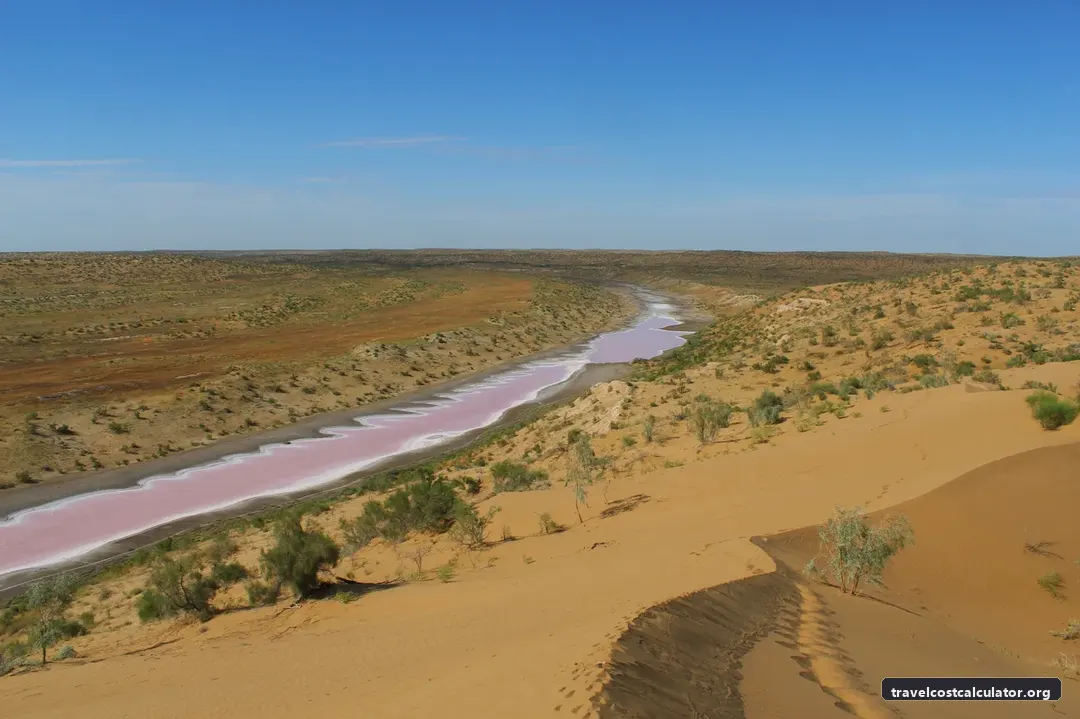
This transnational property comprises fourteen component parts found across arid areas of Central Asia’s temperate zone between the Caspian Sea and the Turanian high mountains.
Cold Winter Deserts of Turan
🏛️ Overview & Historical Significance
In 2023, UNESCO officially inscribed the Cold Winter Deserts of Turan as a transboundary World Heritage site spanning Kazakhstan, Turkmenistan, and Uzbekistan. Unlike the tropical sand seas of the Sahara or the Arabian Peninsula, the Turan basin represents one of the world's most extreme and ecologically unique temperate desert ecosystems. Characterized by freezing winters where temperatures drop below -30°C (-22°F) and scorching summers exceeding +45°C (113°F), this hyper-continental climate has forged hyper-adapted flora and fauna found nowhere else on Earth.
The Kazakhstani component of this UNESCO treasure centers primarily on two extraordinary natural realms: Altyn-Emel National Park and the Barsakelmes State Nature Reserve. Altyn-Emel showcases breathtaking geomorphological wonders formed over millions of years—ranging from the iconic, hum-emitting Singing Dune (Poyschiy Barkhan) to the vibrant, fossil-rich chalk layers of the Aktau Mountains and the dark volcanic lava formations of Katutau.
Beyond its geological drama, the region serves as a vital sanctuary for endangered global biodiversity. It hosts significant populations of the rare Asiatic wild ass (Kulan), the Persian gazelle (Jeyran), Przewalski’s horses, and ancient black saxaul forests that bind the desert soil against howling winter blizzards. For travelers in 2026, visiting this UNESCO site offers an unyielding, raw encounter with Central Asia’s untamed wilderness, where ancient Silk Road topography meets modern conservation efforts.
🎟️ Entrance Fees, Opening Hours & Ticket Booking Tips
Navigating park access in Kazakhstan requires a basic understanding of government environmental permits and checkpoint procedures. Prices for 2026 are quoted in Kazakhstani Tenge (KZT) alongside current USD estimates.
Altyn-Emel National Park Entry & Fees
-
✦
Environmental & Entry Fee: Approximately 1,800 KZT (~$3.80 USD) per person per day.
-
✦
Vehicle Access Permit: Approximately 1,000 KZT (~$2.10 USD) per vehicle per day.
-
✦
Mandatory Park Escort / Ranger Fee: If traveling without an accredited tour company, hiring a park ranger at the Basshi Visitor Center costs roughly 7,000–10,000 KZT (~$15–$21 USD) per day per vehicle group.
Barsakelmes Nature Reserve Entry & Fees
Note: Barsakelmes is a strict scientific reserve (Zapovednik) located near the Aral Sea basin. Access is far more regulated than Altyn-Emel.
-
✦
Special Entry Permit: Requires advance approval via the Forestry and Wildlife Committee in Kyzylorda or Aralsk. Administrative permit fees run around 3,500 KZT (~$7.50 USD) per person.
-
✦
Guide & Escort Fee: Mandatory local ranger escort starts at 18,000 KZT (~$38 USD) per group daily.
Opening Hours & Insider Booking Tips
-
✦
Operating Hours: Checkpoints into Altyn-Emel (primarily at Basshi Village) are open daily from 08:00 to 19:00. Travel inside the park after dark is strictly prohibited to protect nocturnal fauna and avoid travelers getting lost off-grid.
-
✦
Payment Methods: Cash in KZT is strongly required. Mobile card terminals at the Basshi Visitor Center and remote checkpoints frequently fail due to spotty cellular coverage.
-
✦
Advance Permits: You can purchase entry passes at the Altyn-Emel National Park HQ office in Almaty Travel Budget before leaving, or directly at the official office in Basshi village. Always keep your physical permit receipts visible on your dashboard; ranger checkpoints check them inside the park.
🚌 How to Get There & Local Transit Costs
The main gateway for exploring the most accessible part of the Cold Winter Deserts of Turan (Altyn-Emel) is Almaty, Kazakhstan's financial and cultural hub. The reserve sits approximately 260 to 300 kilometers (160–186 miles) northeast of Almaty.
Step-by-Step Route from Almaty to Altyn-Emel (Basshi Hub)
-
✦
Option 1: Guided 4WD Tour (Recommended for Most Travelers)
Due to severe desert tracks, jagged volcanic gravel, and loose sand inside the park, a 4x4 vehicle with high ground clearance is essential.- Cost: 2-Day all-inclusive 4x4 tours from Almaty range from $180 to $320 USD per person (assuming a group of 2–4 travelers), covering fuel, driver, ranger fees, meals, and guest house stays.
-
✦
Duration: 3.5 to 4 hours driving on paved highway (A-3 to Almaty-Konaev-Basshi) to reach Basshi, followed by off-road driving.
-
✦
Option 2: Self-Drive Rental 4x4
Renting a sturdy SUV (such as a Toyota Prado or Renault Duster 4x4) in Almaty is popular for independent road-trippers.- Rental Cost: Approx. $75 to $130 USD per day depending on the vehicle class.
-
✦
Route: Take the modern A-3 highway north from Almaty past Konaev, turning east toward Shengeldy and past the Kapchagay Reservoir, continuing to Basshi village via the Malaisary Pass road network.
-
✦
Fuel Cost: 95-octane petrol costs approximately 240–260 KZT (~$0.50–$0.55 USD) per liter in 2026. Fill up completely in Konaev or Saraychik, as desert gas stations in Basshi can run out of fuel.
-
✦
Option 3: Public Transport + Local 4x4 Hire (Budget Option)
Take a shared minibus (marshrutka) or shared taxi from Almaty’s Sayakhat Bus Station bound for Zharkent or Chundzha, asking to be dropped at the Basshi turnoff.- Bus/Taxi Fare: Approx. 4,000–6,000 KZT (~$8.50–$13 USD) per seat.
-
✦
Local Pickup: Arrange for a Basshi guest house owner to pick you up at the turnoff (approx. 5,000 KZT / $11 USD), then hire a local driver with a UAZ/Lada Niva for park entry (approx. 30,000–40,000 KZT / $63–$85 USD per day divided by your group).
📸 Best Photography Spots & Insider Visit Hacks
Prime Photography Locations
-
✦
The Singing Dune (Poyschiy Barkhan): Standing over 150 meters tall, this massive sand dune does not drift across the desert due to localized wind patterns. When the sand is dry and the wind blows, it emits a low, organ-like hum.
Photography Tip: Arrive at sunrise or late golden hour (1 hour before sunset). The low sun casts sharp geometric shadows across the sand ridges, creating dramatic contrast against the blue desert sky. -
✦
Aktau Chalk Mountains: Ancient ocean floor deposits created these multi-colored, tiered mountains featuring brilliant strata of white chalk, red clay, and pink ochre.
Photography Tip: Shoot in the late afternoon when the warm sunlight accentuates the vibrant red and orange clay streaks. Look out for petrified wood and ancient mammalian fossils embedded in the soil (do not remove them!). -
✦
Katutau Volcanic Mountains: Jagged, dark-brown lava fields carved into surreal shapes by wind and water erosion over millions of years.
Photography Tip: Use wide-angle lenses to capture the intricate, alien-like basalt swirls and natural stone bridges against the harsh desert horizon.
Insider Visit Hacks for 2026
-
✦
Optimal Weather Window: The absolute best months to visit are April to May (spring wildflower bloom, mild weather) and September to October (crisp days, clear skies). Avoid July and August, when temperatures exceed 42°C (107°F) and ground heat distorts telephoto photo shots. Winter (December–February) brings snow over red dunes, producing striking landscape photography, but requires winterized 4WD vehicles and heavy thermals.
-
✦
Hydration & Supplies: There are no shops, shade, or potable water stations once you leave Basshi village. Carry a minimum of 4 liters of water per person per day, emergency non-perishable food, and high-SPF sun protection.
-
✦
Navigation & Offline Maps: Mobile phone reception drops to zero within 5 km of leaving Basshi. Download offline mapping apps like Maps.me or Organic Maps before leaving Almaty, and track your GPS location carefully. Driving off established tracks is illegal under park protection laws.
-
✦
Wildlife Ethics: If you spot herds of Kulans or Jeyran gazelles running across the plains, maintain a respectful distance. Do not chase animals with vehicles or low-flying drones (drone permits must be cleared with park management in advance).
🏨 Nearby Accommodation & Daily Budget Allocation
Accommodation in the Turan Desert region centers on rural guest houses in Basshi village, eco-lodges, or wilderness camping at designated park sites.
Accommodation Options
-
✦
Budget Guest Houses (Basshi Village): Home-stays run by local Kazakh families offer private rooms with shared bath facilities and home-cooked meals.
Price Range: 10,000–16,000 KZT (~$21–$34 USD) per person per night (often includes dinner and breakfast). -
✦
Mid-Range Hotels / Eco-Resorts: Small, modern hotels in Basshi (such as Aigaitai Hotel or Altyn-Emel Eco-Lodge) providing en-suite bathrooms, air conditioning, and Wi-Fi in public areas.
Price Range: 25,000–45,000 KZT (~$53–$95 USD) per room per night. -
✦
Wilderness Camping: Permitted only at designated areas near the Singing Dune or Aktau shelter huts. You must bring all your gear, food, and water, and report camping intentions to the Basshi ranger station.
Price: Included in your standard park conservation fee (~$3.80 USD).
Estimated Daily Budget breakdown (Per Person, 2026)
-
✦
Backpacker Budget Planner: $45 – $65 USD / day
- Shared transit & shared local 4x4 hire
-
✦
Basic guest house stay with home-cooked meals
-
✦
Standard park entry permits
- Self-drive 4x4 rental Split Travel Budget between 2 people or group 4x4 tour
- Private custom 4WD vehicle with professional driver-guide and wildlife expert
Frequently Asked Questions
Essential visitor FAQs for Cold Winter Deserts of Turan
What is the entrance fee for Cold Winter Deserts of Turan?
How much time do you need to explore Cold Winter Deserts of Turan?
How do I get to Cold Winter Deserts of Turan from the nearest city?
📊 Heritage Quick Specs
Visiting Kazakhstan on a Budget?
Calculate your full daily travel budget for Kazakhstan — including hotel costs, local transport, food, and sightseeing expenses.
View Kazakhstan Daily Travel Costs →Explore more UNESCO World Heritage Sites
🏛️ All 1,200+ Heritage Sites →