
 Vietnam
Citadel of the Ho Dynasty
The 14th -century Ho Dynasty citadel, built according to the feng shui principles, testifies to the flowering of neo-Confucianism in late 14th century Viet Nam and its spread to other parts of east Asia.
Citadel of the Ho Dynasty
🏛️ Overview & Historical Significance
Nestled amid the lush rice paddies of Vĩnh Lộc District in Thanh Hóa Province, the Citadel of the Ho Dynasty (Thành nhà Hồ) stands as one of Southeast Asia's most extraordinary yet underrated architectural marvels. Constructed in 1397 under the reign of Emperor Hồ Quý Ly—founder of the short-lived Hồ Dynasty—this ancient fortress served as the imperial capital of Đại Ngu (the historical name of Vietnam). Remarkably, historical chronicles report that the entire stone citadel was erected in a mere three months, a testament to the sophisticated engineering capabilities of late 14th-century Vietnam.
In 2011, UNESCO officially recognized the Citadel of the Ho Dynasty as a World Heritage site. The designation highlights its exceptional manifestation of Neo-Confucian imperial urban planning blended with native Vietnamese landscape aesthetics. It represents a critical transition period in East Asian history, where traditional stone architecture was adapted to accommodate new military artillery techniques. Unlike the brick and wooden citadels prevalent across East Asia, this stronghold was built almost entirely from massive, hand-carved green limestone blocks—some weighing upwards of 20 metric tons—seamlessly fitted together without a single drop of mortar.
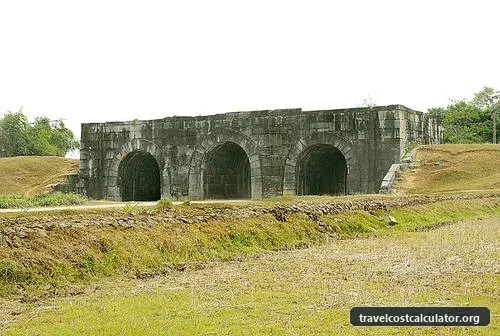
Although the interior imperial palaces were destroyed over centuries of conflict, the monumental stone outer gates and pristine foundation walls remain strikingly intact. Surrounding the core site are key satellite elements, including the Nam Giao Altar (used for royal sacrifices to Heaven and Earth), ancient stone quarries, and sacred surrounding peaks (Don Son and Dun Mountain). Visiting this tranquil UNESCO treasure offers a rare look into medieval Vietnam's military prowess without the overwhelming tourist crowds found at Hue or Ha Long Bay.
🎟️ Entrance Fees, Opening Hours & Ticket Booking Tips
As of 2026, visiting the Citadel of the Ho Dynasty remains one of the most budget-friendly UNESCO cultural experiences in Southeast Asia. Below is the updated breakdown of entry fees and practical ticketing details:
-
✦
Adult Ticket (Standard): 50,000 VND (approx. $2.00 USD / €1.85)
-
✦
Child Ticket (Ages 6–15): 25,000 VND (approx. $1.00 USD / €0.90)
-
✦
Children Under 6: Free entry
-
✦
On-Site Electric Cart Tour: 30,000 VND ($1.20 USD) per person (Highly recommended for navigating between the 4 main gates during hot weather)
-
✦
Official On-Site Guide Service: 100,000 – 150,000 VND ($4.00 – $6.00 USD) for a 1-hour English/Vietnamese language tour
Opening Hours
The site is open daily year-round, including national holidays:
-
✦
Summer Hours (April – September): 7:00 AM – 5:30 PM
-
✦
Winter Hours (October – March): 7:30 AM – 5:00 PM
Insider Booking & Purchasing Tips
There is no need to purchase advance tickets online through third-party vendors (which often charge inflated convenience fees). Tickets are sold directly at the visitor center adjacent to the South Gate (Nam Môn). While cash in Vietnamese Đồng (VND) remains the hassle-free standard, local electronic QR transfers (VietQR) are widely accepted in 2026. If you plan to visit the nearby Nam Giao Altar (located roughly 2.5 km away), make sure to present your main gate ticket stub, as entry is covered under the single standard admission fee.
🚌 How to Get There & Local Transit Costs
The Citadel of the Ho Dynasty is located in Vĩnh Lộc District, approximately 45 kilometers (28 miles) northwest of Thanh Hóa City and 140 kilometers (87 miles) south of Hanoi Travel Budget. Travel logistics depend on your starting hub:
Option 1: Day Trip from Hanoi
If traveling directly from Hanoi, you have three primary transport methods:
-
✦
Limousine Bus / Shared Van: Direct luxury vans operate hourly from Hanoi (departing from Giáp Bát or Mỹ Đình stations) to Vĩnh Lộc or Thanh Hóa City. Transit time is roughly 2.5 hours via the CT01 Expressway. Expect to pay 180,000 – 220,000 VND ($7.00 – $9.00 USD) one-way. Request to be dropped off in Vĩnh Lộc town, just 2 km from the South Gate.
-
✦
Express Train (Vietnam Railways): Take an early morning SE train from Hanoi Station to Thanh Hóa Railway Station (approx. 2.5 to 3 hours). Ticket costs range from 150,000 to 240,000 VND ($6.00 – $9.50 USD) for soft air-conditioned seats. From Thanh Hóa station, take Bus #08 or a taxi to the citadel.
-
✦
Private Car Hire: Hiring a private driver for a full-day round trip from Hanoi costs between 1,800,000 and 2,400,000 VND ($72 – $96 USD). This is ideal for families or small groups wishing to combine the citadel with Ninh Binh or Cam Luong Holy Fish Stream.
Option 2: From Thanh Hóa City (Local Transit)
-
✦
Public Bus #08: Departs every 20-30 minutes from downtown Thanh Hóa City directly toward Vĩnh Lộc. The ride takes around 1 hour and costs 30,000 VND ($1.20 USD). Ask the driver for "Thành nhà Hồ".
-
✦
Taxi or Ride-Hailing App (Grab / Be): A direct private taxi from Thanh Hóa City to the citadel gate costs roughly 450,000 – 550,000 VND ($18 – $22 USD) one-way. Negotiating a round-trip fare with 2 hours of waiting time included usually runs around 800,000 VND ($32 USD).
📸 Best Photography Spots & Insider Visit Hacks
Top Photography Angles
-
✦
The South Gate Archway (Nam Môn): The most recognizable feature of the citadel. Frame your shot standing 30 meters back to capture the three vaulted stone doorways against the sky. For scale, have a companion stand beneath the central arch.
-
✦
Framed Rice Fields from the East Gate: Walk through the Eastern Vaulted Gate during late afternoon; the ancient grey stone acts as a natural photo frame surrounding emerald-green or golden rice paddies outside the perimeter.
-
✦
The Ancient Stone Cannonballs & Exhibition Room: Capture detailed close-ups of the prehistoric stone artifacts, carved megaliths, and ancient weapons inside the onsite indoor exhibition hall.
-
✦
Nam Giao Sacrificial Altar: Located on Mount Don Son, this serene stone platform offers sweeping panoramic views of the surrounding countryside and Ma River valley.
Insider Travel Hacks for 2026
-
✦
Timing Your Visit for Agriculture Seasons: The best months to photograph the citadel are May to early June (harvest season, when surrounding fields turn brilliant gold) and September to October. Early mornings (7:30 AM – 9:00 AM) offer soft lighting and misty backgrounds without mid-day heat.
-
✦
Beat the Heat: The stone walls reflect intense heat during summer months (July–August). Bring a wide-brimmed hat, sunblock, and at least 1 liter of water. Shaded areas inside the expansive interior courtyard are limited.
-
✦
Rent a Bicycle On-Site: The enclosed citadel grounds span over 150 hectares. Renting a basic bicycle at the entrance for 30,000 VND ($1.20 USD) allows you to comfortably explore all four gates and the outer earthen ramparts at your own pace.
🏨 Nearby Accommodation & Daily Budget Allocation
Most travelers visit the Citadel of the Ho Dynasty as a day excursion from Hanoi, Ninh Binh, or Thanh Hóa City. However, staying overnight near Vĩnh Lộc or Thanh Hóa offers an authentic provincial experience far removed from commercialized tourism zones.
Accommodation Options
-
✦
Budget Guesthouses (Nhà Nghỉ) in Vĩnh Lộc: Located within 2 km of the site. Clean, basic private air-conditioned rooms with Wi-Fi cost between 250,000 and 400,000 VND ($10 – $16 USD) per night.
-
✦
Mid-Range Hotels (Thanh Hóa City Center): Places like Phú Hưng Hotel or Central Hotel Thanh Hóa offer comfortable amenities, swimming pools, and breakfast for 700,000 to 1,200,000 VND ($28 – $48 USD) per night.
-
✦
Upscale Luxury (Thanh Hóa City): Melia Vinpearl Thanh Hoa provides premium 5-star skyscraper accommodation with spa facilities starting around 1,800,000 – 2,800,000 VND ($72 – $112 USD) per night.
Local Dining & Food Costs
Dining near the citadel is exceptionally cheap and authentic. Don't leave Thanh Hóa Province without sampling local culinary specialties:
-
✦
Nem Chua Thanh Hóa: Fermented pork rolls seasoned with chili, garlic, and guava leaves. Sold in bundles for roughly 50,000 – 80,000 VND ($2.00 – $3.20 USD) for 10 pieces.
-
✦
Bánh Răng Bừa (Rice Cake with Pork & Wood-Ear Mushroom): A fragrant steamed rice cake wrapped in banana leaves. Costs roughly 10,000 – 15,000 VND ($0.40 – $0.60 USD) per roll.
-
✦
Dê Nướng / Lẩu Dê (Grilled Goat / Goat Hotpot): Popular specialty restaurants along Route 217 near Vĩnh Lộc offer hearty goat meals for 120,000 – 200,000 VND ($4.80 – $8.00 USD) per dish.
Estimated Daily Travel Budgets (Per Person, 2026)
-
✦
Shoestring Backpacker: $18 – $28 USD / day
Includes local bus transit from Thanh Hóa, stay in a local Vĩnh Lộc nhà nghỉ, street food meals, and standard citadel admission. -
✦
Mid-Range Traveler: $55 – $90 USD / day
Includes limousine van from Hanoi, 3-star city hotel in Thanh Hóa, private taxi transport to site, electric cart hire, and casual restaurant dining. -
✦
Luxury / Private Comfort: $160 – $260 USD / day
Includes private chauffeur driven vehicle from Hanoi/Ninh Binh, 5-star hotel stay in Thanh Hóa, private English-speaking tour guide, and high-end dining.
Frequently Asked Questions
Essential visitor FAQs for Citadel of the Ho Dynasty
What is the entrance fee for Citadel of the Ho Dynasty?
How much time do you need to explore Citadel of the Ho Dynasty?
How do I get to Citadel of the Ho Dynasty from the nearest city?
📊 Heritage Quick Specs
Visiting Vietnam on a Budget?
Calculate your full daily travel budget for Vietnam — including hotel costs, local transport, food, and sightseeing expenses.
View Vietnam Daily Travel Costs →Explore more UNESCO World Heritage Sites
🏛️ All 1,200+ Heritage Sites →