
 Brazil
Central Amazon Conservation Complex
The Central Amazon Conservation Complex makes up the largest protected area in the Amazon Basin and is one of the planet’s richest regions in terms of biodiversity.
Central Amazon Conservation Complex
🏛️ Overview & Historical Significance
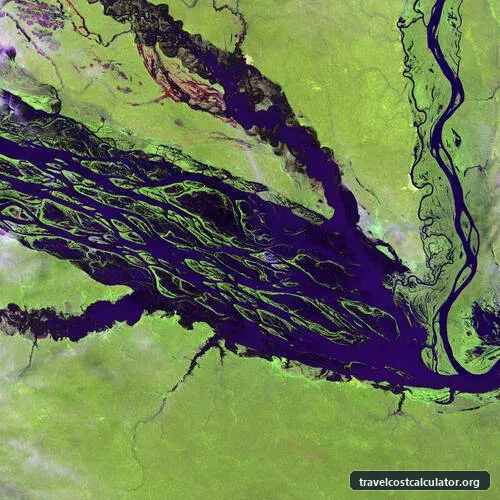
Spanning over 6 million hectares (60,000 square kilometers) of untouched tropical rainforest in the heart of the Brazilian Amazon, the Central Amazon Conservation Complex is the largest protected area in the Amazon Basin and one of the most biodiverse regions on Earth. Recognized by UNESCO as a World Heritage site in 2000—and significantly expanded in 2003—the complex encompasses four major protected zones: Jaú National Park, Anavilhanas National Park, Amanã Sustainable Development Reserve, and Mamirauá Sustainable Development Reserve.
UNESCO granted World Heritage status to this vast wilderness because it offers an extraordinary showcase of evolutionary ecology, continuous ecological processes, and blackwater ecosystem diversity. Unlike the sediment-rich "whitewater" rivers of the Amazon, the complex is fed primarily by the tea-colored, acidic blackwaters of the Rio Negro. This unique water chemistry has forged specialized habitats, most notably the igapó (permanently flooded blackwater forest) and várzea (seasonally flooded floodplain forest).
The conservation complex acts as a critical refuge for globally threatened and endemic wildlife. It holds one of the world's largest populations of the endangered Amazonian manatee, the elusive jaguar, the giant river otter, the black caiman, and two distinct species of freshwater river dolphins: the pink river dolphin (boto) and the gray river dolphin (tucuxi). Additionally, the area shelters the white-bald uakari monkey, over 450 species of birds, and an astonishing variety of electric knifefish that utilize electrical impulses to navigate the dark river channels. For eco-travelers and wilderness enthusiasts in 2026, visiting this UNESCO sanctuary represents the ultimate, unadulterated Amazonian expedition.
🎟️ Entrance Fees, Opening Hours & Ticket Booking Tips
Access to the Central Amazon Conservation Complex is strictly regulated by ICMBio (the Chico Mendes Institute for Biodiversity Conservation) and local reserve management boards to protect fragile ecosystems and indigenous/traditional communities. Visitors cannot simply enter independently; entry permits are almost always tied to certified local guides, authorized community tourism projects, or accredited expedition vessels.
2026 Estimated Entrance Fees & Permit Costs
-
✦
Standard ICMBio National Park Daily Permit (Anavilhanas / Jaú): R$ 12 to R$ 95 (~$2.30 to $18.00 USD) per person, per day, depending on your nationality, reserve sector, and specific activity (e.g., motorboat navigation, hiking, or overnight camping).
-
✦
Guided Day Expeditions (Anavilhanas Archipelago): R$ 380 – R$ 750 (~$72 to $142 USD) per person, including motorized canoe transport, guide fees, and park access permits.
-
✦
Multi-Day Wilderness Expeditions into Jaú National Park (3–5 Days): R$ 2,800 – R$ 6,800 (~$530 to $1,280 USD) per person, covering private rivercraft, certified captain/guide, meals, sleeping gear, and permits.
-
✦
Mamirauá Sustainable Reserve All-Inclusive Packages (Uakari Lodge): R$ 6,500 – R$ 15,000 (~$1,230 to $2,830 USD) per person for 4- to 7-day scientific and eco-tourism programs.
Opening Hours & Access Regulations
-
✦
Anavilhanas National Park: Open daily year-round from 07:00 to 17:00 for day visits. Night navigation requires explicit authorization.
-
✦
Jaú National Park: Accessible 24/7 for pre-booked, multi-day authorized river expeditions. The visitor center at the park entrance (ICMBio base in Novo Airão) operates Monday through Friday from 08:00 to 17:00.
-
✦
Mamirauá Reserve: Accessible only via scheduled eco-lodge transfers or research expedition boats departing from Tefé.
Insider Ticket Booking Tips
-
✦
Book Guide Permits Early: Independent entry without an ICMBio-registered guide is prohibited in Jaú and restricted in Anavilhanas. Secure your guide or boat charter at least 3 to 6 months in advance for high-demand months (June to July and October to November).
-
✦
Check CADASTUR Accreditation: Ensure your tour operator or boat captain holds official CADASTUR credentials issued by the Brazilian Ministry of Tourism. Unlicensed operators are turned back at the ICMBio control checkpoints on the Rio Negro and Rio Jaú.
-
✦
Bring Cash in Local Currency: There are no card readers or ATMs inside the reserves. Carry sufficient Brazilian Reais (BRL) to pay park fees, tip local river captains, and purchase handicrafts from traditional ribeirinho communities.
🚌 How to Get There & Local Transit Costs
Navigating to the Central Amazon Conservation Complex requires a multi-stage journey starting in Manaus, the capital of Amazonas state and the primary international transit hub in northern Brazil.
Step 1: Arrive in Manaus (Eduardo Gomes International Airport - MAO)
Manaus receives direct flights from major Brazilian hubs (São Paulo, Rio de Janeiro, Brasília) and international connections from Miami Travel Budget, Panama City Travel Budget, and Lisbon. From the airport, a taxi or rideshare into downtown Manaus costs approximately R$ 60 – R$ 90 (~$11 to $17 USD).
Step 2: Travel from Manaus to Novo Airão (Gateway to Anavilhanas & Jaú)
Novo Airão, situated 180 km northwest of Manaus on the banks of the Rio Negro, serves as the primary launching pad for visits to Anavilhanas and Jaú. You have four transit options in 2026:
-
✦
Shared Minivan / Shared Taxi (Lotacão): Departs daily from the Porto da Ceasa area or Rodoviária in Manaus. Crosses the Ponte Rio Negro bridge and takes approximately 2.5 to 3 hours. Cost: R$ 75 – R$ 110 (~$14 to $21 USD) per seat.
-
✦
Public Bus (Master Transportes / Aruanã): Departs from the main Manaus Bus Station (Rodoviária). Takes 3.5 to 4.5 hours. Cost: R$ 50 – R$ 68 (~$9 to $13 USD) one way.
-
✦
Express Regional Speedboat (Lancha Rápida): Departs from Manaus Port (Porto de Manaus) straight up the Rio Negro to Novo Airão in 2 hours. Cost: R$ 130 – R$ 190 (~$25 to $36 USD) one way.
-
✦
Private Transfer / Taxi: Door-to-door service from Manaus hotel/airport to Novo Airão. Cost: R$ 480 – R$ 700 (~$90 to $132 USD) per vehicle.
Step 3: Reaching Tefé (Gateway to Mamirauá & Amanã)
If your destination is the Mamirauá or Amanã reserves deeper in the central basin:
-
✦
By Air: Fly from Manaus (MAO) to Tefé Airport (TFE) via regional flights (Azul Linhas Aéreas, ~1 hour 15 mins). Round-trip ticket: R$ 750 – R$ 1,600 (~$140 to $300 USD).
-
✦
By Express Boat (Jato): Departs Manaus for Tefé along the Solimões River, taking roughly 12 to 14 hours. Cost: R$ 380 – R$ 520 (~$72 to $98 USD).
-
✦
From Tefé to Mamirauá: Transfers are conducted via specialized motorized canoes or speedboats (1.5 to 3 hours), typically arranged by your lodge or research host.
📸 Best Photography Spots & Insider Visit Hacks
Capturing the scale and biodiversity of the Central Amazon requires strategic planning around the Amazonian water cycle, which dramatically transforms the landscape twice a year.
Prime Photography Spots
-
✦
Anavilhanas Archipelago Aerial Lookout: Fly a drone (with proper ICMBio permits) or climb the observation tower at Mirante do Gavião in Novo Airão for breathtaking panoramas of over 400 river islands weaving through blackwater channels.
-
✦
Flooded Forests (Igapó) of Jaú: During high water season, mirror-like blackwaters reflect submerged canopy foliage, creating surreal, upside-down landscape compositions best captured from a silent wooden canoe.
-
✦
Giant Sumaúma Trees (Jaú River Trail): Ancient Kapok trees with massive buttress roots towering over 40 meters tall provide dramatic scale shots of primary rainforest growth.
-
✦
Black Caiman Night Safaris: Use a telephoto lens with an off-camera flash or spotlight to capture the glowing red eyes of giant black caimans breaking the pitch-black river surface at night.
Insider Visit Hacks for 2026
-
✦
Understand the Two Amazon Seasons:
- High Water / Flooded Season (May to July): Best for canoeing directly through the tree crowns of the igapó forest and viewing canopy wildlife up close.
-
✦
Low Water / Dry Season (September to December): Best for walking jungle trails, observing freshwater dolphins trapped in shallow pools, seeing black caimans congregate on riverbanks, and relaxing on temporary white-sand river beaches (*praias fluviais*).
🏨 Nearby Accommodation & Daily Budget Allocation
Accommodation options range from rustic town pousadas and floating community lodges to world-class eco-resorts built with sustainable Amazonian hardwoods.
Where to Stay
-
✦
Budget (Novo Airão Town): Pousada Bela Vista or Pousada Ecológica Fast Boat — Clean, air-conditioned rooms in Novo Airão town center within walking distance of the riverfront. Prices range from R$ 180 – R$ 320 (~$34 to $60 USD) per night including breakfast.
-
✦
Mid-Range (Nature Lodges): Anavilhanas Eco Village or Pousada Mato Grosso — Comfortable riverfront cabins offering pool facilities, guided excursions, and regional dining. Prices range from R$ 650 – R$ 1,400 (~$122 to $264 USD) per night.
-
✦
Luxury (Boutique Eco-Lodge): Mirante do Gavião Amazon Lodge — Award-winning architectural marvel in Novo Airão facing the archipelago, offering gourmet Amazonian gastronomy, stilt suites, and customized private boat expeditions. Prices range from R$ 2,800 – R$ 5,500 (~$528 to $1,037 USD) per night (all-inclusive packages).
-
✦
Floating Conservation Lodge: Uakari Lodge (Mamirauá) — Community-managed floating lodge anchored directly inside the reserve, featuring solar power and tile roofs. Prices range from R$ 1,500 – R$ 2,500 (~$283 to $471 USD) per night, full board with expert naturalists.
Daily Budget Allocation (2026 Estimates)
To help plan your financial itinerary, consider these three daily budget tiers:
-
✦
Backpacker / Low-Budget Tier ($60 – $100 USD / day):
- Stay in a basic Novo Airão guesthouse ($35/night shared).
-
✦
Eat traditional Prato Feito (PF) lunches (tambaqui fish, rice, beans, cassava flour) at local street eateries ($6–$10 per meal).
-
✦
Join shared group boat tours around Anavilhanas islands ($35–$50/day).
- Stay in a mid-range eco-pousada or comfortable lodge ($140/night).
- Stay at Mirante do Gavião or board a luxury private live-aboard yacht ($600–$1,100/night).
Frequently Asked Questions
Essential visitor FAQs for Central Amazon Conservation Complex
What is the entrance fee for Central Amazon Conservation Complex?
How much time do you need to explore Central Amazon Conservation Complex?
How do I get to Central Amazon Conservation Complex from the nearest city?
📊 Heritage Quick Specs
Visiting Brazil on a Budget?
Calculate your full daily travel budget for Brazil — including hotel costs, local transport, food, and sightseeing expenses.
View Brazil Daily Travel Costs →Explore more UNESCO World Heritage Sites
🏛️ All 1,200+ Heritage Sites →