
 China
China
Capital Cities and Tombs of the Ancient Koguryo Kingdom
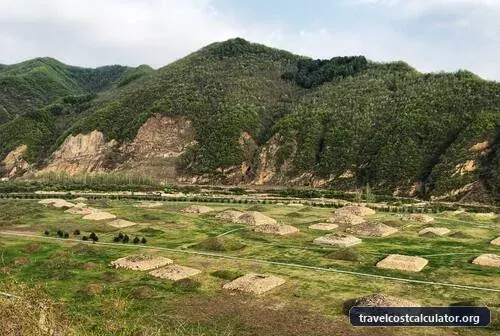
The site includes archaeological remains of three cities and 40 tombs: Wunu Mountain City, Guonei City and Wandu Mountain City, 14 tombs are imperial, 26 of nobles.
Capital Cities and Tombs of the Ancient Koguryo Kingdom
🏛️ Overview & Historical Significance
Inscribed as a UNESCO World Heritage site in 2004, the Capital Cities and Tombs of the Ancient Koguryo Kingdom represent an extraordinary architectural and cultural legacy located across Ji'an (Jilin Province) and Huanren (Liaoning Province) in Northeast China. Spanning from 37 BCE to 668 CE, the Koguryo (Goguryeo) Empire was one of the most powerful ancient kingdoms in East Asia, ruling vast stretches of the Korean Peninsula and Manchuria. The UNESCO-listed archaeological zone encompasses 40 distinct sites, including 3 capital city ruins and 37 preserved tombs (14 imperial tombs and 23 noble tombs).
The historical genius of the Koguryo kingdom lies in its revolutionary dual-capital defensive system. Unlike contemporary civilizations that relied solely on lowland settlements, Koguryo rulers established paired capitals: a plain city for administration and peacetime commerce paired with a nearby mountain fortress city for military retreat during invasions. Visitors today can explore Wunü Mountain City (the kingdom's inaugural capital, Jolbon), Guannei City (the secondary lowland capital), and Wandu Mountain City (the surrounding defensive stronghold).
Among the most iconic structures within the UNESCO cluster are:
-
✦
The General's Tomb (Jiangjunzhong): Frequently hailed by archaeologists as the "Pyramid of the East," this magnificent 7-tiered stepped pyramid is constructed from 1,100 perfectly dressed granite blocks, housing the burial chamber of King Jangsu (394–491 CE).
-
✦
The Haotaiwang Stele & Tomb: A monolithic 6.39-meter-tall granite monument erected in 414 CE to honor King Gwanggaeto the Great. Inscribed with 1,775 Classical Chinese characters, it serves as the definitive primary textual source for early East Asian geopolitical history.
-
✦
The Noble Mural Tombs (e.g., Ohoe Tomb No. 5): Renowned for their vibrant subterranean wall paintings depicting celestial constellations, mythic guardians (the Blue Dragon, White Tiger, Vermilion Bird, and Black Tortoise), and elaborate scenes of daily 5th-century life.
Recognized by UNESCO under criteria (i), (ii), (iii), (iv), and (v), these monuments capture a sophisticated synthesis of indigenous Koguryo engineering, Han Dynasty cultural influences, and early Buddhist aesthetics. For cultural travelers and history enthusiasts in 2026, visiting this remote corner of Dongbei (Northeast China) offers an unmatched look into an empire that shaped northern Asia for over seven centuries.
🎟️ Entrance Fees, Opening Hours & Ticket Booking Tips
Planning your ticketing strategy for the Koguryo Heritage Complex requires understanding that the sites are spread across two different administrative counties: Ji'an City (home to the majority of tombs and mountain fortresses) and Huanren County (home to Wunü Mountain City). In 2026, scenic area management in Jilin and Liaoning utilizes streamlined digital ticketing alongside mandatory physical passport verification for foreign travelers.
2026 Estimated Entrance Fees
-
✦
Ji'an Koguryo Archaeological Heritage Park Combo Ticket: ¥120 RMB (~$17.00 USD) per adult. Includes entry to the General's Tomb, Wandu Mountain City, Haotaiwang Tomb & Stele, and the Ji'an Museum. Valid for 2 consecutive days.
-
✦
Individual Site Tickets (if purchased separately in Ji'an):
- General's Tomb (Jiangjunzhong): ¥40 RMB (~$5.60 USD)
-
✦
Wandu Mountain City: ¥40 RMB (~$5.60 USD)
-
✦
Haotaiwang Tomb & Stele: ¥30 RMB (~$4.20 USD)
-
✦
Ji'an Museum: ¥30 RMB (~$4.20 USD)
Operating Hours (Seasonal Schedule)
-
✦
Peak Season (May 1 – October 31): 08:00 – 17:30 (Ticket offices close at 16:30).
-
✦
Low Season (November 1 – April 30): 08:30 – 16:30 (Ticket offices close at 15:30).
Essential 2026 Booking & Reservation Tips
Passport Requirement: Ticket validation is tied directly to your official passport number. You must carry your original physical passport to gain entry at each site gate; photocopies or digital scans are generally rejected by automated turnstiles.
Digital Payment Integration: Cash acceptance at ticket booths is extremely limited. Ensure your Alipay or WeChat Pay app is bound to your international credit card (Visa/Mastercard integration functions smoothly across Jilin Province). Alternatively, non-Chinese speakers can reserve tickets in advance via international travel platforms like Trip.com.
Concessions & Discounts: Seniors aged 60–69 receive a 50% discount on standard entry rates upon presenting a valid passport. Visitors aged 70 and above, as well as children under 1.2 meters (3.9 feet), are eligible for free entry (though small internal shuttle fees may still apply).
🚌 How to Get There & Local Transit Costs
Located in the southern corner of Jilin Province along the Yalu River border with North Korea, Ji'an is most conveniently accessed via regional transportation hubs such as Shenyang (Liaoning Province) or Tonghua (Jilin Province).
Step 1: Reaching the Regional Hub (Tonghua or Shenyang)
Most international and domestic travelers fly into Shenyang Taoxian International Airport (SHE) or Changchun Longjia International Airport (CGQ).
-
✦
By High-Speed Train (HSR): Take the high-speed rail network to Tonghua West Railway Station (通化西站). High-speed bullet trains run daily from Shenyang North (~2.5 hours, ¥100–¥130 RMB / ~$14–$18 USD) and Beijing Travel Budget朝阳 (~5 hours, ¥320–¥380 RMB / ~$45–$53 USD).
Step 2: Onward Travel to Ji'an City
-
✦
Connecting Train: Regular regional trains run directly from Tonghua to Ji'an Railway Station (~1 hour 15 minutes, ¥16.5 RMB / ~$2.30 USD).
-
✦
Express Long-Distance Bus: Intercity buses depart Tonghua Passenger Station for Ji'an every 30 minutes between 06:30 and 17:00 (~1.5 hours, ¥25 RMB / ~$3.50 USD).
-
✦
Private Intercity Taxi: A direct private transfer from Tonghua city center to Ji'an costs approximately ¥180–¥240 RMB (~$25–$34 USD) one way.
Getting Around Ji'an Local Sites
The historical monuments around Ji'an are scattered across a 15-kilometer radius surrounding the town center:
-
✦
Private Taxi Charter (Recommended): Hiring a local taxi driver for a full-day tour of all four major Koguryo sites in Ji'an costs between ¥200 and ¥300 RMB (~$28–$42 USD). Drivers will wait for you at each gate while you explore.
-
✦
Public Bus Routes: City Bus No. 5 connects central Ji'an to the General's Tomb and Wandu Mountain City for ¥2 RMB (~$0.30 USD) per trip, though departures can be sporadic outside of summer months.
-
✦
Transit to Wunü Mountain City (Huanren): To reach the Huanren portion of the UNESCO site from Ji'an, take an intercity coach from Ji'an Bus Station to Huanren County (~2 hours, ¥45 RMB / ~$6.30 USD), followed by a 15-minute local taxi ride (¥20 RMB / ~$2.80 USD) to the park gate.
📸 Best Photography Spots & Insider Visit Hacks
To capture stunning visual content while avoiding tourist bottlenecks, smart timing and spatial strategy are key when exploring these ancient stone complexes.
Top Photography Angles & Vantage Points
-
✦
The South-East Axis of General's Tomb: Position yourself at the southeastern corner of the stepped pyramid during early morning light (08:15 – 09:30 AM). The low sun angle highlights the hand-chiseled texture of the giant granite megaliths against the dramatic silhouette of Mount Longwei in the background.
-
✦
Wandu Mountain City Fortress Crest: Hike up to the South Gate wall ruins at Wandu Mountain City during golden hour (16:00 – 17:00 PM). The elevated ridge offers a sweeping panoramic view of the entire valley amphitheater, original stone ramparts, and the winding Tonggou River below.
-
✦
Yalu River Promenade at Sunset: Head to Ji'an's riverfront park in the late afternoon. You can frame the ancient border waters with North Korea's mountainous Manpo coastline directly across the river, framed by autumnal ginkgo trees.
Insider Visit Hacks
Optimal Seasonal Window: The Best Time to Visit Planner is during late September to mid-October. Northeast China experiences vibrant autumn foliage, crisp blue skies, and mild daytime temperatures (12°C to 20°C). May through June is also pleasant with blooming alpine flora. Avoid late December through February unless you are prepared for extreme sub-zero weather (-15°C to -25°C).
Beating the Tour Groups: Large Chinese tour buses typically arrive at the General's Tomb around 10:00 AM. Arrive right at opening time (08:00 AM) to experience the monumental stone pyramid in serene solitude.
Mural Protection & Photography Protocols: Due to sensitive preservation requirements, entry inside original subterranean tomb chambers (such as Ohoe Tomb No. 5) is strictly regulated or periodically closed to regulate ambient humidity. Flash photography is strictly banned inside all ancient tomb structures. For high-resolution study of the tomb murals, the Ji'an Museum features precise 1:1 scale architectural replicas with optimized lighting designed for photography.
🏨 Nearby Accommodation & Daily Budget Allocation
Ji'an is a peaceful, walkable border town offering high-value lodging and authentic regional dining that blends traditional Dongbei (Northeastern Chinese) cooking with Korean ethnic culinary traditions.
Recommended Places to Stay in Ji'an
-
✦
Budget: Ji'an Youth Guesthouse / Family Inns – Clean, basic private rooms near the Yalu River parkway. (Price range: ¥120 – ¥180 RMB / $17 – $25 USD per night).
-
✦
Mid-Range: Ji'an Hongjian Hotel or Ji'an International Hotel – Comfortable modern hotels offering spacious rooms, Western-style breakfasts, air conditioning, and English-capable front desk translation apps. (Price range: ¥280 – ¥450 RMB / $39 – $63 USD per night).
-
✦
Boutique / Riverview: Ji'an Yalu River Resort & Spa Hotel – Upscale accommodations featuring balconies overlooking the Yalu River and North Korean mountains. (Price range: ¥600 – ¥950 RMB / $84 – $133 USD per night).
Local Food & Culinary Highlights
Don't miss sampling local specialties: Ji'an Korean Cold Noodles (Naengmyeon / 冷面) served in ice-chilled sweet and savory broth, Northeastern Charcoal Barbecue (Dongbei Chuan'er), wild mountain fern dishes, and locally produced Ji'an Ice Wine (crafted from cold-climate Amur grapes grown in the surrounding river valleys). A hearty dinner costs around ¥40–¥80 RMB ($6–$11 USD) per person.
Estimated Daily Budget Allocations (2026)
Below is a breakdown of estimated daily expenditures based on your travel style:
-
✦
Backpacker Budget Planner: ~$40 to $55 USD / day (¥280 – ¥390 RMB)
- Accommodation: Shared room/Budget inn ($18 USD)
-
✦
Food: Street stalls, cold noodles, local diners ($12 USD)
-
✦
Transport: Local city buses & shared rides ($5 USD)
-
✦
Sightseeing: 2-day combo ticket spread out ($15 USD)
- Accommodation: 3-Star or 4-Star Central Hotel ($50 USD)
- Accommodation: Luxury Riverview Resort ($120 USD)
Frequently Asked Questions
Essential visitor FAQs for Capital Cities and Tombs of the Ancient Koguryo Kingdom
What is the entrance fee for Capital Cities and Tombs of the Ancient Koguryo Kingdom?
How much time do you need to explore Capital Cities and Tombs of the Ancient Koguryo Kingdom?
How do I get to Capital Cities and Tombs of the Ancient Koguryo Kingdom from the nearest city?
📊 Heritage Quick Specs
Visiting China on a Budget?
Calculate your full daily travel budget for China — including hotel costs, local transport, food, and sightseeing expenses.
View China Daily Travel Costs →Explore more UNESCO World Heritage Sites
🏛️ All 1,200+ Heritage Sites →