
 India
India
Buddhist Monuments at Sanchi
On a hill overlooking the plain and about 40 km from Bhopal, the site of Sanchi comprises a group of Buddhist monuments (monolithic pillars, palaces, temples and monasteries) all in different states of conserva...
Buddhist Monuments at Sanchi
🏛️ Overview & Historical Significance
Perched on a quiet, hilltop plateau in the Raisen district of Madhya Pradesh, the Buddhist Monuments at Sanchi represent one of the oldest and most remarkably preserved stone structure complexes in India. Designated as a UNESCO World Heritage Site in 1989, Sanchi is globally celebrated as the cradle of Buddhist art and architecture. The sanctuary offers an unbroken record of Buddhist artistic development spanning over 1,300 years—from the reign of the Mauryan Emperor Ashoka in the 3rd century BCE through the 12th century CE.
Curiously, historical records indicate that Lord Buddha never physically set foot in Sanchi. Emperor Ashoka chose this serene hilltop for several strategic and personal reasons: it offered contemplative isolation while sitting adjacent to Vidisha, a prosperous mercantile hub of ancient India. Furthermore, Vidisha was the home of Ashoka’s primary empress, Devi, who was a devoted Buddhist and oversaw the initial construction of the Great Stupa (Stupa 1).
The site’s historical evolution unfolds across major Indian dynasties:
-
✦
Mauryan Empire (3rd Century BCE): Emperor Ashoka established the foundational hemispherical brick mound encapsulating sacred relics of the Buddha, alongside his famous polished sandstone Monolithic Pillar featuring royal edicts.
-
✦
Shunga & Satavahana Dynasties (2nd–1st Century BCE): The original brick stupa was encased in stone, doubled in size, and embellished with four intricate stone gateways (Toranas) facing the cardinal directions, funded by ivory carvers and merchant guilds from Vidisha.
-
✦
Gupta Period (4th–5th Century CE): Marked a transition to classical Hindu-Buddhist temple architecture, notably seen in Temple 17, celebrated by architectural historians for its pristine structural proportions.
-
✦
19th-Century Rediscovery & Restoration: Left abandoned and overgrown after the 14th century, Sanchi was rediscovered in 1818 by British Officer General Taylor. Between 1912 and 1919, Sir John Marshall, then Director-General of Archaeology in India, systematically excavated and painstakingly restored the hill complex to its present glory.
UNESCO conferred World Heritage status on Sanchi for its unparalleled artistic mastery—specifically the stone carvings on the Toranas depicting the Jataka stories (previous lives of the Buddha). Crucially, the early reliefs exhibit an iconic aniconic phase, where the Buddha is never shown in human form but is represented symbolically by an umbrella, footprints, a vacant throne, or the Wheel of the Law (Dharmachakra).
🎟️ Entrance Fees, Opening Hours & Ticket Booking Tips
Planning your trip in 2026 requires understanding the Archaeological Survey of India (ASI) tiered pricing structure and digital ticketing systems. Cash payments at physical counters carry a surcharge, making online pre-booking highly advisable.
Official Ticket Prices (2026 Pricing)
-
✦
Indian Citizens, SAARC & BIMSTEC Visitors: ₹40 INR (~$0.50 USD) via online payment; ₹50 INR (~$0.60 USD) at the physical ticket window.
-
✦
Foreign Tourists: ₹600 INR (~$7.20 USD) via online payment; ₹650 INR (~$7.80 USD) at the physical ticket window.
-
✦
Children (Under 15 Years): Free entry for all nationalities (valid photo ID required).
-
✦
Sanchi Archaeological Museum Ticket: ₹10–₹20 INR ($0.12–$0.24 USD) additional entry fee.
-
✦
Still Camera & Smartphone Photography: Included in standard entry ticket (commercial tripod use requires advance written permission from ASI).
Opening Hours & Schedule
-
✦
Sanchi Monument Complex: Open daily from sunrise to sunset (typically 6:00 AM – 6:30 PM).
-
✦
Sanchi Archaeological Museum: Open 9:00 AM to 5:00 PM (CLOSED ON FRIDAYS). Plan your visit accordingly if you wish to see original excavated sculptures, including the shattered capital of Ashoka's pillar.
Pro Tips for Ticket Booking
Avoid queuing under the midday sun by booking digital tickets directly through the official ASI gateway or scanning the QR codes posted at the base of Sanchi Hill. Cellular connectivity (Jio and Airtel networks) is stable at the entrance plaza, allowing quick online checkout via credit card or UPI.
🚌 How to Get There & Local Transit Costs
Sanchi is located in central Madhya Pradesh. The primary transit springboard for international and domestic travelers is Bhopal, the state capital, situated approximately 46 kilometers (28 miles) southwest of the monuments.
Step-by-Step Transport Options from Bhopal
1. By Private Taxi / Cab (Most Convenient)
Hiring a private vehicle from Bhopal allows you to combine Sanchi with nearby historical sites such as the 5th-century rock-cut Udayagiri Caves (18 km from Sanchi) and the ancient heliodorus pillar in Vidisha.
-
✦
Cost (Sedan/SUV Day Rental): ₹2,200 – ₹3,200 INR ($26 – $38 USD) for an 8-hour / 80-km package including fuel and toll fees.
-
✦
Travel Time: Approximately 1 hour to 1 hour 15 minutes via the well-paved Bhopal-Sanchi Road (NH-146).
2. By Train (Best Value for Money)
Sanchi has its own small railway station (Station Code: SNC), situated right at the foot of the hill (15 minutes walk to the ticket counter). While major express trains bypass Sanchi, several local MEMU and passenger trains ply the Bhopal-Sanchi route daily.
-
✦
Route: Board at Bhopal Junction (BPL) or Rani Kamlapati Railway Station (RKMP) to Sanchi (SNC).
-
✦
Cost: ₹30 – ₹100 INR ($0.35 – $1.20 USD) for Second Class Unreserved or General Express tickets.
-
✦
Travel Time: 45 to 60 minutes.
-
✦
Alternative Route: Take a high-speed express train from Bhopal to Vidisha (VGLJ line) (cost: ₹70–₹150 INR), then hire an auto-rickshaw to Sanchi for ₹250–₹350 INR ($3.00–$4.20 USD).
3. By Public Bus (Budget Pick)
Regular state-run (MPSRTC) and private buses run frequently from Bhopal’s Nadra Bus Stand or the ISBT (Inter-State Bus Terminal) toward Vidisha, passing directly by the Sanchi entrance turnoff.
-
✦
Cost: ₹60 – ₹100 INR ($0.70 – $1.20 USD) per person, one way.
-
✦
Travel Time: 1.5 hours depending on city traffic exiting Bhopal.
📸 Best Photography Spots & Insider Visit Hacks
To capture the grandeur of early Indian stone masonry, strategic timing and positioning are essential. The white and light-red sandstone structures respond dramatically to shifting natural light.
Top Photography Angles
-
✦
The Southern Gateway (Torana): The oldest and most detailed gateway. Capture it framed against the dramatic hemispherical dome of Stupa 1 during early morning light. Look for detailed carvings depicting Emperor Ashoka’s pilgrimage to the Bodhi Tree.
-
✦
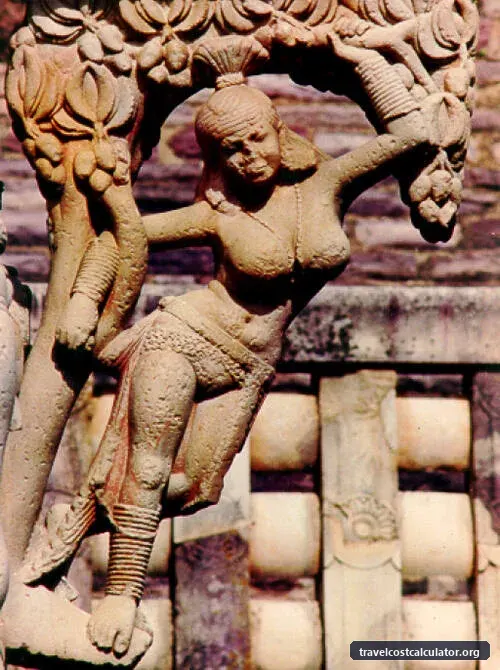
The Eastern Gateway & Shalabhanjika Yakshi: Photographers flock here to capture the famous bracket sculpture of the Shalabhanjika (tree nymph), sculpted with astonishing grace. Frame this bracket against the clear blue sky using a mid-range zoom lens (50mm–85mm).
-
✦
Temple 18 (Greek-Style Peristyle Columns): Positioned south of Stupa 1, these classical horseshoe-shaped columns resemble ancient Mediterranean architecture. Photograph late in the afternoon to capture long, dramatic shadows stretching across the stone floor.
-
✦
Stupa 2 Hillside View: Situated slightly down the hill slope, Stupa 2 offers elevated vantage points looking back up toward the main cluster of monuments, ideal for wide-angle landscape shots.
Insider Hacks to Avoid Crowds & Heat
-
✦
Ideal Season to Visit: October through March. Winter temperatures range between 12°C and 26°C (53°F – 78°F), providing pleasant walking conditions. Avoid April to June, when temperatures regularly top 42°C (108°F), making the stone courtyard uncomfortably hot.
-
✦
The Sunrise Strategy: Arrive at the gates by 6:15 AM. You will experience the sacred grounds in near total solitude before tour buses arrive from Bhopal around 10:00 AM.
-
✦
Footwear Logistics: Visitors are required to remove shoes when walking on the stone circumambulatory paths (Pradakshina Patha) immediately surrounding the Stupas. Bring a thick pair of socks in your daypack to protect your feet from heat during sunny hours.
🏨 Nearby Accommodation & Daily Budget Allocation
Travelers visiting Sanchi can choose to stay right in Sanchi village for a peaceful rural ambiance, or base themselves in Bhopal, which offers a broader range of lodging options.
Recommended Accommodations Near Sanchi
-
✦
Budget / Backpackers: Sanchi Travelers Lodge / Local Guesthouses (₹1,000 – ₹1,800 INR / $12 – $22 USD per night). Clean, modest rooms within walking distance of the train station and monuments.
-
✦
Mid-Range / Heritage Standard: MPT Gateway Retreat, Sanchi (MP Tourism Property) (₹3,200 – ₹5,500 INR / $38 – $66 USD per night). Landscaped gardens, comfortable air-conditioned cottages, and an on-site restaurant serving local Malwa thalis.
-
✦
Luxury Base in Bhopal: Jehan Numa Palace Hotel or Taj Lakefront Bhopal (₹12,000 – ₹22,000 INR / $144 – $265 USD per night). Historic luxury situated 45 km from Sanchi, ideal for high-end cultural tours.
2026 Estimated Daily Budget Allocations
| Traveler Profile | Daily Cost (INR) | Daily Cost (USD) | Includes |
|---|---|---|---|
| Budget Backpacker | ₹1,500 – ₹2,500 | $18 – $30 | Local train/bus transit, local guesthouse stay, ASI online ticket, local thali meals. |
| Mid-Range Traveler | ₹5,000 – ₹9,500 | $60 – $114 | MPT hotel in Sanchi, private day-cab Split Travel Budget, museum entry, sit-down restaurant dining. |
| Luxury Cultural Traveler | ₹18,000 – ₹32,000+ | $216 – $385+ | 5-star hotel in Bhopal, private chauffeur SUV, licensed official ASI guide, fine dining. |
Frequently Asked Questions
Essential visitor FAQs for Buddhist Monuments at Sanchi
What is the entrance fee for Buddhist Monuments at Sanchi?
How much time do you need to explore Buddhist Monuments at Sanchi?
How do I get to Buddhist Monuments at Sanchi from the nearest city?
📊 Heritage Quick Specs
Visiting India on a Budget?
Calculate your full daily travel budget for India — including hotel costs, local transport, food, and sightseeing expenses.
View India Daily Travel Costs →Explore more UNESCO World Heritage Sites
🏛️ All 1,200+ Heritage Sites →