
 Brazil
ian Atlantic Islands: Fernando de Noronha and Atol das Rocas Reserves
Peaks of the Southern Atlantic submarine ridge form the Fernando de Noronha Archipelago and Rocas Atoll off the coast of Brazil.
Brazilian Atlantic Islands: Fernando de Noronha and Atol das Rocas Reserves
🏛️ Overview & Historical Significance
Inscribed as a UNESCO World Heritage site in 2001, the Brazilian Atlantic Islands: Fernando de Noronha and Atol das Rocas Reserves represent one of the planet's most vital oceanic sanctuaries. Located off the northeastern coast of Brazil, this remote marine realm comprises two main components: the volcanic archipelago of Fernando de Noronha (21 islands and islets) and the Atol das Rocas Biological Reserve, Brazil's only ocean atoll. Together, these reserves protect critical breeding grounds, nursery zones, and feeding environments for Atlantic marine life.
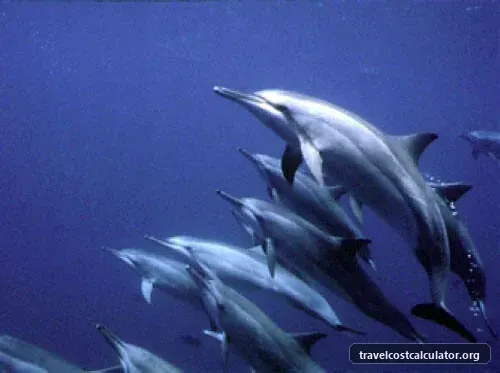
UNESCO granted World Heritage status based on the region's extraordinary biodiversity and ecological importance. The rich, nutrient-dense waters serve as a key habitat for resident populations of spinner dolphins, green and hawksbill sea turtles, reef sharks, and over 230 species of fish. Additionally, it shelters the largest concentration of tropical seabirds in the Western South Atlantic.
Historically, Fernando de Noronha played strategic military and penal roles. Discovered in 1503 by Amerigo Vespucci (or Fernão de Loronha, its Portuguese namesake), the main island transitioned from a pirate haven to a heavily fortified outpost guarded by ten stone forts built in the 18th century. It later served as a high-security prison colony and a World War II military base. Today, the human footprint is strictly regulated. While Atol das Rocas is an absolute biological reserve completely closed to general tourism (accessible only to authorized scientific researchers), Fernando de Noronha offers a world-class model of controlled eco-tourism designed to preserve its fragile environment for generations to come.
🎟️ Entrance Fees, Opening Hours & Ticket Booking Tips
Visiting Fernando de Noronha requires navigating a dual-tier fee structure instituted by the Brazilian government to limit human impact. Note: Atol das Rocas cannot be visited by regular tourists under any circumstances. Below are the updated 2026 rates and logistics for Fernando de Noronha:
1. Environmental Preservation Tax (TPA - Taxa de Preservação Ambiental)
The TPA is a mandatory, progressive daily tax levied by the State of Pernambuco on all visitors staying on Fernando de Noronha.
-
✦
2026 Estimated Rate: R$ 105.50 per day (approx. $19.50 - $21.00 USD per person per day).
-
✦
Payment Details: The tax increases progressively if you overstay your declared duration without approval. It is strongly advised to pay online via the official Pernambuco state portal (noronha.pe.gov.br) before departure to skip the long payment queues at Fernando de Noronha Airport (FEN).
2. Fernando de Noronha Marine National Park Ticket (PARNAMAR)
Managed by ICMBio, this ticket grants physical entry to the protected marine zones, including top beaches like Baía do Sancho, Baía dos Porcos, Praia Travel Budget do Leão, and the Atalaia trail system.
-
✦
Foreign Visitors Rate (2026): R$ 373.00 (approx. $68.00 - $72.00 USD).
-
✦
Brazilian Citizens Rate (2026): R$ 186.50 (approx. $34.00 - $36.00 USD).
-
✦
Validity: 10 consecutive days from activation.
-
✦
Booking Tips: Purchase your ticket online ahead of time on the official ICMBio portal or at the local visitor kiosks (located at Boldró, Vila dos Remédios, or Praia do Sueste). You will receive a plastic visitor card or digital QR pass that must be scanned at beach check-in posts.
Opening Hours & Schedule Hacks
-
✦
National Park Gates: Open daily from 8:00 AM to 6:30 PM.
-
✦
Atalaia Tide Pool Trail: Strictly limited to daily quotas based on low tide times. You must schedule your slot in person at the ICMBio Visitor Center in Vila do Boldró up to 6 days prior to your intended hike. Slots open at 3:30 PM daily and fill up within minutes.
🚌 How to Get There & Local Transit Costs
Because of its remote position 354 km (220 miles) off Brazil's coast, reaching Fernando de Noronha requires planning around daily flight allowances.
Step 1: Flights to Fernando de Noronha (FEN)
There are no public passenger ferries to the island; air travel is the sole entry point for commercial travelers. Flights depart daily from two main mainland hubs in Northeast Brazil:
-
✦
Recife (REC): Direct flight operated by Azul / Voepass (~1 hour 15 minutes). 2026 roundtrip fare: $350 – $650 USD.
-
✦
Natal (NAT): Direct flight options (~1 hour 10 minutes). 2026 roundtrip fare: $320 – $600 USD.
Step 2: Island Transport & Transit Pricing (2026 Estimates)
Fernando de Noronha features just one paved road—the BR-363, the shortest federal highway in Brazil at only 7.9 kilometers long. Options for moving around include:
-
✦
Public Bus (Ônibus): The island bus shuttles back and forth along the BR-363 from Sueste to Porto de Santo Antônio every 30 minutes between 6:00 AM and 11:00 PM. Flat rate: R$ 7.00 ($1.30 USD) per trip.
-
✦
Dune Buggy Rental: The classic local vehicle. Ideal for navigating dirt side trails leading to secluded beaches. Rental cost: R$ 350 – R$ 550 per day ($65 – $100 USD), excluding fuel (~R$ 9.50 per liter).
-
✦
Taxis: Fixed-rate tariffs apply across specific island zones. Average ride between Vila dos Remédios and Baía do Sancho costs R$ 45 – R$ 70 ($8 – $13 USD).
-
✦
E-Bikes & Scooter Rentals: Eco-friendly options available near Vila dos Remédios for roughly R$ 150 – R$ 250 ($28 – $46 USD) per day.
📸 Best Photography Spots & Insider Visit Hacks
Capturing the pristine marine geology of Fernando de Noronha requires knowing tide times, seasonal water conditions, and strict park rules (e.g., flash photography, drones, and touch bans are stringently enforced).
Unmissable Photo Locations
-
✦
Baía do Sancho Cliff Viewpoint: Consistently ranked among the best beaches in the world. Photograph the sweeping crescent bay from the wooden boardwalks atop the cliff before descending the famous vertical iron ladder squeezed between rock crevices.
-
✦
Baía dos Porcos & Morro Dois Irmãos: The quintessential postcard image of Brazil. Frame the iconic twin volcanic rock towers ("Morro Dois Irmãos") against the emerald tidal pools of Baía dos Porcos. Best light: Late afternoon (around 3:30 PM to 5:00 PM).
-
✦
Forte dos Remédios: The highest elevated hilltop fortress near the main town. Offers a panoramic 360-degree sunset view overlooking Conceição beach and the inner sea.
-
✦
Mirante dos Golfinhos (Dolphin Bay Lookout): Bring a telephoto camera lens. Arrive at sunrise (5:30 AM – 7:00 AM) to photograph hundreds of spinner dolphins returning to the calm bay to rest and play.
Seasonal & Insider Visit Hacks
-
✦
Water Visibility vs. Surf Seasons: Visit between August and December for glassy waters, optimal underwater visibility (up to 50 meters), and ideal conditions for scuba diving. From January to March, Atlantic swells bring massive waves, making it a world-class surfing destination ("the Brazilian Hawaii"), though visibility for marine snorkeling drops.
-
✦
Tide Timing is Everything: Natural tidal pools at Atalaia, Buraco do Airton, and Lasca da Velha are only accessible at extreme low tide. Always consult local tide tables before planning daily beach excursions.
-
✦
Sunscreen Restrictions: Standard reef-injurious sunscreens are banned in tidal pool areas. Bring certified ocean-safe, biodegradable zinc sunblock.
🏨 Nearby Accommodation & Daily Budget Allocation
Due to environmental regulations, large resort chains are strictly prohibited on Fernando de Noronha. Accommodation consists primarily of family-run pousadas (guesthouses) ranging from rustic stays to ultra-exclusive eco-lodges.
Accommodation Tier Breakdown (2026 Projections)
-
✦
Budget Pousadas (Hostel/Shared or Simple Private Room): Located mainly around Vila dos Remédios or Vila do Floresta. Expect basic amenities, air conditioning, and fresh breakfast. $70 – $130 USD per night.
-
✦
Mid-Range Boutique Pousadas: Charming lodges featuring private verandas, tropical gardens, and personalized service (e.g., Pousada Beco de Noronha, Pousada Ze Maria). $180 – $380 USD per night.
-
✦
Luxury Eco-Resorts: High-end luxury properties overlooking the ocean with private infinity pools and gourmet dining (e.g., Pousada Maravilha, Nannai Noronha). $650 – $1,400+ USD per night.
Food & Dining Costs
Because nearly all ingredients must be shipped or flown in from the Brazilian mainland, dining on the island comes at a premium.
-
✦
Budget Meals (PF - Prato Feito / Buffet): R$ 50 – R$ 80 ($9 – $15 USD) per plate at local eateries in Vila dos Remédios.
-
✦
Mid-Range Seafood Restaurants: Fresh fish (like yellowfin tuna or wahoo) or Brazilian moqueca (seafood stew) costs R$ 130 – R$ 230 ($24 – $42 USD) per main course.
-
✦
Groceries: Small island supermarkets carry essential snacks and bottled water, though items cost roughly 50-80% more than mainland prices.
Estimated Daily Budget Profiles (2026)
-
✦
Backpacker / Smart Saver: $140 – $180 USD / day (Hostel/simple pousada, public bus transit, local PF meals, amortized TPA & park entrance fees).
-
✦
Mid-Range Traveler: $300 – $500 USD / day (Mid-range pousada, shared buggy/taxi rides, guided diving/boat tours, comfortable seafood dining).
-
✦
Luxury Connoisseur: $850 – $1,800+ USD / day (Top-tier luxury eco-lodge, private buggy, private boat charters, fine dining).
Frequently Asked Questions
Essential visitor FAQs for Brazilian Atlantic Islands: Fernando de Noronha and Atol das Rocas Reserves
What is the entrance fee for Brazilian Atlantic Islands: Fernando de Noronha and Atol das Rocas Reserves?
How much time do you need to explore Brazilian Atlantic Islands: Fernando de Noronha and Atol das Rocas Reserves?
How do I get to Brazilian Atlantic Islands: Fernando de Noronha and Atol das Rocas Reserves from the nearest city?
📊 Heritage Quick Specs
Visiting Brazil on a Budget?
Calculate your full daily travel budget for Brazil — including hotel costs, local transport, food, and sightseeing expenses.
View Brazil Daily Travel Costs →Explore more UNESCO World Heritage Sites
🏛️ All 1,200+ Heritage Sites →