
 Indonesia
Borobudur Temple Compounds
This famous Buddhist temple, dating from the 8th and 9th centuries, is located in central Java.
Borobudur Temple Compounds
🏛️ Overview & Historical Significance
Rising majestically out of the lush Kedu Valley in Central Java, Borobudur Temple Compounds stands as the world's largest Buddhist monument and one of Southeast Asia's greatest architectural wonders. Constructed between the 8th and 9th centuries during the reign of the Syailendra Dynasty, this massive stone mandala predates Cambodia's Angkor Wat by over three centuries. Built from roughly 2 million cubic feet of volcanic stone quarried from local riverbeds, the monument reflects a sophisticated fusion of indigenous Indonesian ancestor worship and Indian Mahayana Buddhist cosmology.
The entire compound is designed as a three-dimensional model of the universe divided into three distinct vertical realms:
-
✦
Kamadhatu (The Realm of Desire): Represented by the hidden base of the temple, featuring 160 relief panels depicting the human sphere of earthly cravings and the law of karma.
-
✦
Rupadhatu (The Realm of Forms): Comprising five square terraces where visitors navigate narrow open-air corridors lined with 1,300 intricate bas-reliefs illustrating the life of Buddha (Lalitavistara) and legendary tales (Jataka).
-
✦
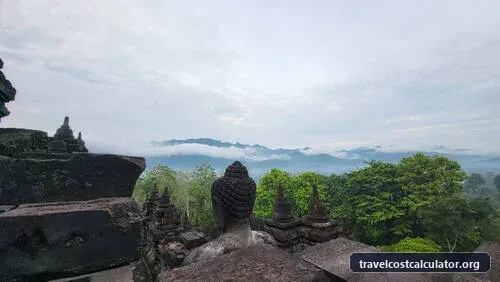
Arupadhatu (The Realm of Formlessness): Consisting of three circular upper platforms hosting 72 perforated bell-shaped stupas, each housing a seated Buddha statue, all surrounding a massive central stupa representing enlightenment.
In 1991, UNESCO inscribed the Borobudur Temple Compounds as a World Heritage site under Criteria (i), (ii), and (vi). UNESCO recognized it as a masterpiece of Buddhist architecture and monumental arts, an extraordinary witness to Central Javanese artistic revival between the 8th and 10th centuries, and an enduring symbol of spiritual pilgrimage. The designation encompasses not only the main Borobudur temple but also two smaller companion temples aligned in a precise 3-kilometer straight line: Mendut Temple (housing a monumental 3-meter seated stone Buddha) and Pawon Temple.
Abandoned around the 14th century following the fall of Hindu-Buddhist kingdoms and volcanic eruptions from nearby Mount Merapi, Borobudur lay hidden beneath layers of volcanic ash and dense jungle for centuries. It was re-discovered in 1814 by Sir Thomas Stamford Raffles and underwent a monumental $20-million UNESCO-led restoration project in the 1970s and 1980s, which stabilized the foundations and disassembled over 1 million stone blocks to install modern drainage systems.
🎟️ Entrance Fees, Opening Hours & Ticket Booking Tips
In 2026, visitor access to Borobudur remains strictly managed to prevent physical erosion of the ancient volcanic stone while delivering an educational, high-value experience. Ticket categories are divided into two distinct tiers: Grounds-Only (Pelataran) and Structure Access (Naik Candi).
2026 Ticket Pricing Breakdown
-
✦
Structure Access Ticket (Naik Candi Monument Tier):
- International Adult: IDR 500,000 (~$32.00 USD)
-
✦
International Child (Ages 3–10): IDR 350,000 (~$22.00 USD)
-
✦
Domestic Adult (Indonesian Citizen): IDR 150,000 (~$9.50 USD)
-
✦
Inclusions: Escalation to the top terraces, dedicated official heritage guide (grouped in up to 15 people), a souvenir tote bag, and mandatory woven eco-sandals called Upanat designed to protect the historic stonework.
- International Adult: IDR 385,000 (~$25.00 USD)
Opening Hours & Schedule Constraints
-
✦
Park Grounds Hours: Daily from 06:30 AM to 05:00 PM.
-
✦
Temple Structure Access Slots: Hourly operational slots run from 08:30 AM to 03:30 PM.
-
✦
Monday Maintenance Closure: The physical temple structure (climbing area) is CLOSED on Mondays for conservation maintenance and stone washing. Grounds-only access remains open on Mondays.
Crucial 2026 Ticket Booking Tips
To preserve the structure, government conservation authorities maintain a strict daily quota cap of 1,200 visitors per day allowed onto the upper monument structure. Structure tickets frequently sell out 1 to 2 weeks in advance during high season (June to August) and holiday periods.
You must pre-book your timed slot online via the official Indonesian heritage portal (ticket.borobudurpark.com). When booking, select your preferred hourly climbing slot. Ensure you bring your passport for identity verification matching your booking confirmation. Arrive at the main visitor center at least 30 minutes before your booked time slot to collect your Upanat sandals and meet your assigned certified guide.
🚌 How to Get There & Local Transit Costs
Borobudur is located in the Magelang Regency of Central Java, approximately 42 kilometers (26 miles) northwest of the cultural hub city of Yogyakarta, which serves as the primary gateway for international and domestic travelers.
1. Direct Airport Shuttle Bus (DAMRI)
If arriving at Yogyakarta International Airport (YIA) in Kulon Progo, state transport operator DAMRI runs direct air-conditioned minibuses straight to the Borobudur Bus Terminal.
-
✦
Fare: IDR 80,000 (~$5.00 USD) per person, one-way.
-
✦
Travel Time: 60 to 75 minutes.
-
✦
Frequency: Every 60 minutes from early morning to evening.
2. Private Car Hire with Driver (Most Convenient for Groups)
Renting a private vehicle with an English-speaking driver for 10 to 12 hours is the most popular, hassle-free option. This allows you to combine Borobudur, Punthuk Setumbu sunrise, Pawon/Mendut temples, and Prambanan in a single day.
-
✦
Cost: IDR 600,000 to IDR 750,000 (~$38.00 - $48.00 USD) full-day rate including vehicle, driver, and petrol (parking/tolls extra).
-
✦
Travel Time: 60 to 75 minutes one-way from downtown Yogyakarta.
3. Ride-Hailing Apps (Grab / Gojek)
On-demand cars via Grab or Gojek operate seamlessly between Yogyakarta city center and Borobudur.
-
✦
Fare: IDR 250,000 to IDR 320,000 (~$16.00 - $20.00 USD) one-way.
-
✦
Tip: While getting a driver from Yogyakarta to Borobudur is easy, securing a ride back to Yogyakarta late in the afternoon directly from Borobudur can take longer. Arrange a return pick-up or request your driver to wait for an agreed extra fee.
4. Public Bus Transit (Budget Option)
Backpackers can take a local TransJogja bus to Jombor Bus Terminal in northern Yogyakarta, then transfer to a local public bus bound for Borobudur Terminal (located 1 km from the temple entrance).
-
✦
Total Transit Cost: IDR 25,000 to IDR 35,000 (~$1.60 - $2.20 USD).
-
✦
Travel Time: 1.5 to 2 hours depending on local traffic.
📸 Best Photography Spots & Insider Visit Hacks
Prime Photography Locations
-
✦
Punthuk Setumbu Hill (Sunrise Viewpoint): Located 4 km west of the temple, this forest hill offers a iconic vantage point. Arrive by 05:00 AM to watch the morning sun rise behind Mount Merapi and Mount Merbabu, casting rays over the mist-covered canopy with the stupas of Borobudur emerging from the sea of fog below. Entrance fee: IDR 50,000 (~$3.20 USD).
-
✦
The Upper Arupadhatu Terrace: Frame the central main stupa alongside the bell-shaped perforated stupas against the dramatic backdrop of the Menoreh Hills.
-
✦
Bas-Relief Gallery Corridors: Capture symmetry by shooting down the narrow stone corridors of the second or third Rupadhatu levels during golden hour.
-
✦
Mendut Temple Interior: Position your lens to catch natural light filtering into the dark inner chamber, illuminating the ancient 3-meter Dhyani Buddha stone statue.
Insider Visit Hacks
-
✦
Book the First Structure Slot (08:30 AM): Securing the earliest 08:30 AM climbing slot allows you to experience the monument before the midday equatorial heat peaks and long crowds accumulate on the narrow staircases.
-
✦
Dress Code Rules: Modest dress covering shoulders and knees is mandatory. Avoid heavy metal accessories, as security screenings are active. You will swap your shoes for the provided Upanat sandals prior to climbing.
-
✦
Weather Strategy: The dry season runs from May to October, with July and August bringing clear skies and deep blue horizons. The wet season (November to April) sees heavy afternoon downpours; carry a lightweight poncho and waterproof bag for camera gear if visiting during these months.
-
✦
Combine the Aligned Triad: Don't skip Mendut and Pawon temples. Purchase a combined local access ticket (IDR 25,000 / ~$1.60 USD) to explore these gems located directly on the same east-west alignment line as Borobudur.
🏨 Nearby Accommodation & Daily Budget Allocation
Whether you choose to stay in the serene countryside near Borobudur Village or base yourself in downtown Yogyakarta, options span from rustic homestays to five-star luxury resorts.
Accommodation Options
-
✦
Budget (Hostels & Homestays): Efata Homestay or Borobudur Heritage Homestay. Clean, family-run guesthouses located within walking distance of the temple entrance.
Cost: IDR 180,000 - IDR 320,000 (~$12.00 - $20.00 USD) per night. -
✦
Mid-Range (Boutique Hotels & Country Resorts): Sarasvati Borobudur Hotel or Janji Jiwa Resort. Features Dutch colonial or Javanese architecture, swimming pools, and manicured tropical gardens.
Cost: IDR 700,000 - IDR 1,400,000 (~$45.00 - $90.00 USD) per night. -
✦
Luxury (World-Class Heritage Resorts): Plataran Borobudur Resort & Spa or Amanjiwo. Offers ultra-exclusive private villas with unobstructed views of the temple stupas and Menoreh hills.
Cost: IDR 4,500,000 - IDR 18,000,000+ (~$290.00 - $1,150.00+ USD) per night.
Dining & Culinary Costs
Sampling regional Javanese food around Borobudur is affordable and high quality. Try local specialties like Tahu Kupat (fried tofu with rice cakes and sweet peanut sauce) and Gudeg (sweet jackfruit stew).
-
✦
Local Warungs: IDR 20,000 - IDR 40,000 (~$1.30 - $2.50 USD) per meal.
-
✦
Mid-Range Tourist Restaurants: IDR 100,000 - IDR 220,000 (~$6.50 - $14.00 USD) per meal with drinks.
Daily Budget Allocation Summary (Per Person)
-
✦
Backpacker Budget Planner: ~$35 – $50 USD / day (Local transport, homestay room, structure ticket, warung dining).
-
✦
Flashpacker / Mid-Range Budget: ~$90 – $160 USD / day (Private driver Split Travel Budget, 3-star resort, structure ticket with guide, sit-down dining).
-
✦
Luxury Budget: ~$450 – $1,200+ USD / day (Luxury resort suite, private door-to-door transfers, fine dining, private photography tour).
Frequently Asked Questions
Essential visitor FAQs for Borobudur Temple Compounds
What is the entrance fee for Borobudur Temple Compounds?
How much time do you need to explore Borobudur Temple Compounds?
How do I get to Borobudur Temple Compounds from the nearest city?
📊 Heritage Quick Specs
Visiting Indonesia on a Budget?
Calculate your full daily travel budget for Indonesia — including hotel costs, local transport, food, and sightseeing expenses.
View Indonesia Daily Travel Costs →Explore more UNESCO World Heritage Sites
🏛️ All 1,200+ Heritage Sites →