
 Iran
Bisotun
Bisotun is located along the ancient trade route linking the Iranian high plateau with Mesopotamia and features remains from the prehistoric times to the Median, Achaemenid, Sassanian, and Ilkhanid periods.
Bisotun
🏛️ Overview & Historical Significance
Etched into the towering limestone cliffs of Mount Bisotun along the ancient Silk Road trade route, the Bisotun World Heritage Site is one of human history's most profound epigraphic monuments. Situated in Iran’s Kermanshah Province, this multi-layered archaeological complex was officially inscribed as a UNESCO World Heritage site in 2006. It serves as a monumental chronicle of empires that shaped western Asia across thousands of years.
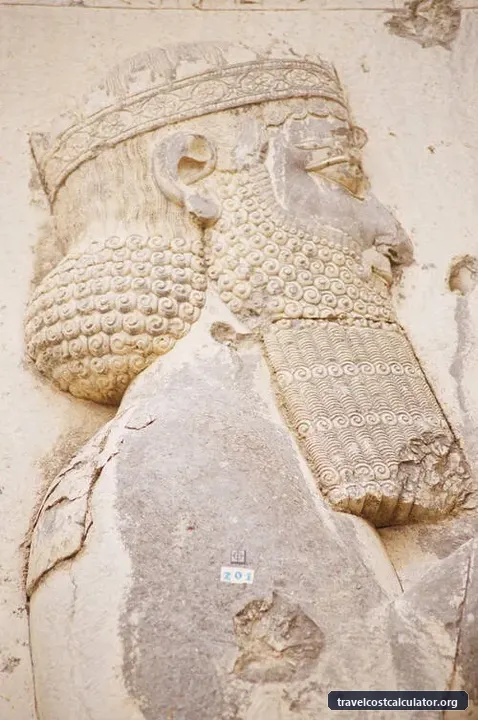
The centerpiece of Bisotun is the world-renowned Behistun Inscription, commissioned around 520 BCE by Darius I (Darius the Great) following his ascent to the throne of the Achaemenid Empire. Carved 100 meters above the valley floor on a sheer cliff face, the massive relief depicts Darius holding a bow, stepping on the usurper Gaumata, with nine chained rebel leaders standing before him under the protection of the Zoroastrian deity Ahura Mazda.
What makes Bisotun globally incomparable—and earned its 2006 UNESCO recognition—is its role as the "Rosetta Stone of Cuneiform Script." The inscription features the exact same text written in three distinct cuneiform languages: Old Persian, Elamite, and Akkadian (Babylonian). In the 19th century, British officer Sir Henry Rawlinson scaled the cliff to transcribe these texts, unlocking the key to deciphering ancient cuneiform and revealing millennia of Near Eastern history.
Beyond the Achaemenid relief, Bisotun is a multi-epoch archaeological sanctuary. Within the park’s boundary, visitors can discover:
-
✦
The Statue of Hercules: Carved in 148 BCE during the Seleucid era, portraying a reclining Hercules with a goblet in hand.
-
✦
Parthian Reliefs: Carvings of Kings Mithridates II and Gotarzes II dating back to the 1st century BCE.
-
✦
Ilkhanid & Safavid Caravanserais: Including the fully restored 17th-century Shah Abbasi Caravanserai, which once harbored Silk Road merchants.
-
✦
Prehistoric Caves: Paleolithic sites such as the Hunter's Cave, offering evidence of human habitation dating back tens of thousands of years.
🎟️ Entrance Fees, Opening Hours & Ticket Booking Tips
Visiting Bisotun in 2026 requires understanding Iran's dual-tier pricing system and local financial logistics. Because standard international credit and debit cards (Visa/Mastercard) do not function within Iran due to banking sanctions, advance planning is essential.
2026 Estimated Entrance Fees
-
✦
International Visitors: 1,500,000 – 2,500,000 IRR (~$4.00 – $8.00 USD / €3.70 – €7.50, depending on free-market exchange rates).
-
✦
Domestic / Iranian Visitors: 150,000 – 250,000 IRR (~$0.30 – $0.60 USD).
-
✦
Parking & Side Attractions: Minor additional fee of ~300,000 IRR ($0.75 USD) if arriving by private vehicle.
Opening Hours
-
✦
Spring & Summer (April – September): 8:00 AM – 7:00 PM daily.
-
✦
Autumn & Winter (October – March): 8:00 AM – 5:00 PM daily.
-
✦
Note: Hours may be shortened slightly during the holy month of Ramadan or national mourning days.
Crucial Financial & Booking Tips for 2026
-
✦
No International Credit Cards: You cannot pay with Visa, Mastercard, or foreign debit cards at the ticket counter. You must pay using Iranian Rial (IRR) cash or an Iranian prepaid tourist debit card (such as MahCard or Daric Card), which can be loaded at Tehran Travel Budget airports or major city exchanges.
-
✦
No Advance Online Booking Required: Tickets are sold directly at the main entrance gate. Queues are rarely long unless visiting during Nowruz (Iranian New Year, late March).
-
✦
Keep Your Ticket Stub: The ticket gives access to the entire complex, including the Hercules statue, Parthian reliefs, and caravanserai grounds.
🚌 How to Get There & Local Transit Costs
Bisotun is located approximately 30 kilometers (18.5 miles) northeast of Kermanshah, the regional hub of western Iran. Most travelers base themselves in Kermanshah and make a half-day excursion to the site.
Step 1: Reaching Kermanshah
-
✦
By Air: Flights connect Tehran (Mehrabad Airport - THR) to Kermanshah (KSH) daily. One-way flight prices in 2026 average $25 – $45 USD (approx. 45-minute flight).
-
✦
By VIP Bus: Comfortable 44-seat or 25-seat VIP buses run from Tehran’s West Bus Terminal (Azadi) to Kermanshah continuously. Journey time is about 6 to 7 hours and costs $5 – $8 USD per seat.
Step 2: Traveling from Kermanshah to Bisotun
-
✦
Option A: Ride-Hailing App (Snapp) — Recommended
Snapp (Iran’s equivalent of Uber) operates reliably in Kermanshah. A one-way ride directly from central Kermanshah to the main gate of Bisotun costs approximately 800,000 to 1,200,000 IRR ($2.00 – $3.50 USD). You will need an Iranian SIM card (Irancell or Hamrah-e Aval) to use the app. -
✦
Option B: Shared Taxi (Savari)
Head to Kermanshah's Azadi Square (Meidan-e Azadi). Yellow shared taxis (Savari) depart frequently for Bisotun town. A seat costs roughly 200,000 – 300,000 IRR ($0.50 – $0.80 USD) one-way. Get dropped off along the main highway right across from the site entrance. -
✦
Option C: Private Taxi Hire (Half-Day)
Hiring a private taxi from your Kermanshah hotel to drive you to Bisotun, wait for 3 hours, and return costs between $15.00 and $25.00 USD (negotiate and agree on the fare in advance).
📸 Best Photography Spots & Insider Visit Hacks
Prime Photography Angles
-
✦
The High Cliff View (Darius Inscription): The inscription itself is located high up on the mountain cliff wall. Because of its height (and protective scaffolding installed for conservation), naked-eye viewing can be distant. Bring a telephoto lens (200mm+) or high optical zoom camera to capture fine details of the cuneiform text and Darius's facial features.
-
✦
Statue of Hercules: Located near the base of the mountain path. Shoot from a low angle during early morning light to catch the texture of the carved limestone against the steep mountain background.
-
✦
Shah Abbasi Caravanserai Courtyard: Capture the symmetrical Persian courtyard arches framed perfectly against the dramatic vertical rock face of Mount Bisotun behind it.
Insider Visit Hacks
-
✦
Optimal Visit Timing: Early morning (8:00 AM – 10:30 AM) is best. Morning light illuminates the east-facing relief wall directly, making details pop. Late afternoon casts heavy mountain shadows over the inscriptions.
-
✦
Seasonal Advice: The best weather occurs during Spring (April to May) when surrounding fields are lush, and Autumn (September to November) when mountain air is crisp and clear. Avoid mid-summer (July–August), when temperatures frequently exceed 38°C (100°F).
-
✦
Pack Binoculars: If you are not a photographer carrying a telephoto lens, carry a compact pair of binoculars. It significantly enhances your view of the main Darius relief.
-
✦
Footwear Warning: The site involves walking over cobblestones, gravel paths, and moderate inclines up toward the cliff base. Wear sturdy walking shoes or light hiking sneakers.
🏨 Nearby Accommodation & Daily Budget Allocation
While many travelers visit Bisotun on a day trip from Kermanshah, staying directly at the foot of the mountain offers an unforgettable historic atmosphere.
Accommodation Options
-
✦
Heritage Luxury Stay: Laleh Bisotun Hotel (Shah Abbasi Caravanserai)
Located inside the heritage park itself, this 17th-century Safavid caravanserai has been meticulously restored into a 5-star boutique hotel. Standard double rooms range from $55 to $90 USD per night (including traditional Persian breakfast). -
✦
Mid-Range in Kermanshah: Jamshid Hotel / Parsian Hotel
Comfortable modern hotels located in Kermanshah city center (30 mins away). Rates range from $35 to $60 USD per night. -
✦
Budget & Eco-Lodges: Bisotun Local Guesthouses
Traditional homestays and rural eco-lodges (B&Bs) in Bisotun town offer private rooms for $12 to $25 USD per night.
Sample 2026 Daily Budget Breakdown
Here is what you can expect to spend per day when visiting Bisotun and Kermanshah:
-
✦
Budget Backpacker: $18 – $28 USD / day
- Accommodation: Budget hostel/guesthouse ($12)
-
✦
Transport: Shared taxis ($2)
-
✦
Food: Local street food & falafel/kebabs ($5)
-
✦
Attraction Ticket: Bisotun entrance ($5)
- Accommodation: Mid-range hotel or Laleh Bisotun standard room ($45)
- Accommodation: Suite at Laleh Bisotun Hotel ($90)
Frequently Asked Questions
Essential visitor FAQs for Bisotun
What is the entrance fee for Bisotun in 2026?
How much time do you need to explore Bisotun?
How do I get to Bisotun from the nearest city?
📊 Heritage Quick Specs
Visiting Iran on a Budget?
Calculate your full daily travel budget for Iran — including hotel costs, local transport, food, and sightseeing expenses.
View Iran Daily Travel Costs →Explore more UNESCO World Heritage Sites
🏛️ All 1,200+ Heritage Sites →