
 Thailand
Ban Chiang Archaeological Site
Ban Chiang is considered the most important prehistoric settlement so far discovered in South-East Asia.
Ban Chiang Archaeological Site
🏛️ Overview & Historical Significance
Hidden amid the rolling rural landscapes of Udon Thani Province in Northeast Thailand (Isan), the Ban Chiang Archaeological Site stands as one of the most critical prehistoric discoveries in Southeast Asian history. Inscribed as a UNESCO World Heritage site in 1992, Ban Chiang fundamentally rewritten Asia’s evolutionary timeline, dismantling long-held Eurocentric and Sinocentric historical theories that assumed early metallurgy and complex agriculture were imported exclusively from Mesopotamia or Imperial China.
Discovered accidentally in 1966 by American political science student Steve Young—who tripped over a tree root and found himself staring at distinctive red-painted geometric ceramic sherds emerging from the earth—Ban Chiang became the epicenter of groundbreaking joint excavations led by the Fine Arts Department of Thailand and the University of Pennsylvania Museum. The findings revealed an unbroken chronological sequence of human occupation stretching from the Late Neolithic through the Bronze and Iron Ages (circa 1500 BCE to 300 CE).
UNESCO granted World Heritage status to Ban Chiang based on Criterion III, recognizing it as an exceptional testimony to an independent, indigenous prehistoric culture. Key historical pillars include:
-
✦
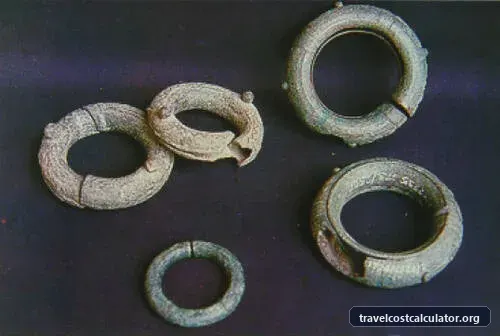
Independent Metallurgy: Artifacts demonstrate that local metalsmiths mastered copper smelting and bronze casting independently without foreign conquest or colonization. Crucible fragments, bronze spearheads, bangles, and bells showcase sophisticated casting technology.
-
✦
Wet-Rice Agriculture & Domestication: Excavated layers revealed cattle, pig, and dog bones alongside agricultural implements, proving early mastery of settled farming and wet-rice cultivation in the Mekong River Basin.
-
✦
Iconic Ceramics: The site is world-famous for its late-period earthenware adorned with striking burnt-sienna spiral, swirl, and geometric motifs painted over buff-colored clay—a ceramic tradition unmatched anywhere else in prehistoric East Asia.
-
✦
Peaceful Burial Rites: Unlike contemporary European or Middle Eastern sites dominated by weaponry and military fortifications, Ban Chiang grave goods emphasize adornments, tools, and pottery, suggesting a stable, peaceful agrarian society.
🎟️ Entrance Fees, Opening Hours & Ticket Booking Tips
Visiting Ban Chiang is straightforward, affordable, and refreshingly uncrowded compared to Thailand’s coastal hotspots. The archaeological precinct consists of two main sectors: the Ban Chiang National Museum (housing the primary artifact collections) and Wat Po Si Nai (an open-air in-situ excavation pit located 800 meters away).
2026 Ticket Pricing
-
✦
Foreign Adult Ticket: 150 THB (~$4.30 USD)
-
✦
Foreign Child Ticket (Under 12): 80 THB (~$2.30 USD)
-
✦
Thai Citizens: 30 THB (~$0.85 USD)
-
✦
Wat Po Si Nai Excavation Pit Entry: Included in the main museum ticket (keep your stub handy).
-
✦
Audio Guide / Interactive Smartphone App: Free downloadable QR audio guide available in English, Thai, and Mandarin at the reception desk.
Opening Hours & Logistics
-
✦
Museum Operating Days: Wednesday through Sunday (9:00 AM – 4:00 PM).
-
✦
Weekly Closure: Closed every Monday and Tuesday, except on official Thai national holidays. Ticket counters stop selling tickets at 3:30 PM.
-
✦
Wat Po Si Nai Hours: Daily from 8:30 AM – 4:30 PM (Independent access to the glass-roofed pit compound).
Pro Visitor & Booking Tips
Advance online booking is unnecessary for Ban Chiang. You can purchase tickets directly at the main entrance ticket booth. Payments can be made in Thai Baht cash or via local PromptPay QR transfers. International credit cards are generally accepted for museum transactions, but carrying local cash (100–500 THB bills) is essential for local songthaews, street stalls, and artisan workshops nearby.
🚌 How to Get There & Local Transit Costs
Ban Chiang is located approximately 50 kilometers (31 miles) east of Udon Thani city. Udon Thani serves as the primary regional transport hub, accessible via short domestic flights from Bangkok Travel Budget (BKK/DMK), daily trains, or long-distance buses.
Option 1: Public Minivan & Local Songthaew (Budget Route)
This is the most economical way for solo travelers and backpackers to reach the site:
-
✦
Step 1: Head to Udon Thani Bus Terminal 1 near Central Plaza. Board a local bus or minivan heading east toward Nong Han or Sakon Nakhon. Buses depart every 30 minutes. Fare: 45–50 THB (~$1.30 USD); Travel time: 45 minutes.
-
✦
Step 2: Tell the driver you are going to Ban Chiang. You will be dropped off at the Nong Han junction (Highway 22 and Route 2225).
-
✦
Step 3: From the Nong Han junction, catch a blue Songthaew (shared pickup truck bus) or a motorbike taxi directly into Ban Chiang village. Songthaew fare: 30–40 THB (~$1.00 USD); Motorbike taxi: 60–80 THB (~$2.00 USD); Travel time: 15 minutes.
Option 2: Motorbike or Scooter Rental (Flexible Independent Travel)
Renting a scooter in Udon Thani gives you absolute freedom to explore the countryside at your own pace:
-
✦
Daily Scooter Rental in Udon Thani: 250–350 THB per day (~$7.00–$10.00 USD).
-
✦
Route: Drive east on Highway 22 (Udon Thani - Sakon Nakhon Road) for 43 km. Turn left onto Route 2225 at the well-signposted Ban Chiang junction and continue straight for 6 km into the village. Roads are fully paved, flat, and easy to navigate.
Option 3: Private Taxi or Ride-Hailing App (Maximum Comfort)
If traveling in a group or family, booking a private driver is efficient and hassle-free:
-
✦
Grab Car / Private Taxi: Round-trip private taxi packages booked from Udon Thani city center cost between 1,400 THB and 1,800 THB (~$40–$50 USD). This rate includes a 3-hour waiting time at the museum and return transport. Negotiate driver waiting times prior to departure.
📸 Best Photography Spots & Insider Visit Hacks
Prime Photography Locations
-
✦
Wat Po Si Nai Open-Air Excavation Pit: The absolute crown jewel for photography. Walk along raised walkways above an active, preserved archaeological trench containing partially exposed prehistoric skeletons buried in-situ alongside giant swirl-patterned storage urns and bronze implements. Use a wide-angle lens (16–24mm equivalent) to capture the depth of the strata.
-
✦
The Museum Central Courtyard & Pottery Murals: Captivating exterior architecture featuring traditional Isan wood accents integrated with modern museum spaces, surrounded by larger-than-life sculptural displays of iconic red-swirl ceramic urns.
-
✦
Ban Chiang Craftsmen Workshops: Head into Ban Chiang village to document local master artisans applying natural mineral pigments onto clay pots using hand-turned wheels and traditional bamboo brushes.
Insider Visit Hacks & Seasonal Timing
-
✦
Ideal Visiting Season: The best weather occurs during Isan’s cool, dry winter season from November through February, when temperatures range between 20°C and 30°C (68°F–86°F). Avoid late April and May, when temperatures regularly exceed 38°C (100°F).
-
✦
Optimal Time of Day: Arrive right when the doors open at 9:00 AM. You will miss the midday heat, avoid school tour groups (which usually arrive around 11:30 AM), and enjoy peaceful lighting over Wat Po Si Nai.
-
✦
Temple Dress Code: Wat Po Si Nai is located within active Buddhist monastery grounds. Ensure shoulders and knees are covered when stepping outside the museum zones onto sacred temple soil.
-
✦
Hands-On Workshop Hack: Do not just look at the pottery—paint it! Located 200 meters from the museum, local community centers offer 45-minute pottery painting workshops for 100–150 THB (~$3.00–$4.30 USD) where you can take home your hand-painted souvenir pot.
🏨 Nearby Accommodation & Daily Budget Allocation
While many travelers visit Ban Chiang as a day trip from Udon Thani, spending a night in Ban Chiang village provides an authentic, serene look into rural Isan culture far away from standard tourist tracks.
Accommodation Options
-
✦
Village Homestays (Ban Chiang Village): Experience local Isan hospitality. Simple, clean homestays like Ban Chiang Heritage Homestay offer private air-conditioned rooms, home-cooked breakfasts, and bicycle rentals. Price range: 450–900 THB per night (~$13–$26 USD).
-
✦
Mid-Range City Hotels (Udon Thani): Staying in Udon Thani city gives access to night markets and luxury amenities. Top options include Centara Grand Hotel Udon Thani or Vella Hotel. Price range: 1,200–2,800 THB per night (~$34–$80 USD).
Local Food & Dining Pricing
Isan cuisine is world-renowned for its bold, spicy, and savory flavors. Dining near Ban Chiang is exceptionally budget-friendly:
-
✦
Som Tum (Green Papaya Salad): 40–60 THB (~$1.15–$1.70 USD)
-
✦
Gai Yang (Isan Charcoal-Grilled Chicken): 80–140 THB (~$2.30–$4.00 USD)
-
✦
Khao Niao (Sticky Rice basket): 10–15 THB (~$0.30–$0.45 USD)
-
✦
Fresh Thai Iced Coffee / Coconut Water at Village Cafes: 35–60 THB (~$1.00–$1.70 USD)
Estimated Daily Budget Allocation (2026 Projections)
Here is a practical breakdown of expected expenses per person for a dedicated trip to Ban Chiang Archaeological Site:
-
✦
Budget Backpacker: ~$22 – $32 USD / day
- Transit: Public bus + Songthaew ($4.00)
-
✦
Entry Fee: Museum & Excavation pit ($4.30)
-
✦
Meals & Water: Street food & local market ($8.00)
-
✦
Lodging: Shared village homestay ($12.00)
- Transit: Scooter rental + fuel OR shared private taxi ($15.00)
Frequently Asked Questions
Essential visitor FAQs for Ban Chiang Archaeological Site
What is the entrance fee for Ban Chiang Archaeological Site?
How much time do you need to explore Ban Chiang Archaeological Site?
How do I get to Ban Chiang Archaeological Site from the nearest city?
📊 Heritage Quick Specs
Visiting Thailand on a Budget?
Calculate your full daily travel budget for Thailand — including hotel costs, local transport, food, and sightseeing expenses.
View Thailand Daily Travel Costs →Explore more UNESCO World Heritage Sites
🏛️ All 1,200+ Heritage Sites →