
 Iran
Iran
Bam and its Cultural Landscape
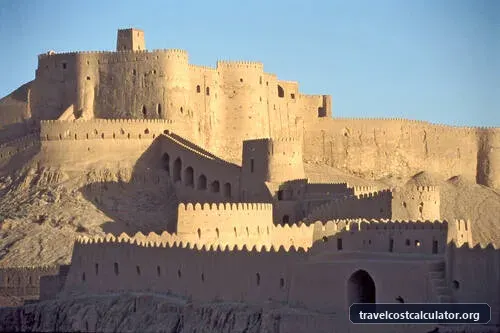
Bam is situated in a desert environment on the southern edge of the Iranian high plateau. The origins of Bam can be traced back to the Achaemenid period (6th to 4th centuries BC). Its heyday was from the 7th to...
Bam and its Cultural Landscape
🏛️ Overview & Historical Significance
Rising like a colossal sandcastle from the arid deserts of southeastern Iran, Bam and its Cultural Landscape represents one of the world's most breathtaking architectural wonders. At its heart lies Arg-e Bam (the Citadel of Bam), recognized as the world's largest mudbrick (adobe) fortress. Built along the southern edge of the Iranian High Plateau in Kerman Province, this ancient desert fortress city spans over 180,000 square meters and dates back to the Achaemenid Empire (6th to 4th centuries BC), reaching its commercial zenith between the 7th and 11th centuries AD as a vital node on the southern Silk Road trade routes.
In 2004, UNESCO inscribed Arg-e Bam and its surrounding Cultural Landscape as a World Heritage Site. The designation was awarded based on its extraordinary status as an exceptional example of a fortified medieval trading settlement constructed entirely of earth—utilizing chinah (packed mud layers) and khezht (sun-dried mud bricks). Beyond the fortress walls, the UNESCO boundary encompasses a delicate, centuries-old desert ecosystem supported by Qanats—an ancient subterranean system of gravity-fed water channels that tapped into high-altitude mountain aquifers to nourish thousands of surrounding date palms and pomegranate orchards in the middle of a desert environment.
The site's inclusion on the World Heritage list in 2004 occurred under dramatic circumstances. On December 26, 2003, a devastating shallow earthquake (magnitude 6.6) struck the region, destroying up to 80% of the citadel and claiming tens of thousands of lives. UNESCO immediately placed Bam on the World Heritage in Danger list while launching an unprecedented international restoration effort. Master architects, archaeologists, and engineers from Japan, Italy, France, Germany, and Iran collaborated over a decade to meticulously reconstruct the fortress using original ancient earth-building techniques and seismically reinforced raw materials. Thanks to this masterclass in heritage conservation, UNESCO officially removed Bam from the "In Danger" list in 2013. Visitors in 2026 can now experience the fully revived glory of the Grand Mosque, the Governor’s Seat (Hakem-Neshin), the ice houses (Yakhchal), and the sprawling outer defensive ramparts.
🎟️ Entrance Fees, Opening Hours & Ticket Booking Tips
Navigating travel in Iran requires specific financial logistics due to the country's unique banking environment. As of 2026, foreign credit and debit cards (Visa, Mastercard, AMEX) do not function inside Iran due to ongoing international banking disconnects. Foreign travelers must plan ahead regarding currency and payment methods.
Estimated 2026 Ticket Prices
-
✦
International Visitor Ticket: Approximately 600,000 to 800,000 IRR (Iranian Rials), which translates to roughly $10.00 – $12.00 USD / €9.00 – €11.00 EUR (depending on daily free-market exchange rates).
-
✦
Iranian Nationals: ~100,000 IRR (approx. $1.50 USD).
-
✦
Guided Site Tours (Optional): Hiring an official English-speaking guide at the main entrance desk costs roughly $15.00 – $25.00 USD for a private 2-hour walkthrough.
Opening Hours & Operating Schedule
-
✦
Spring & Summer (April – September): 7:30 AM – 7:30 PM (Ticket window closes at 6:30 PM).
-
✦
Autumn & Winter (October – March): 7:30 AM – 5:30 PM (Ticket window closes at 4:30 PM).
-
✦
Days Closed: The complex remains open daily year-round, except during major national mourning days on the Iranian lunar calendar (such as Ashura and Tasua).
Crucial 2026 Ticket Booking Hacks
Advance online ticket booking systems for foreign travelers are rarely operational from abroad. Instead, purchase your admission ticket directly at the main entrance gate. Remember these critical financial tips:
-
✦
Understand the Dual Currency System: Prices are quoted in Rials, but locals speak and calculate in Tomans (1 Toman = 10 Rials). A ticket of 700,000 Rials will be called 70,000 Tomans. Always confirm which unit is being quoted before paying.
-
✦
Get an Iranian Tourist Card: To avoid carrying wads of physical cash, buy a prepaid Iranian Debit Card (such as MahCard or Daric Card) upon arrival at Imam Khomeini International Airport (IKA) in Tehran Travel Budget or through reputable travel agencies in Kerman. You can charge this card using foreign currency cash ($ USD or € EUR) and tap to pay for your tickets easily.
🚌 How to Get There & Local Transit Costs
Bam is located in Kerman Province in southeastern Iran. The primary transit hub used by international travelers to access Bam is the provincial capital city of Kerman, located approximately 190 kilometers (118 miles) northwest of Bam.
1. Direct Flight to Kerman or Bam Airport
Bam possesses a small regional airport (BAM), which handles occasional domestic flights from Tehran's Mehrabad Airport operated by domestic carriers like Mahan Air. However, schedules are limited. Most travelers fly into Kerman Airport (KER) from Tehran (1 hour 30 mins flight, approx. $35 – $55 USD one-way) and travel overland to Bam.
2. From Kerman to Bam by Private Taxi or Ride-Hailing
The most convenient and comfortable way to reach Bam for a day trip or overnight stay is by private vehicle along Route 84.
-
✦
Private Taxi (Roundtrip with waiting time): Expect to pay between $25.00 and $40.00 USD for a full-day private driver who will pick you up at your hotel in Kerman, drive to Bam, wait while you explore for 3-4 hours, and return you to Kerman.
-
✦
Snapp App (Iranian Uber): You can book intercity drives via the Snapp app using an Iranian SIM card. A one-way trip from Kerman to Bam costs approximately $10.00 – $14.00 USD.
3. Shared Taxis (Savari) & Intercity Buses
For budget-conscious travelers, public ground transit is very affordable:
-
✦
Shared Taxi (Savari): Departing frequently from Kerman’s Adineh Passenger Terminal or Fabiola Square, intercity yellow taxis carry 4 passengers to Bam. Seat fare: $4.00 – $6.00 USD per person one-way. Journey time: 2 hours.
-
✦
VIP Public Bus: Air-conditioned long-distance coaches depart every hour from Kerman’s main bus station to Bam. Ticket cost: $2.00 – $3.00 USD one-way. Journey time: approx. 2.5 hours.
4. Overnight Train from Tehran or Kerman
The Trans-Iranian Railway network connects Tehran directly to Bam via Kerman. The comfortable overnight sleeper train from Tehran to Bam takes about 14 hours and costs $12.00 – $18.00 USD for a 4-berth compartment ticket. From Kerman train station to Bam train station, the local train ride takes roughly 2 hours and costs $3.00 USD.
📸 Best Photography Spots & Insider Visit Hacks
Capturing the dramatic geometry of raw mudbrick towers juxtaposed against endless blue desert skies and verdant palm groves requires smart timing and positioning.
Top Photography Vantage Points
-
✦
The Pinnacle of the Governor’s Citadel (Hakem-Neshin): Climb to the top of the central inner fortress. This elevated multi-tiered structure provides an unforgettable 360-degree panorama overlooking the entire citadel complex, the outer city walls, the dense date palm oases, and the distant snow-capped peaks of the Kerman mountain range in winter.
-
✦
The Main Double-Tower Gateway (Sarbaz-Khaneh): Position yourself outside the primary southern entrance just as the morning sun illuminates the monumental archways and watchtowers.
-
✦
The Western Ramparts Wall: Walk along the outer perimeter wall to capture the sharp visual contrast between the stark, light-brown adobe walls and the lush green date palm canopy surrounding the ancient dry moat.
-
✦
The Ancient Ice House (Yakhchal): Shoot the dramatic domed interior of the traditional earth-brick ice storage facility to highlight historical desert engineering.
Insider Visit & Weather Hacks
-
✦
The Golden Hour Advantage: Arrive at the site either right at opening (7:30 AM) or approximately 2.5 hours before sunset. Late afternoon sun bathes the adobe structures in a warm terracotta glow, ideal for photography, whereas midday sun flattens features and creates harsh shadows.
-
✦
Seasonal Timing: The ideal time to visit Bam is from October through April. High summer (June through August) brings scorching desert temperatures exceeding 42°C (108°F), making outdoor exploration uncomfortably hot.
-
✦
Hydration & Footwear: The interior paths of Arg-e Bam consist of packed earth, loose gravel, and steep adobe stairs. Wear sturdy walking shoes with good traction. Bring plenty of bottled water, as vendor kiosks inside the ruins are limited.
-
✦
Respect Active Archaeological Zones: While 90% of the public areas are fully restored and safe, respect cordoned-off zones where active archaeological digs and micro-restoration efforts are under way.
🏨 Nearby Accommodation & Daily Budget Allocation
While many visitors tour Bam as a day trip from Kerman, staying overnight in or near Bam allows you to experience the desert starlight and avoid early morning highway transit.
Accommodation Options in Bam & Kerman (2026 Rates)
-
✦
Budget Lodging & Eco-Lodges ($15 – $30 USD / night): Traditional desert eco-lodges situated in the date palm groves of Bam (such as local family-run homestays or guest houses near the Citadel) offer authentic Iranian hospitality, traditional floor-mattress bedding, home-cooked local meals, and peaceful courtyard gardens.
-
✦
Mid-Range Hotel ($40 – $70 USD / night): Hotel Arg-e Jadid (located in the Special Economic Zone roughly 15 km outside Bam city center) offers modern 4-star amenities, air-conditioned rooms, Wi-Fi, swimming pools, and international dining. Alternatively, travelers often base themselves in Kerman at establishments like the Pars Hotel Kerman or Akhavan Hotel.
Food & Dining Costs
Dining in Bam is extremely affordable. Don't miss sampling local Kerman province delicacies such as Abgoosht (savory meat and chickpea stew), Kabab Koobideh, and Qatogh Beneh (a unique soup made from wild pistachios). Freshly harvested local Bam Mozafati dates are world-renowned for their rich caramel flavor.
-
✦
Traditional Restaurant Meal: $4.00 – $8.00 USD per person.
-
✦
Street Snacks & Date/Tea Stalls: $1.00 – $2.00 USD.
Estimated Daily Travel Budget Allocation (Per Person)
Plan your total daily expenditure based on your travel style:
-
✦
Backpacker / Budget Traveler: $25.00 – $35.00 USD / day (Includes shared transit/bus from Kerman, staying in an eco-lodge homestay, eating local street food, and site entry).
-
✦
Mid-Range Comfort Traveler: $75.00 – $120.00 USD / day (Includes private day-car with driver from Kerman, mid-range 4-star hotel accommodation, private site guide, and fine dining).
Frequently Asked Questions
Essential visitor FAQs for Bam and its Cultural Landscape
What is the entrance fee for Bam and its Cultural Landscape?
How much time do you need to explore Bam and its Cultural Landscape?
How do I get to Bam and its Cultural Landscape from the nearest city?
📊 Heritage Quick Specs
Visiting Iran on a Budget?
Calculate your full daily travel budget for Iran — including hotel costs, local transport, food, and sightseeing expenses.
View Iran Daily Travel Costs →Explore more UNESCO World Heritage Sites
🏛️ All 1,200+ Heritage Sites →