
 China
China
Badain Jaran Desert - Towers of Sand and Lakes
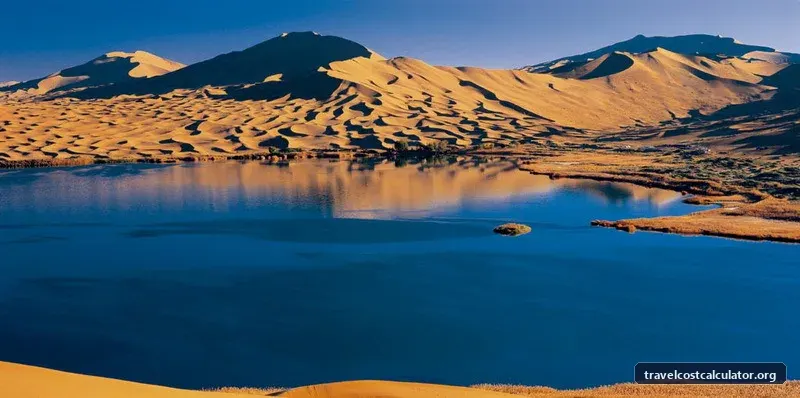
Located in the Alashan Plateau in the hyper-arid and temperate desert region of northwestern China, the Badain Jaran Desert is a meeting point for three sandy regions of China and is the country’s third largest desert and second largest drifting desert.
Badain Jaran Desert - Towers of Sand and Lakes
🏛️ Overview & Historical Significance
Inscribed as a UNESCO World Heritage site in July 2024 during the 46th session of the World Heritage Committee, the Badain Jaran Desert - Towers of Sand and Lakes stands as one of the most visually stunning and geologically unique landscapes on Earth. Located in the remote Alxa League of China's Inner Mongolia Autonomous Region, this 44,370-square-kilometer desert expanse is celebrated for its extraordinary hyper-arid natural phenomena: colossal sand megadunes juxtaposed against more than 140 permanent, spring-fed lakes.
The site's primary claim to global geological fame is Mount Bilutu (Bilutu Peak), known as the "Everest of the Desert." Rising to an elevation of 1,611 meters above sea level with a relative relief exceeding 470 meters, Mount Bilutu is officially recognized as the world's tallest stationary sand megadune. Unlike moving barchan dunes, these megadunes remain structurally stable due to deep-seated moisture reserves, complex wind dynamics, and underlying hydro-geological mechanisms. Subterranean groundwater channels flowing thousands of kilometers from the snow-capped Qilian Mountains emerge in the desert troughs, creating vibrant, turquoise, emerald, and hot-pink hypersaline and freshwater oases.
Beyond its geological scale, Badain Jaran possesses rich cultural heritage. Deep within the dunes sits the historic Badain Jilin Temple, a remarkably preserved Tibetan Buddhist monastery constructed in 1755 during the Qing Dynasty under the reign of Emperor Qianlong. Accessible only by grueling foot treks or skilled 4x4 desert navigation, the white-walled, red-trimmed temple rests serenely on the shores of Lake Badain Jilin, serving as a sanctuary for nomadic pastoralists and pilgrims for centuries. The region is also famous for its acoustic marvel known as the "singing sands" (Xiangsha)—a rare atmospheric resonance where sliding sand grains generate deep, booming sound vibrations echoing across the dunes.
🎟️ Entrance Fees, Opening Hours & Ticket Booking Tips
Visiting Badain Jaran Desert requires navigating both general park admission fees and mandatory specialized transportation. As of 2026, China's National Forestry and Grassland Administration maintains strict real-name visitor limits to preserve fragile lake ecosystems post-UNESCO designation.
-
✦
Base Park Entrance Fee (2026): ¥90 RMB (~$13 USD) per adult. Discounted tickets for seniors (60+) and children are available at ¥45 RMB (~$6.50 USD).
-
✦
Conservation & Heritage Maintenance Surcharge: ¥50 RMB (~$7 USD) per person.
-
✦
Mandatory 4x4 Desert Vehicle & Licensed Driver (2-Day/1-Night Overland Route): ¥2,800 to ¥3,600 RMB (~$390 to $500 USD) total per vehicle (max 3-4 passengers). Solo travelers can Split Travel Budget costs by arranging shared vehicles at the main visitor center or through Alxa Right Banner tour agencies.
-
✦
Opening Hours: The Geo-Park Visitor Center is open daily from 08:00 to 18:00. However, registered off-road tours operate 24 hours depending on sunrise and sunset schedules.
Crucial Ticket Booking & Logistics Tips for 2026
1. Real-Name Registration (Passport Required): Foreign visitors must present an original passport when purchasing entry passes. Since late 2024, online pre-registration via the official "Alxa Tourism" (文旅阿拉善) WeChat Mini-Program or authorized Chinese travel platforms (such as Trip.com/Ctrip) is strongly recommended, especially during peak autumn months.
2. 4x4 Vehicle Reservation: Independent driving inside the deep megadunes is strictly prohibited for security and environmental conservation reasons. You must hire a certified local driver with a specially modified 4x4 SUV (typically a Toyota Land Cruiser or Tank 300 equipped with sand tires and roll cages). Book your vehicle at least 3–5 days in advance during mid-September to October.
🚌 How to Get There & Local Transit Costs
Reaching this remote UNESCO sanctuary involves traveling through neighboring transit hubs in Gansu Province before crossing into Inner Mongolia. The primary staging base for desert expeditions is Alxa Right Banner (Badain Jaran Town / 巴丹吉林镇).
Step-by-Step Route via Zhangye or Jinchang
Step 1: Arrive in Gansu Hub Cities
-
✦
Via Zhangye (Recommended): Take high-speed rail (CRH) to Zhangye West Railway Station from major cities like Lanzhou (2 hours, ~¥150 RMB / $21 USD) or Xi'an Travel Budget (6 hours, ~¥380 RMB / $53 USD).
-
✦
Via Jinchang: Fly into Jinchang Jinchuan Airport (JIC) or take a train to Jinchang Railway Station. Jinchang is geographically closest to Alxa Right Banner.
Step 2: Travel to Alxa Right Banner (Badain Jaran Town)
-
✦
Bus from Zhangye Long-Distance Bus Station: Direct daily coaches depart for Badain Jaran Town. Travel time is approximately 2.5 to 3 hours. Ticket cost: ¥65 RMB (~$9 USD) per seat.
-
✦
Private Taxi / Shared Car from Zhangye: Shared taxis cost around ¥100–¥120 RMB (~$14–$17 USD) per seat, while a private hire costs approximately ¥350–¥450 RMB (~$49–$63 USD) one-way.
-
✦
Bus from Jinchang: Takes approximately 1.5 to 2 hours, costing around ¥40 RMB (~$5.50 USD).
Step 3: Transfer to Badain Jaran Desert Geopark Entrance
From Badain Jaran Town to the main entrance (Badain Jaran Geo-Park Gate), the distance is roughly 40 kilometers along Route S317. A local shuttle or taxi costs ¥100–¥150 RMB (~$14–$21 USD) per vehicle. At the entrance, you will meet your pre-arranged 4x4 desert driver to launch into the megadunes.
📸 Best Photography Spots & Insider Visit Hacks
Top Photography Locations
-
✦
Mount Bilutu (Summit Viewpoint): Reaching the crest of the world's tallest megadune requires a challenging 1.5-to-2-hour sand hike, but it rewards photographers with a 360-degree panorama of rolling sand waves and multi-hued desert lakes below. Capture golden hour light when dune ridges cast sharp, cinematic shadows.
-
✦
Badain Jilin Temple & Lake: Frame the historic Tibetan monastery against its perfectly mirrored spring-fed lake during early morning hours when wind speeds are virtually zero.
-
✦
The Pink Lakes (Dagutu & Baoritaolegai): Select saline lakes display striking magenta and neon-pink hues caused by high concentrations of salt-loving micro-algae (such as Dunaliella salina) and halophilic bacteria. Photos are best captured under mid-day direct sunlight when water coloration is most vivid.
-
✦
Yinderitu Spring ("The Holy Spring"): Located on a tiny island in a saltwater lake, this freshwater spring gushes pure drinking water from 108 outlets. The contrast of lush greenery against stark sand cliffs creates compelling landscape compositions.
Insider Visit Hacks for 2026
1. Optimal Seasonal Window: The absolute Best Time to Visit Planner is from mid-September through late October. During autumn, daily temperatures average a comfortable 15°C to 24°C (59°F to 75°F), skies are crystal clear, sandstorm activity is low, and lake colors reach peak intensity. Avoid mid-summer (surface sand temperatures exceed 50°C/122°F) and winter (sub-zero freeze down to -20°C/-4°F).
2. Camera Protection Strategy: Superfine quartz sand grains act like micro-abrasives. Wrap your camera body in silicone skins or specialized rain covers, use UV filters to shield front elements, and never change lenses while out on the dunes. Keep all electronic gear sealed in airtight dry bags when riding inside the 4x4 during fast dune crossings.
3. Sand Footwear & Gear: High-top hiking boots paired with elasticized sand gaiters (snow gaiters work equally well) are essential to prevent hot quartz dust from filling your shoes. Bring trekking poles fitted with wide snow baskets to negotiate steep dune inclines efficiently.
🏨 Nearby Accommodation & Daily Budget Allocation
Accommodation in the Badain Jaran region ranges from modern city hotels in Alxa Right Banner to traditional yurt camps and basic desert guesthouses nestled alongside remote oasis lakes inside the UNESCO park boundary.
Accommodation Options
-
✦
Badain Jaran Town (Alxa Right Banner): 3-star to 4-star standard hotels (e.g., Alxa Badain Jaran Hotel or Taosheng Hotel). Clean rooms, hot showers, and Wi-Fi. Rates: ¥260–¥480 RMB (~$36–$67 USD) per night.
-
✦
In-Desert Yurt Camps & Guesthouses: Located near Badain Jilin Temple or Lake Nuoertu. Basic brick rooms or Mongolian yurts with shared drop-toilet facilities and limited electricity (generator-powered). Rates: ¥200–¥450 RMB (~$28–$63 USD) per bed/room per night, often including simple evening meals.
Estimated Daily Budget Allocations (2026 Figures)
Backpacker / Budget Traveler: ~$70 – $100 USD / day
-
✦
Transportation: Shared 4x4 desert jeep (split among 4 passengers: ~$100 USD/person) + budget bus from Zhangye ($9 USD).
-
✦
Lodging: Basic shared yurt or desert guest house ($28 USD/night).
-
✦
Food: Simple noodles, fried rice, and canned provisions ($15 USD/day).
-
✦
Tickets & Park Fees: Base park ticket & heritage fee (~$20 USD).
Mid-Range Traveler: ~$200 – $320 USD / day
-
✦
Transportation: Shared 4x4 desert jeep split between 2 passengers (~$200 USD/person) + private taxi transfer from Zhangye ($25 USD/person).
-
✦
Lodging: Private room in desert guesthouse or comfortable 4-star hotel in town ($50–$65 USD/night).
-
✦
Food: Authentic Mongolian dining, roasted lamb, and hearty local meals ($30–$40 USD/day).
-
✦
Tickets & Guides: Entrance fees + tip for off-road driver ($30 USD).
Luxury Overland Traveler: ~$500 – $800+ USD / day
-
✦
Transportation: Private exclusive 4x4 Land Cruiser with professional desert stunt driver ($450+ USD/day) + luxury airport chauffeur.
-
✦
Lodging: Premium high-end glamping yurt with private en-suite bathroom inside the desert oasis ($200–$350 USD/night).
-
✦
Food: Full-service private catering, wine, and gourmet regional dishes ($80+ USD/day).
-
✦
Services: Private English-speaking guide, drone photography service, and expedited booking permits ($100+ USD/day).
Frequently Asked Questions
Essential visitor FAQs for Badain Jaran Desert - Towers of Sand and Lakes
What is the entrance fee for Badain Jaran Desert - Towers of Sand and Lakes?
How much time do you need to explore Badain Jaran Desert - Towers of Sand and Lakes?
How do I get to Badain Jaran Desert - Towers of Sand and Lakes from the nearest city?
📊 Heritage Quick Specs
Visiting China on a Budget?
Calculate your full daily travel budget for China — including hotel costs, local transport, food, and sightseeing expenses.
View China Daily Travel Costs →Explore more UNESCO World Heritage Sites
🏛️ All 1,200+ Heritage Sites →