
 Poland
Auschwitz Birkenau German Nazi Concentration and Extermination Camp (1940-1945)
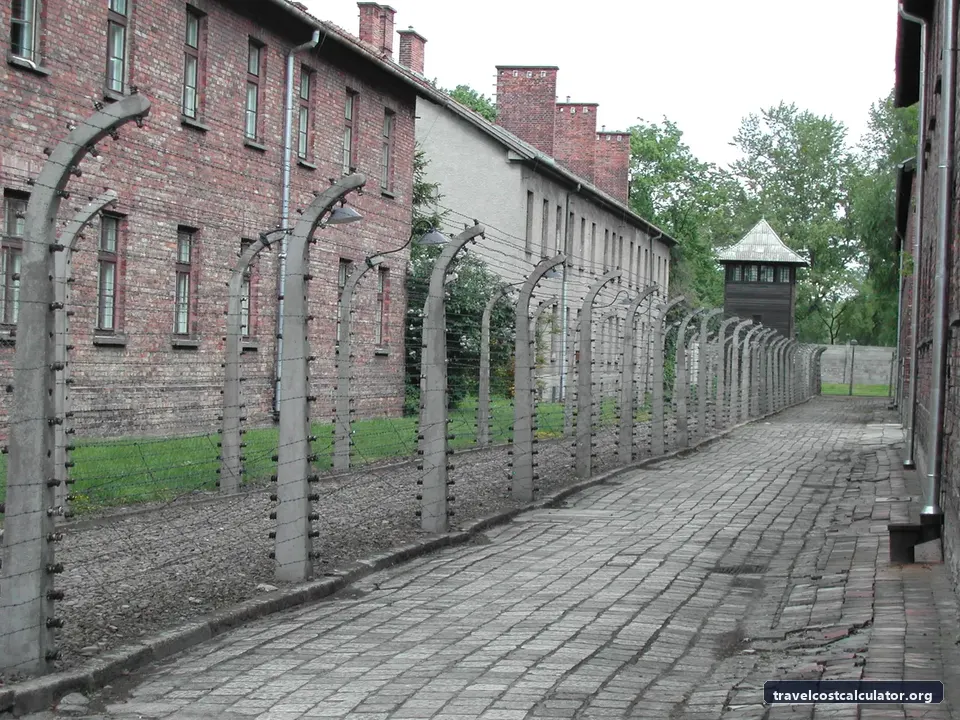
The fortified walls, barbed wire, platforms, barracks, gallows, gas chambers and cremation ovens show the conditions within which the Nazi genocide took place in the former concentration and extermination camp ...
Auschwitz Birkenau German Nazi Concentration and Extermination Camp (1940-1945)
🏛️ Overview & Historical Significance
The Auschwitz Birkenau German Nazi Concentration and Extermination Camp (1940-1945) stands as the universal symbol of the Holocaust, state-sponsored genocide, and the darkest depths of human cruelty. Located near the Polish town of Oświęcim (roughly 66 kilometers west of Kraków), this vast complex was established by Nazi Germany during World War II and became the primary engine of the "Final Solution"—the systematic plan to murder the Jewish population of Europe.
In 1979, UNESCO inscribed Auschwitz-Birkenau on the World Heritage List under Criterion (vi). The World Heritage Committee recognized the site as a vital, physical testament to the planned genocide of over 1.1 million human beings—including approximately 1 million Jews, 74,000 Poles, 21,000 Romani, 15,000 Soviet prisoners of war, and tens of thousands of victims of other nationalities. UNESCO's designation serves to preserve the physical ruins, original barracks, personal belongings, and mass execution sites in perpetuity, standing as an eternal warning to future generations against hatred, antisemitism, totalizing ideologies, and the erosion of human dignity.
The site comprises two primary preserved areas: Auschwitz I, the original administrative camp built in brick former Polish army barracks (housing the infamous "Arbeit Macht Frei" gate and Block 11), and Auschwitz II-Birkenau, the massive, 425-acre purpose-built extermination facility featuring the railway unloading ramp (the Judenrampe), wooden barracks, and the dynamited ruins of gas chambers and crematoria II, III, IV, and V.
🎟️ Entrance Fees, Opening Hours & Ticket Booking Tips
Visiting Auschwitz-Birkenau requires careful planning due to strict daily visitor caps designed to maintain solemnity and site integrity. The official reservation portal is visit.auschwitz.org. Booking your pass 3 to 4 months in advance is strongly advised, especially for peak travel months between April and October.
2026 Admission & Educator Tour Rates
-
✦
Educator-Guided Tour (3.5 Hours - Highly Recommended): 110 PLN – 130 PLN per person (~$28.00 – $33.00 USD / €26.00 – €30.00 EUR). This fee includes an official museum guide (available in English, Polish, German, French, Italian, Spanish, and other languages) and the mandatory wireless headset system.
-
✦
Individual Entry Pass (Self-Guided / Without Educator): Free base admission. However, individual non-guided passes are strictly limited to late afternoon hours (typically after 3:00 PM or 4:00 PM depending on the season) and must still be reserved online in advance. An online transaction/service fee of 5 PLN – 10 PLN (~$1.30 – $2.50 USD) may apply.
-
✦
Study Tours (6 Hours Extensive Guided Option): 170 PLN – 210 PLN (~$43.00 – $53.00 USD / €40.00 – €48.00 EUR). Designed for scholars and deeply engaged visitors, covering specialized exhibits and sub-camps.
Opening Hours (Year-Round Operational Schedule)
The Memorial Museum is open seven days a week, 362 days a year (closed January 1, December 25, and Easter Sunday). Entry starts at 7:30 AM daily, while closing times vary seasonally based on daylight hours:
-
✦
December: 7:30 AM – 2:00 PM
-
✦
January & November: 7:30 AM – 3:00 PM
-
✦
February: 7:30 AM – 4:00 PM
-
✦
March & October: 7:30 AM – 5:00 PM
-
✦
April, May & September: 7:30 AM – 6:00 PM
-
✦
June, July & August: 7:30 AM – 7:00 PM
Crucial Booking Hack: Your printed or digital Entry Pass must match the exact name on your passport or official government photo ID. Security officers perform identity checks at the Auschwitz I main entrance gate. Mismatched names will result in denied entry without a refund.
🚌 How to Get There & Local Transit Costs
Most international travelers use Kraków as their main transit hub. Oświęcim is located approximately 66 kilometers west of Kraków and can easily be reached by public transport or private transfers.
1. Direct Bus / Coach from Kraków (Most Convenient Public Transport)
Direct regional coaches operate from Kraków's Main Bus Station (MDA - Małopolskie Dworce Autobusowe, located behind Kraków Główny train station) directly to the front entrance of Auschwitz I (Stop: Oświęcim Muzeum).
-
✦
Operators: Lajkonik, PKOiW, and Marek Trans.
-
✦
Transit Time: Approximately 1 hour 20 minutes to 1 hour 35 minutes.
-
✦
Cost (2026): 24 PLN – 28 PLN one-way (~$6.00 – $7.00 USD / €5.50 – €6.50 EUR).
-
✦
Tip: Book your return bus ticket online in advance during summer months, as afternoon returning coaches back to Kraków frequently sell out.
2. Train from Kraków Główny to Oświęcim
Local commuter trains operated by Koleje Małopolskie and POLREGIO run regularly from Kraków Główny central station to Oświęcim railway station.
-
✦
Transit Time: 1 hour 10 minutes to 1 hour 25 minutes.
-
✦
Cost (2026): 21 PLN – 26 PLN one-way (~$5.25 – $6.50 USD).
-
✦
Local Transfer: The Oświęcim train station is 2 kilometers from the museum entrance. You can take local city buses (Lines 24, 25, 26, 27, 28, or 29 for ~4 PLN / $1.00 USD) or take a 20-minute flat walk following the directional signs to Muzeum Auschwitz.
3. Transport Between Auschwitz I and Auschwitz II-Birkenau
The two main memorial camps are separated by approximately 3.5 kilometers. The museum provides a free shuttle bus running back and forth between Auschwitz I and the main gate of Auschwitz II-Birkenau every 10 to 15 minutes during operating hours.
4. Private Driver & Organized Guided Day Trips
If you prefer door-to-door comfort from your hotel in Kraków, private car transfers cost approximately 320 PLN – 450 PLN (~$80.00 – $115.00 USD) round-trip. Full-day tour packages originating in Kraków (including private minivan transport, museum entrance tickets, and an official educator) generally cost between $50.00 and $85.00 USD per person.
📸 Best Photography Spots & Insider Visit Hacks
Auschwitz-Birkenau is a solemn mass grave and memorial site. Photography must be approached with the utmost dignity, emotional sensitivity, and reverence. The objective of photographing here is historical documentation, not personal social media portraits or pose-striking.
Key Documentation Locations
-
✦
The "Arbeit Macht Frei" Gate (Auschwitz I): The notorious iron entry gate framing the original brick barracks. Best captured early in the morning when natural light filters through the tree canopy.
-
✦
The Gatehouse & Railroad Ramp (Birkenau): The iconic central watchtower of Birkenau framing the railway tracks where selection took place. Walking to the top platform of the Main Gatehouse provides a vast overview of the scale of Birkenau.
-
✦
Ruins of Crematoria II and III (Birkenau): Located at the far end of the railway tracks, left largely as destroyed by retreating Nazi forces in January 1945.
-
✦
The International Monument to the Victims of Fascism: Situated between the ruins of Crematoria II and III, featuring memorial plaques in over 20 languages representing the origins of the victims.
Strict Rules & Visitor Restrictions
-
✦
Strict Photo Prohibitions: Flash photography and tripods are strictly banned everywhere. Photography is strictly prohibited inside Block 4 (the room containing human hair) and inside the basement of Block 11 (the death cells) out of respect for the deceased. Always watch for posted signage.
-
✦
Strict Bag Size Limits: Security allows a maximum bag size of 30 cm x 20 cm x 10 cm (roughly smaller than a standard A4 sheet of paper or small purse). Backpacks, luggage, and large camera bags are forbidden inside. Luggage storage lockers are available at the Auschwitz I Visitor Center for 10 PLN – 15 PLN (~$2.50 – $3.75 USD).
-
✦
Dress Code & Behavior: Visitors must dress respectfully (covered shoulders and modest attire recommended). Eating, drinking alcohol, smoking, e-cigarettes, and loud vocalizations are strictly prohibited across all grounds. Children under the age of 14 are advised by museum authorities not to visit due to the disturbing nature of the exhibitions.
-
✦
Weather & Footwear: Birkenau is almost entirely outdoors, unpaved, exposed to winds, and spans vast distances. Wear sturdy walking shoes and bring an umbrella or weather-appropriate outerwear. In summer, bring sun protection; in winter, temperatures regularly drop below freezing.
🏨 Nearby Accommodation & Daily Budget Allocation
While the majority of travelers base themselves in nearby Kraków—taking advantage of its vibrant food scene and diverse lodging options—staying overnight in the town of Oświęcim is an excellent strategy if you have booked an early morning 7:30 AM or 8:00 AM tour.
Recommended Accommodations
-
✦
Budget Lodging (Kraków Hostels): Greg & Tom Hostel or Dragonfly Hostel Kraków. Dorm beds range from 80 PLN to 140 PLN per night (~$20.00 – $35.00 USD). Ideal for solo travelers who plan to take the morning bus to Oświęcim.
-
✦
Mid-Range Hotel (Oświęcim - Steps from the Site): Hotel Imperiale Oświęcim or Hampton by Hilton Oświęcim. Rooms range from 300 PLN to 480 PLN per night (~$75.00 – $120.00 USD). Hotel Imperiale sits directly across from the Auschwitz I entrance, eliminating morning transit stress.
-
✦
Mid-Range to Boutique (Kraków Old Town / Kazimierz): Hotel Amber Design or PURO Kraków Kazimierz. Doubles range from 400 PLN to 650 PLN per night (~$100.00 – $160.00 USD).
Dining & Food Costs (2026)
There are very limited food concessions on site at Auschwitz I (a small coffee bar and snack kiosk near the visitor centre), and zero food amenities inside Birkenau. Plan to eat before or after your visit.
-
✦
Quick Lunch in Oświęcim: Local Polish cafeterias or pierogarnias near Oświęcim town square (Rynek) serve hearty traditional meals (pierogi, barszcz, kotlet schabowy) for 35 PLN – 55 PLN (~$9.00 – $14.00 USD).
-
✦
Mid-Range Dinner in Kraków: Full three-course meal with beverages in Kraków's Kazimierz (Jewish Quarter) costs roughly 80 PLN – 140 PLN (~$20.00 – $35.00 USD).
Daily Travel Budget Allocations (2026 Breakdown)
Below are realistic daily budget guidelines per person when combining a visit to Auschwitz-Birkenau with a base stay in Kraków:
-
✦
Budget Backpacker: $45.00 – $65.00 USD / day
- Hostel dorm in Kraków: $25.00
-
✦
Round-trip coach bus: $13.00
-
✦
Guided Museum Tour: $28.00 (or free afternoon entry)
-
✦
Budget meals/street food: $15.00
- 3-star hotel room (shared cost): $55.00
- 4-star boutique hotel in Kraków: $120.00
Frequently Asked Questions
Essential visitor FAQs for Auschwitz Birkenau German Nazi Concentration and Extermination Camp (1940-1945)
What is the entrance fee for Auschwitz Birkenau German Nazi Concentration and Extermination Camp (1940-1945)?
How much time do you need to explore Auschwitz Birkenau German Nazi Concentration and Extermination Camp (1940-1945)?
How do I get to Auschwitz Birkenau German Nazi Concentration and Extermination Camp (1940-1945) from the nearest city?
📊 Heritage Quick Specs
Visiting Poland on a Budget?
Calculate your full daily travel budget for Poland — including hotel costs, local transport, food, and sightseeing expenses.
View Poland Daily Travel Costs →Explore more UNESCO World Heritage Sites
🏛️ All 1,200+ Heritage Sites →