
 Turkey
Archaeological Site of Troy
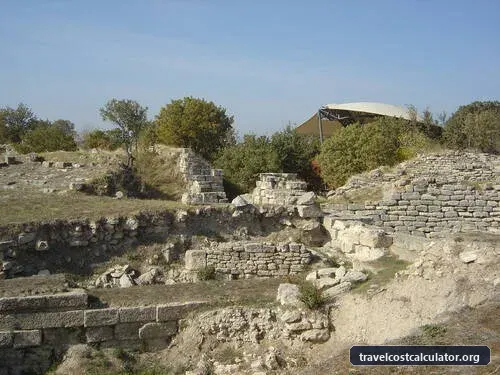
Troy, with its 4,000 years of history, is one of the most famous archaeological sites in the world.
Archaeological Site of Troy
🏛️ Overview & Historical Significance
Standing on the windswept mound of Hisarlık in northwestern Turkey, the Archaeological Site of Troy (known locally as Truva or Troia) remains one of the most legendary settings in human history. Immortalized in Homer’s 8th-century BCE epic The Iliad, Troy was long believed to be purely mythical—a romantic backdrop for tales of King Priam, Prince Hector, Achilles, and the cunning Wooden Horse of Odysseus. That perception changed forever in the 1870s when amateur archaeologist Heinrich Schliemann excavated the site, uncovering layers of stone ramparts and gold treasures that proved a sophisticated Bronze Age citadel had indeed controlled the strategic entrance to the Dardanelles for millennia.
In 1998, UNESCO inscribed the Archaeological Site of Troy as a World Heritage Site. UNESCO recognized Troy as a cultural monument of universal value for several critical reasons:
-
✦
4,000 Years of Continuous Stratigraphy: Troy contains nine distinct occupational layers (designated Troy I to Troy IX), spanning from the Early Bronze Age (c. 3000 BCE) through the Roman Imperial period (c. 500 CE). It serves as the master chronological reference point for Aegean and Anatolian archaeology.
-
✦
Cultural Crossroads between East and West: Situated at the mouth of the Dardanelles strait, Troy was the vital bridge connecting Mediterranean maritime traders with the Black Sea, as well as Anatolian cultures with Balkan and Aegean powers.
-
✦
The Birthplace of Western Classical Literature: Troy is the physical anchor for the Trojan War saga, a narrative that laid the foundation for Greek mythology, Roman imperial identity (via Virgil's Aeneid), and centuries of Western art, theater, and poetry.
-
✦
Evidence of Bronze Age Warfare: Troy VI and Troy VIIa demonstrate massive fortifications, burnt destruction layers, and arrowheads embedded in masonry, matching the destruction timelines associated with the Homeric Trojan War (circa 1200 BCE).
Visitors in 2026 will find a world-class archaeological park paired with the state-of-the-art Troy Museum (Troya Müzesi), an architectural marvel built near the site entrance that houses gold artifacts, statues, and sarcophagi recovered from the Troad region.
🎟️ Entrance Fees, Opening Hours & Ticket Booking Tips
The Turkish Ministry of Culture and Tourism manages the site and museum. To ensure a seamless trip in 2026, review the updated ticket pricing structure, which utilizes Euro-equivalent baseline tariffs for international visitors.
Estimated 2026 Ticket Prices
-
✦
Ancient Site of Troy Entrance: €27 EUR (approx. $30 USD / 1,050 TRY) per adult.
-
✦
Troy Museum (Troya Müzesi) Entrance: €14 EUR (approx. $15 USD / 550 TRY) per adult.
-
✦
Combined Site + Museum Ticket: €38 EUR (approx. $41 USD / 1,480 TRY) — Recommended for savings.
-
✦
Museum Pass Türkiye / Aegean Pass: If your 2026 itinerary includes Ephesus, Hierapolis, or Pergamon, consider purchasing the Museum Pass Aegean (approx. €75 - €95 EUR), which fully covers entrance to both the Troy site and the Troy Museum.
-
✦
Audio Guide Rental: €5 EUR (approx. $5.50 USD / 200 TRY) available at the ticket window in English, German, French, Spanish, Japanese, and Turkish.
-
✦
Children (Under 8 years old): Free admission with valid passport proof.
Opening Hours (2026 Schedule)
-
✦
Summer Season (April 1 – October 31): 08:00 to 20:00. (Ticket counter closes at 19:15)
-
✦
Winter Season (November 1 – March 31): 08:30 to 17:30. (Ticket counter closes at 16:45)
-
✦
Operating Days: Open 7 days a week year-round, except for the first morning of religious holidays (Ramazan and Kurban Bayramı), when the site opens at 13:00.
Insider Ticket Booking Tips
To avoid queues during peak summer months (June through August), purchase digital tickets in advance via the official portal muze.gov.tr. If buying on-site, major credit cards (Visa, Mastercard) and cash (Turkish Lira and Euros) are accepted. Keep your ticket physical or QR code accessible, as staff re-scan tickets when transitioning between the ancient citadel grounds and the modern Troy Museum.
🚌 How to Get There & Local Transit Costs
Troy is located near the village of Tevfikiye in the Çanakkale Province of northwestern Turkey. The primary gateway city is Çanakkale, situated 30 kilometers (18 miles) north of the ruins.
Step 1: Reaching Çanakkale
-
✦
From Istanbul Travel Budget (By Car/Bus): Thanks to the 1915 Çanakkale Bridge across the Dardanelles, travel from Istanbul to Çanakkale takes approximately 3.5 to 4 hours by road. Express long-distance buses (operated by Kamil Koç, Metro, or Pamukkale) run hourly from Istanbul’s Esenler or Alibeyköy terminals. Bus fare: $16 – $24 USD (600 – 850 TRY) one-way.
-
✦
From Izmir (By Bus): Direct intercity buses run north from Izmir Otogar to Çanakkale in about 4.5 hours. Bus fare: $14 – $20 USD (500 – 720 TRY) one-way.
Step 2: Çanakkale City Center to the Archaeological Site of Troy
Once in Çanakkale, travelers can choose between public transit, taxis, or self-driving:
-
✦
By Local Dolmuş (Minibus) — Best Budget Choice: Public minibuses depart from the lower level of the Çanakkale Central Bus Station (Çanakkale Otogarı) and from the bus stop near the Truva Köprüsü (Troy Bridge) in the town center.
- Schedule: Minibuses leave every 30 to 45 minutes during high season (8:00 AM to 7:00 PM).
-
✦
Travel Time: ~35 to 45 minutes.
-
✦
Fare: $2.50 USD (~90 TRY) each way per passenger. Cash paid directly to the driver.
📸 Best Photography Spots & Insider Visit Hacks
Because Troy is a multi-layered archaeological complex composed primarily of stone foundations, wall sections, and earthworks, capturing stunning photography requires knowing where to look and understanding the light angles.
Prime Photography Locations
-
✦
The Entrance Replica Wooden Horse: The giant wooden horse standing at the site entrance is an iconic photo stop. Frame it from the lower garden pathway looking up against a clear blue sky to emphasize its height.
-
✦
Troy VI East Wall and Watchtower: Constructed around 1300 BCE, these massive, battered limestone walls represent the Homeric city of Hector. The sloped, dressed-stone masonry provides the most dramatic architectural backdrop on the site.
-
✦
The Scaean Gate & Ramp (Troy II): Photograph the sloping stone ramp leading into Troy II (c. 2500 BCE). This is the historical ramp Heinrich Schliemann mistakenly believed Trojan citizens used to haul inside the famous wooden horse.
-
✦
The Roman Odeon and Bouleuterion: Located in the upper section of Troy IX, this restored Roman council house and small marble theater offer classic classical arches surrounded by olive trees.
-
✦
The Troy Museum Rooftop & Facade: The rust-red Corten steel architecture of the Troy Museum mimics an excavated artifact emerging from the earth. Capture the exterior during golden hour, or head up to the rooftop terrace for panoramic views over the Troad Plain toward the Aegean Sea and the island of Tenedos (Bozcaada).
Insider Visit Hacks for 2026
-
✦
Visit the Troy Museum FIRST: The ancient ruins can look like a maze of stone foundations to an untrained eye. Spending 1.5 hours in the Troy Museum beforehand provides vital context, 3D interactive reconstructions, and visual models of all nine historical layers.
-
✦
Beat the Heat and Tour Buses: Tour groups arriving from Istanbul or cruise ships in Kepez typically flood the ruins between 11:00 AM and 14:30 PM. Arrive right at 08:00 AM or after 16:00 PM to enjoy calm walkways and soft natural light.
-
✦
Wear Sturdy Footwear: The main route through the ruins follows elevated wooden boardwalks, but surrounding trails involve uneven dirt paths, polished Roman stones, and gravel inclines. Closed-toe walking shoes or light hikers are essential.
-
✦
Bring Sun Protection: Shade is scarce across the upper mound of Hisarlık. Pack a wide-brimmed hat, SPF 50 sunscreen, and refillable water bottles (water refilling stations are available near the site entrance).
-
✦
Explore Tevfikiye "Archaeo-Village": The adjacent village of Tevfikiye was renovated into a Homeric-themed archaeological village. Stroll through the village square to view Trojan-style murals, stone cottages, and local craft shops operated by village artisans.
🏨 Nearby Accommodation & Daily Budget Allocation
While many visitors squeeze Troy into a quick day-trip, spending 1 or 2 nights in the region allows you to explore nearby classical sites like Assos (Behramkale), Alexandria Troas, and the Gallipoli Peninsula battlefields.
Where to Stay
-
✦
Budget (Hostels & Village Guesthouses):
- Tevfikiye Archaeo-Village Pensions: Local family-run guesthouses right in Tevfikiye village (within walking distance of Troy). Clean, humble rooms with traditional Turkish breakfasts. ($30 – $50 USD per night).
-
✦
Anzac House Hostel / Hostels in Çanakkale Center: Social traveler hubs in Çanakkale center close to the clock tower and ferry port. ($20 – $35 USD per night).
- Hotel Helen / Akol Hotel (Çanakkale Harbor): Comfortable 3 and 4-star hotels located along the waterfront promenade in Çanakkale, offering sea views of the Dardanelles and easy transit links. ($70 – $110 USD per night).
- Kolin Hotel Spa & Convention Center (Çanakkale): Full-service 5-star resort featuring expansive pools, gardens, spa facilities, and ocean views. ($160 – $260 USD per night).
Daily Budget Allocation (2026 Estimates per Person)
1. Budget Backpacker: ~$55 - $75 USD / day
-
✦
Accommodation: Dorm bed or village pension ($25 - $35)
-
✦
Meals: Street food, döner kebab, local lokanta meals ($12 - $18)
-
✦
Transport: Roundtrip local dolmuş from Çanakkale ($5)
-
✦
Site Access: Combined Site + Museum ticket allocated ($41 one-time)
2. Mid-Range Traveler: ~$140 - $210 USD / day
-
✦
Accommodation: 3/4-star harbor hotel in Çanakkale ($45 - $65 per person based on double occupancy)
-
✦
Meals: Seated seafood dinner along Çanakkale promenade ($30 - $45)
-
✦
Transport: Rental car share or private taxi (~$20 - $35)
-
✦
Site Access: Combined ticket + Audio guide rental ($46)
3. Luxury Traveler: ~$350+ USD / day
-
✦
Accommodation: 5-star hotel suite or luxury Assos boutique hotel ($120 - $180 per person)
-
✦
Meals: Fine dining seafood restaurants with Turkish wine ($70 - $110)
-
✦
Transport: Private chauffeur drive from Istanbul or private local transfer ($100+)
-
✦
Site Access: Private licensed archaeologist guide for Troy & Troy Museum ($120 - $180 per group)
Frequently Asked Questions
Essential visitor FAQs for Archaeological Site of Troy
What is the entrance fee for Archaeological Site of Troy in 2026?
How much time do you need to explore Archaeological Site of Troy?
How do I get to Archaeological Site of Troy from the nearest city?
📊 Heritage Quick Specs
Visiting Turkey on a Budget?
Calculate your full daily travel budget for Turkey — including hotel costs, local transport, food, and sightseeing expenses.
View Turkey Daily Travel Costs →Explore more UNESCO World Heritage Sites
🏛️ All 1,200+ Heritage Sites →