
 Libya
Libya
Archaeological Site of Cyrene
A colony of the Greeks of Thera, Cyrene was one of the principal cities in the Hellenic world.
Archaeological Site of Cyrene
🏛️ Overview & Historical Significance
Perched dramatically on a lush plateau in the Jebel Akhdar (Green Mountains) overlooking the Mediterranean Sea, the Archaeological Site of Cyrene is one of the grandest classical Greek and Roman ruins in the Mediterranean basin. Founded in 631 BCE by Greek colonists from the island of Thera (modern-day Santorini Travel Budget) under the leadership of Battus, Cyrene rapidly evolved into a major economic, intellectual, and cultural powerhouse of the ancient world. It gave its name to the entire eastern region of Libya: Cyrenaica.
In its golden age, Cyrene was renowned for its school of philosophy (the Cyrenaics, founded by Aristippus, a student of Socrates), its medicine, and its celebrated agricultural export, silphium—a now-extinct medicinal herb so valuable its image was minted on ancient Cyrenian coins. The city transitioned into a prosperous Roman colony following its bequest to the Roman Republic in 96 BCE, surviving devastating earthquakes in 262 CE and 365 CE before gradually falling into decline during the Byzantine era.
Cyrene was designated a UNESCO World Heritage site in 1982 due to its extraordinary archaeological weight. It satisfies multiple UNESCO criteria:
-
✦
Criterion (ii): Cyrene exhibits an important interchange of human values over a thousand-year span, blending archaic Greek, Hellenistic, and Imperial Roman architectural traditions.
-
✦
Criterion (iii): It represents a unique testimony to the lost civilization of the Cyrenaic Greeks and their complex relationship with indigenous Libyan tribes.
-
✦
Criterion (vi): The site is directly associated with historical events, classical philosophy, and early scientific inquiry in the ancient Mediterranean.
Note for 2026 Travelers: Cyrene has been included on UNESCO's List of World Heritage in Danger since 2016 due to regional political turbulence and urban encroachment. Visiting in 2026 offers a rare, awe-inspiring window into antiquity, but demands responsible, guide-led exploration to preserve these fragile monuments for future generations.
🎟️ Entrance Fees, Opening Hours & Ticket Booking Tips
Visiting Cyrene in 2026 requires advance planning, as tourism infrastructure in eastern Libya relies heavily on certified local tour operators and official security clearances.
Estimated 2026 Ticket Costs
-
✦
Foreign Visitors (Individual Site Ticket): ~30 LYD – 50 LYD (approx. $6.00 – $10.00 USD) at the gate.
-
✦
Libyan Nationals: ~5 LYD (approx. $1.00 USD).
-
✦
Professional Photography Permit: ~50 LYD (approx. $10.00 USD) if using heavy tripods or commercial gear (standard smartphone/camera photography is included in admission).
-
✦
Drone Operations: Strictly restricted and prohibited without high-level government permits.
Opening Hours
-
✦
Summer (April – October): Daily from 8:00 AM to 6:30 PM.
-
✦
Winter (November – March): Daily from 8:30 AM to 4:30 PM.
-
✦
Ramadan Hours: Site hours are shortened (typically 9:00 AM to 3:00 PM). Confirm ahead of time if traveling during the holy month.
Essential Ticket Booking & Entry Tips
There is no online ticketing platform for Cyrene. Tickets are purchased directly in cash at the official ticketing office located near the main entrance in the village of Shahhat. Foreign travelers cannot realistically complete independent "walk-in" visits; Libyan regulations require international tourists to travel with an authorized guide and security clearance (Letter of Invitation / Visa authorization package). Your licensed local operator will typically handle site entry tickets as part of your overall tour package.
Currency Tip: Ensure you carry clean, unblemished US Dollar ($) or Euro (€) notes for currency exchange into Libyan Dinars (LYD) in Benghazi or Al Bayda. Credit cards are rarely accepted at archaeological ticket offices or local shops in 2026.
🚌 How to Get There & Local Transit Costs
Cyrene is situated adjacent to the modern town of Shahhat, roughly 15 km east of Al Bayda and approximately 200 km east of Benghazi.
Step 1: Arrive in the Gateway City (Benghazi)
International travelers typically fly into Benina International Airport (BEN) in Benghazi, which connects directly to hubs such as Istanbul, Cairo, Tunis, and Dubai. Alternatively, flights land at Labraq Airport (LAQ) near Al Bayda when domestic scheduled service operates.
Step 2: Transit from Benghazi to Shahhat / Cyrene
Because foreign visitors face military checkpoints along the coastal and Jebel Akhdar highways, traveling via an organized private transport setup is mandatory for safety and smooth passage.
-
✦
Private 4WD / Chauffeured Vehicle (Recommended): Hiring a private vehicle with an approved driver/guide from Benghazi costs between $120.00 and $180.00 USD per day, covering fuel, driver expenses, and checkpoint clearance documentation. The drive takes approximately 2.5 to 3 hours through scenic mountain landscapes.
-
✦
Shared Taxi ("Service" Cab from Benghazi to Al Bayda): Local shared taxis operate from Benghazi’s main garage to Al Bayda for roughly 35 – 50 LYD ($7.00 – $10.00 USD) per seat. However, non-Libyan passport holders may be turned back at checkpoints without a security escort or official travel permit.
-
✦
Local Taxi from Al Bayda to Shahhat: A 15-minute private local taxi ride between Al Bayda and the Shahhat site entrance costs around 15 – 25 LYD ($3.00 – $5.00 USD).
📸 Best Photography Spots & Insider Visit Hacks
Cyrene spreads over several sprawling top-level terraces, deep valleys, and hillsides. Capturing its dramatic ruins against the Mediterranean horizon requires strategically timed exploration.
Top 4 Photography Highlights
-
✦
The Sanctuary of Apollo & Greek Theatre: Positioned on the lower terrace, the majestic columns of the Apollo Temple set against the background of the green valley and distant sea offer the site's most iconic view. The ancient theatre carved directly into the cliffside creates striking geometric depth.
-
✦
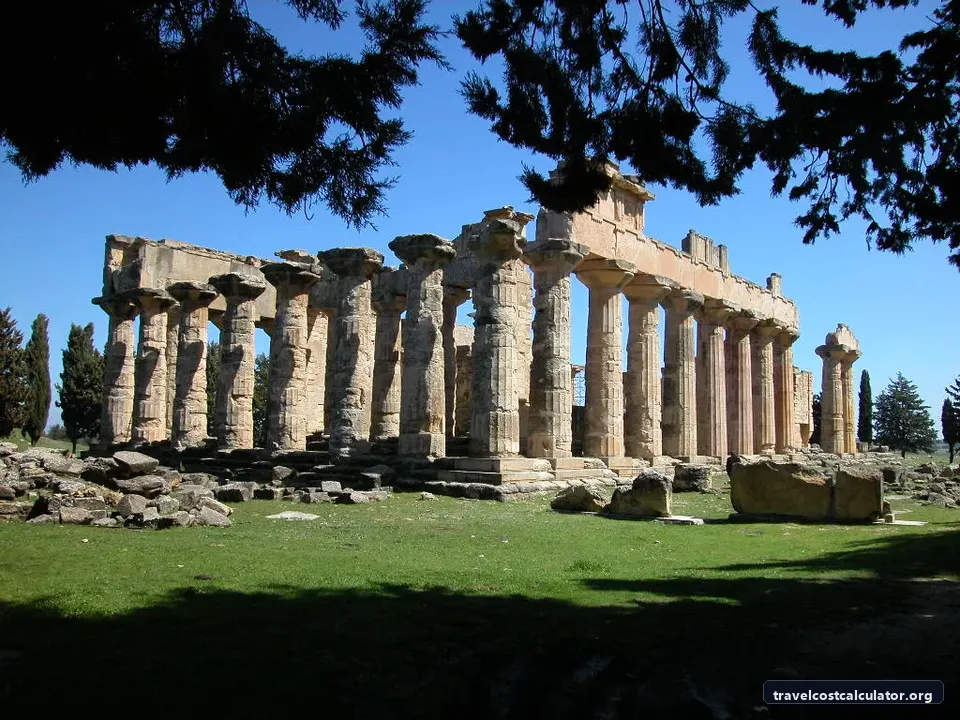
The Temple of Zeus: Larger than the Parthenon in Athens Travel Budget, this massive Doric structure on the eastern hill features re-erected columns that loom dramatically against the open sky.
-
✦
The Agora & Sanctuary of Demeter: The central forum area features intact porticoes, the famous naval monument, and intricate inscriptions carved into pristine yellow limestone blocks.
-
✦
The Great Necropolis: Stretching for kilometers along the roads leading up to Cyrene, thousands of rock-cut tombs and elaborate sarcophagi carve into the cliffside, reminiscent of Petra Travel Budget or the Valley of the Kings.
Insider Visit Hacks for 2026
-
✦
Best Season: March to May is optimal. The Jebel Akhdar region bursts into vibrant green fields and wild spring flowers, offering contrast against the pale ancient stones. September to November is also excellent, with crisp air and low tourist volume.
-
✦
Ideal Time of Day: Arrive at opening (8:00 AM) or visit in the late afternoon (after 3:30 PM). Golden hour casts a warm, honey-colored light over the Temple of Apollo, ideal for landscape photography.
-
✦
Footwear & Terrain: The site covers over 200 hectares of uneven, unpaved terrain. Wear sturdy hiking shoes with strong grip; limestone surfaces can be slippery, especially after light rain.
-
✦
Hydration & Facilities: Restroom and refreshment services inside the ruin boundary are minimal. Carry at least 2 liters of water and light snacks purchased in Shahhat or Al Bayda prior to entry.
🏨 Nearby Accommodation & Daily Budget Allocation
Most visitors use Al Bayda (the third-largest city in Cyrenaica, located 15 km west of the ruins) as their main overnight base, though small boutique guesthouses operate directly in Shahhat.
Accommodation Options (2026 Estimates)
-
✦
Budget / Local Guesthouses (Shahhat & Al Bayda): Simple, clean family-run rooms or basic hotels cost approximately 120 – 200 LYD ($25.00 – $40.00 USD) per night. Expect basic amenities, traditional hospitality, and air conditioning.
-
✦
Mid-Range Hotels (Al Bayda): Standard modern hotels (e.g., Al Loloa Hotel or similar regional properties in Al Bayda) run between 250 – 450 LYD ($50.00 – $90.00 USD) per night, offering private bath, breakfast, Wi-Fi, and secure parking.
-
✦
Upmarket Accommodation (Benghazi Base): Staying in major hotels in Benghazi (such as the Tibesti Hotel or business-class suites) costs $110.00 – $200.00 USD per night, combining a day trip to Cyrene with urban amenities.
Dining & Local Cuisine Costs
Local dining around Shahhat and Al Bayda is flavorful, hearty, and very affordable. Try Ruz Hout (spiced coastal fish rice), Mbrakten, or local fresh lamb dishes.
-
✦
Street Food / Fast Meal (Shawarma, Falafel, Fresh Juice): 10 – 20 LYD ($2.00 – $4.00 USD).
-
✦
Traditional Sit-Down Restaurant Meal: 35 – 70 LYD ($7.00 – $14.00 USD) per person for grilled meats, fresh salads, flatbreads, and mint tea.
Estimated Daily Travel Budgets (Per Person, 2026)
-
✦
Independent / Low-Cost Budget: $45.00 – $75.00 USD / day (Local shared transport where possible, budget guesthouse in Al Bayda, street food, standard site ticket).
-
✦
Standard Guided Tour (Recommended Foreign Tourist Standard): $160.00 – $280.00 USD / day (Covers allocated share of private vehicle/driver, certified guide fees, security permits, mid-range hotel, entry tickets, and full-service dining).
Frequently Asked Questions
Essential visitor FAQs for Archaeological Site of Cyrene
What is the entrance fee for Archaeological Site of Cyrene?
How much time do you need to explore Archaeological Site of Cyrene?
How do I get to Archaeological Site of Cyrene from the nearest city?
📊 Heritage Quick Specs
Visiting Libya on a Budget?
Calculate your full daily travel budget for Libya — including hotel costs, local transport, food, and sightseeing expenses.
View Libya Daily Travel Costs →Explore more UNESCO World Heritage Sites
🏛️ All 1,200+ Heritage Sites →