
 Germany
Archaeological Border complex of Hedeby and the Danevirke
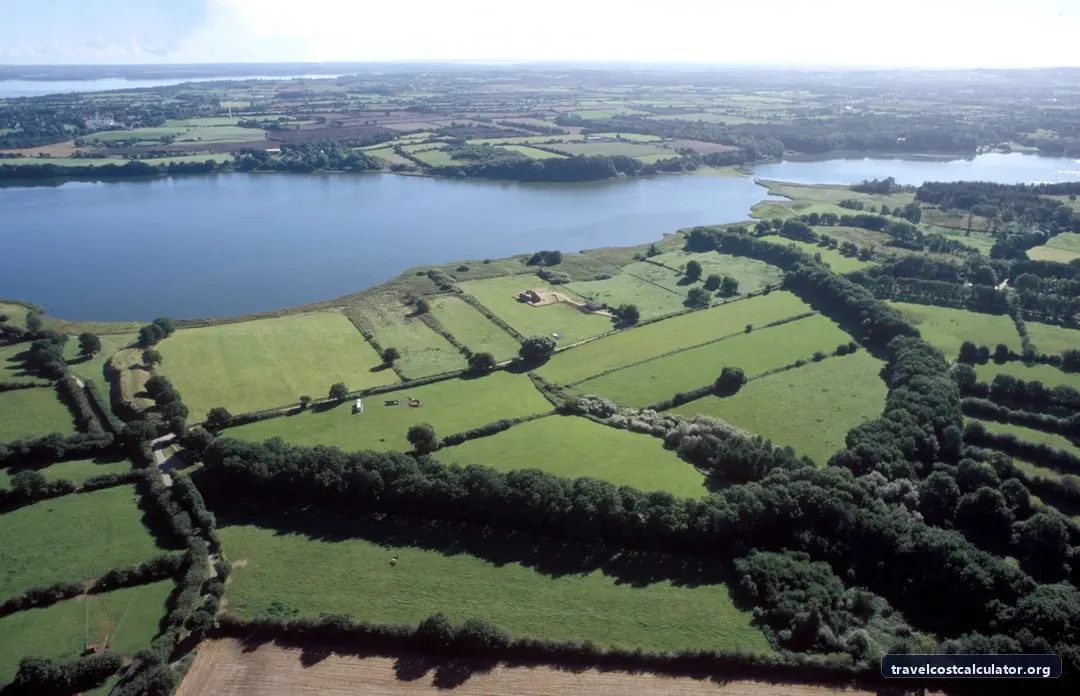
The archaeological site of Hedeby consists of the remains of an emporium – or trading town – containing traces of roads, buildings, cemeteries and a harbour dating back to the 1st and early 2nd millennia CE.
Archaeological Border complex of Hedeby and the Danevirke
1. 🏛️ Overview & Historical Significance
Inscribed as a UNESCO World Heritage site in 2018, the Archaeological Border complex of Hedeby and the Danevirke represents one of the most critical geopolitical and cultural crossroads of Viking Age Europe. Situated at the narrowest neck of the Cimbrian Peninsula in Schleswig-Holstein, Germany, this complex served as the defensive shield and primary trading nexus between Scandinavia and Continental Europe from the 8th to the 11th centuries.
The site comprises two masterworks of early medieval infrastructure:
-
✦
Hedeby (Haithabu): A sprawling early urban trading hub set along the Haddebyer Noor lagoon. Positioned between the Baltic Sea (via the Schlei fjord) and the North Sea (via the rivers Eider and Treene), Hedeby allowed merchants to bypass the dangerous sea journey around Denmark's northern tip. At its height, it was the second-largest Viking city, home to international craftspeople, moneyers, traders, and sailors hailing from Frisia, Saxony, Ireland, and Byzantium.
-
✦
The Danevirke (Danewerk): A massive 30-kilometer-long system of defensive earthworks, trenches, stone walls, and a fortified rampart. Engineered by early Danish rulers—including King Gorm the Old, Queen Thyra, and King Harald Bluetooth—it protected southern Denmark and Viking trade routes from expansionist aggression by the Frankish Empire. The complex includes the famous Waldemarswall (a 12th-century brick extension) and the central gateway (Ochsenweg Gate), which funnelled all overland trade moving north or south through a single fortified checkpoint.
UNESCO awarded World Heritage status to the complex due to its exceptional preservation. Thanks to wet, anaerobic soil conditions, organic artifacts—such as Viking longships, wooden foundations, textiles, leather shoes, and runic monuments—have survived intact for over a millennium. As of 2026, ongoing non-invasive archaeological research continues to yield groundbreaking insights into Viking urbanism, early medieval fortification design, and transnational commerce.
2. 🎟️ Entrance Fees, Opening Hours & Ticket Booking Tips
Visiting the UNESCO complex involves two main museum sites separated by approximately 10 kilometers: the Wikinger Museum Haithabu (near Busdorf) and the Danewerk Museum (in Dannewerk). While the indoor exhibitions and reconstructed Viking houses require tickets, the sprawling outdoor earthworks and hiking trails are accessible free of charge year-round.
Estimated 2026 Ticket Prices
-
✦
Wikinger Museum Haithabu (Museum + Outdoor Viking Village):
- Adult Ticket: €12.00 (~$13.00 USD)
-
✦
Concession (Students, Seniors, Disabled): €8.00 (~$8.70 USD)
-
✦
Family Ticket (2 Adults + Children up to 18): €26.00 (~$28.25 USD)
-
✦
Children (Under 6): Free
- Adult Ticket: €7.50 (~$8.15 USD)
Operating Hours (2026 Schedule)
-
✦
Summer Season (April 1 – October 31): Both museums are open daily from 10:00 AM to 6:00 PM. The outdoor Viking settlement at Haithabu operates fully, complete with costumed historical interpreters and craft demonstrations.
-
✦
Winter Season (November 1 – March 31): Main exhibition buildings are open Tuesday through Sunday, 10:00 AM to 4:00 PM (Closed Mondays). Note: The outdoor reconstructed houses at Haithabu are closed during deep winter for preservation, though the circular earthwork rampart remains accessible to walkers.
Booking Tips & Insider Advice
To avoid long wait times during peak European summer holidays (July–August), reserve digital timed-entry tickets through the official Landesmuseen Schleswig-Holstein portal. If you hold a Deutschlandticket or regional transit pass, present it at the counter for potential partner discounts on local cultural sites. Allow at least 2.5 hours for Haithabu and 1.5 hours for the Danewerk Museum.
3. 🚌 How to Get There & Local Transit Costs
The primary transit gateway for the UNESCO site is the historic town of Schleswig in northern Germany. The nearest major international transport hub is Hamburg, located approximately 120 kilometers to the south.
Step 1: Hamburg to Schleswig
-
✦
By Regional Train (DB Regional): Take the RE7 or RE70 regional express train from Hamburg Hauptbahnhof directly to Schleswig Bahnhof. The journey takes approximately 1 hour and 20 minutes. Single tickets cost around €24.00 – €32.00 (~$26.00 – $34.80 USD). If traveling across Germany, the Deutschlandticket (€58.00/month in 2026) fully covers this regional train route.
-
✦
By Rental Car: Drive north from Hamburg via the A7 Autobahn toward Flensburg. Take Exit 5 (Schleswig-Jagel) for Haithabu or Exit 6 (Schleswig-Süd) for Danewerk. Travel time is around 1 hour 15 minutes. Parking at both museum lots costs €3.00 (~$3.25 USD) per day.
Step 2: Reaching the Sites from Schleswig Station
-
✦
To Wikinger Museum Haithabu: Board local Bus Line 1574 or Line 1502 from Schleswig station to the stop "Haddeby, Wikinger Museum" (12-minute ride, fare approx. €3.40 / $3.70 USD). From the bus stop, enjoy a pleasant 10-minute walk through the nature reserve to the museum entrance. Alternatively, taxi service from Schleswig Hbf costs roughly €15.00 – €18.00 (~$16.30 – $19.50 USD).
-
✦
To Danewerk Museum (Dannewerk): Take Bus Line 1504 from Schleswig station directly to "Dannewerk, Museum" (15-minute ride, fare approx. €3.40 / $3.70 USD).
-
✦
Traveling Between Haithabu and Danevirke: The two sites are connected by a 10 km segment of the historic Ochsenweg route. You can hire an e-bike at Schleswig train station for around €18.00 (~$19.50 USD) per day, take local Bus 1504/1574 via Schleswig transfer, or take a 12-minute taxi ride (~€22.00 / $23.90 USD).
4. 📸 Best Photography Spots & Insider Visit Hacks
Top Photography Locations
-
✦
The Reconstructed Viking Houses at Haithabu: Position yourself along the wooden jetty on the shore of the Haddebyer Noor. Early morning light casts perfect mirror reflections of the thatched-roof wattle-and-daub houses on the serene lagoon surface.
-
✦
The Semicircular Earthwork (Halbkreiswall): Climb to the top of the elevated grassy rampart surrounding Haithabu. Use a wide-angle lens to capture the vast crescent wall framing the reconstructed settlement and the fjord beyond.
-
✦
Waldemarswall (Danewerk): Located inside the Danewerk Archaeological Park, this restored 12th-century red-brick defense wall presents striking textures and historic depth. Framing the brick wall against autumn foliage or summer green grass delivers dramatic landscape shots.
-
✦
The Ochsenweg Gate Trench: Photograph the excavated stone foundations of the ancient gateway where Viking traders once lined up to pay duties.
Insider Visit Hacks
-
✦
Wear All-Weather Footwear: The complex spans extensive natural terrain, grassy dykes, and packed gravel paths. Comfortable, waterproof walking shoes or hiking boots are essential.
-
✦
Plan for the Distance Walk: The main museum building at Haithabu is located about 1.2 kilometers (0.75 miles) away from the outdoor reconstructed Viking village. Factor in a 15-to-20-minute walk along the scenic lake path between the two points.
-
✦
Visit During Reenactment Weekend: Check the museum calendar for the annual summer Viking Market (typically late July). Hundreds of international re-enactors occupy the settlement, demonstrating bronze casting, blacksmithing, combat techniques, and archery.
-
✦
Combine with Holm Fishing Village: Extend your itinerary by visiting the nearby historic fishing district of Holm in Schleswig town, where local families have fished the Schlei fjord using traditional methods since the Middle Ages.
5. 🏨 Nearby Accommodation & Daily Budget Allocation
Staying in the neighboring town of Schleswig provides the most convenient access to both archaeological areas, offering coastal charm along the Schlei fjord alongside excelente regional cuisine.
Recommended Accommodations (2026 Rates)
-
✦
Budget: DJH Jugendherberge Schleswig – A clean, modern youth hostel near the fjord offering dorm beds and private family rooms starting from €38.00 – €55.00 ($41.00 – $60.00 USD) per night, including breakfast.
-
✦
Mid-Range: Hotel Alter Kreisbahnhof – A comfortable boutique hotel situated in a converted historic train station in central Schleswig. Double rooms range from €105.00 – €145.00 ($114.00 – $157.00 USD) per night with rich regional breakfast spreads.
-
✦
Luxury & Wellness: Hotel Waldschlößchen – Located in Schleswig-Pulverholz, this 4-star superior hotel offers fine dining, expansive spa facilities, and quiet woods near the sites. Rooms range from €185.00 – €270.00 ($200.00 – $293.00 USD) per night.
Daily Budget Allocations (Per Person)
| Traveler Style | Accommodation | Food & Dining | Transport & Tickets | Total Daily Budget |
|---|---|---|---|---|
| Budget Backpacker | €42.00 ($45.50 USD) | €22.00 ($24.00 USD) | €16.50 ($18.00 USD) | €80.50 (~$87.50 USD) |
| Mid-Range Traveler | €70.00 ($76.00 USD) | €48.00 ($52.00 USD) | €28.00 ($30.40 USD) | €146.00 (~$158.40 USD) |
| Luxury / Comfort | €135.00 ($146.50 USD) | €95.00 ($103.00 USD) | €55.00 ($60.00 USD) | €285.00 (~$309.50 USD) |
Local Dining Tip
While exploring the region, try local Schleswig-Holstein specialties such as Räucheraal (smoked Schlei eel), Fischbrötchen (fresh fish sandwiches at the harbor kiosks), or regional North German kale stews (Grünkohl) during late autumn and winter months.
Frequently Asked Questions
Essential visitor FAQs for Archaeological Border complex of Hedeby and the Danevirke
What is the entrance fee for Archaeological Border complex of Hedeby and the Danevirke?
How much time do you need to explore Archaeological Border complex of Hedeby and the Danevirke?
How do I get to Archaeological Border complex of Hedeby and the Danevirke from the nearest city?
📊 Heritage Quick Specs
Visiting Germany on a Budget?
Calculate your full daily travel budget for Germany — including hotel costs, local transport, food, and sightseeing expenses.
View Germany Daily Travel Costs →Explore more UNESCO World Heritage Sites
🏛️ All 1,200+ Heritage Sites →