
 Italy
Italy
Archaeological Area of Agrigento
Founded as a Greek colony in the 6th century B.C., Agrigento became one of the leading cities in the Mediterranean world.
Archaeological Area of Agrigento
🏛️ Overview & Historical Significance
Rising dramatically along a Mediterranean ridge in southwestern Sicily, the Archaeological Area of Agrigento—widely known as the Valle dei Templi (Valley of the Temples)—stands as one of the most sublime achievements of ancient Greek architecture anywhere in the world. Designated as a UNESCO World Heritage Site in 1997, this 1,300-hectare park contains the extraordinary remnants of the ancient Greek city of Akragas, founded in 581 BC by colonists from Gela and Crete Travel Budget.
During its golden era in the 5th century BC, Akragas grew into one of the leading metropolis hubs of Magna Graecia, boasting a population of over 200,000 residents. The Greek philosopher Empedocles famously remarked that the citizens of Akragas built "as if they would live forever, and ate as if they would die tomorrow." UNESCO recognized the area not only for its exceptionally preserved Doric temples, but also because the site uniquely demonstrates the economic, cultural, and political grandeur of a Greek colony integrated harmoniously into its surrounding agricultural landscape.
Unlike many ancient ruins that sit hemmed in by modern urban sprawl, Agrigento’s monuments stretch along a high rocky crest overlooking olive groves, almond orchards, and the sparkling Mediterranean Sea. Key highlights within the archaeological park include:
-
✦
Temple of Concordia (Tempio della Concordia): Constructed around 430 BC, this is widely considered the finest surviving Doric temple on Earth alongside the Parthenon. Its survival is largely due to its conversion into a Christian basilica in the 6th century AD.
-
✦
Temple of Juno (Tempio di Giunone / Hera Lacinia): Sitting at the highest point of the ridge, this 5th-century BC temple still displays fire marks left by Carthaginian invaders during the siege of 406 BC.
-
✦
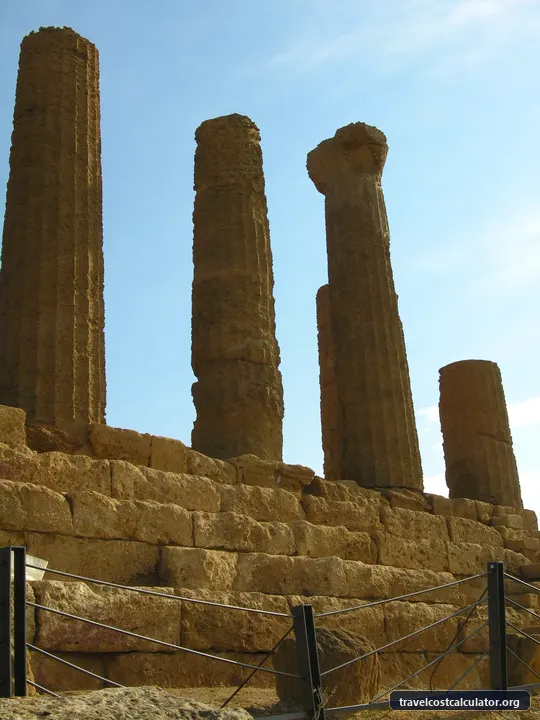
Temple of Heracles (Tempio di Ercole): The oldest temple at the site (late 6th century BC), featuring eight painstakingly re-erected Doric columns.
-
✦
Temple of Olympian Zeus (Olympeion): Once one of the largest Greek temples ever attempted, famous for its colossal Telamones—giant stone Atlas figures used as structural supports.
-
✦
Temple of Castor and Pollux (Dioscuri): Featuring four iconic reconstructed columns that have become the official symbol of modern Agrigento.
🎟️ Entrance Fees, Opening Hours & Ticket Booking Tips
Planning your visit in 2026 requires understanding ticket combinations, dynamic seasonal hours, and online reservation strategies to avoid long lines under the Sicilian sun.
Updated 2026 Admission Pricing
-
✦
Standard Adult Valley Ticket: €14.00 – €16.00 (~$15.00 – $17.50 USD). Note: Prices sit at the higher end during special temporary art exhibitions held inside the park.
-
✦
Combined Ticket (Valley + Pietro Griffo Archaeological Museum): €18.00 – €21.00 (~$19.50 – $23.00 USD). Highly recommended for history enthusiasts.
-
✦
Combined Ticket (Valley + Kolymbethra Garden): €20.00 – €24.00 (~$21.50 – $26.00 USD). Includes access to the lush ancient garden managed by FAI (Fondo Ambiente Italiano).
-
✦
EU Citizens (Ages 18–25): Reduced rate of €2.00 – €4.00 (~$2.15 – $4.30 USD) upon showing valid ID.
-
✦
Under 18s & Disabled Visitors: Free admission (online booking fee of €1.00–€2.00 may still apply for timed reservations).
Opening Hours & Seasonal Visiting Times (2026)
The archaeological park is open 365 days a year from 8:30 AM to 8:00 PM (last admission at 7:00 PM). However, schedule variations occur seasonally:
-
✦
Summer Night Visits (July to September): The park reopens during hot summer nights (typically 8:00 PM to 11:00 PM on weekdays, extending to midnight on weekends and holidays). Walking among illuminated Doric columns under the stars is an unforgettable experience.
-
✦
First Sunday of the Month: Free entry for all visitors. Insider Tip: Arrive prior to 8:30 AM if visiting on a free Sunday, as security queues can stretch up to an hour by midday.
Ticket Booking Hacks
To skip ticket lines, purchase your digital tickets in advance via the official park ticketing partner (CoopCulture / Aditus). Always download your electronic PDF ticket to your smartphone before entering the park, as cellular network coverage can be spotty along the lower ridge.
🚌 How to Get There & Local Transit Costs
Agrigento is located on the southern coast of Sicily. Most international travelers reach the site via connection from major transit hubs in Palermo (north) or Catania (east).
1. Travel from Palermo to Agrigento
-
✦
By Regional Train (Trenitalia): Trains depart from Palermo Centrale to Agrigento Centrale roughly every hour. The journey takes approximately 2 hours. Cost (2026): €10.50 – €12.50 (~$11.50 – $13.50 USD) one-way.
-
✦
By Express Bus (SAIS Trasporti): Buses depart from the terminal next to Palermo Train Station directly to Agrigento. Travel time is around 2 hours. Cost: €9.50 – €11.00 (~$10.50 – $12.00 USD) one-way.
2. Travel from Catania to Agrigento
-
✦
By Bus (SAIS Trasporti): Direct buses run from Catania Fontanarossa Airport (CTA) and Catania Central Station to Agrigento Bus Terminal. Duration: ~2.5 to 3 hours. Cost: €14.00 – €16.00 (~$15.00 – $17.50 USD) one-way.
3. Getting from Agrigento City Center to the Valley of the Temples
Once you arrive at Agrigento Centrale train station or the main bus depot at Piazza Marconi, you are about 3 kilometers from the archaeological site.
-
✦
City Bus (TUA / TUCSA Line 1, 2, or 2/): Board local buses from Piazza Marconi directly to either the Tempio di Giunone (upper gate) or Porta Quinta (lower gate). Frequency is every 20–30 minutes. Cost: €1.20 – €1.70 (~$1.30 – $1.85 USD) if purchased at a local newsstand/tabacchi, or €2.00 onboard.
-
✦
Official Taxi: Taxis are available outside Agrigento Central Station. Standard fixed-rate city fares to the park range from €12.00 to €18.00 (~$13.00 – $19.50 USD) per trip.
-
✦
Internal Park Electric Shuttle: The main park path is roughly 2.5 kilometers long. If you do not wish to backtrack uphill, electric shuttle vans run continuously between the upper gate (Juno) and lower gate (Porta Quinta). Cost: €3.00 (~$3.25 USD) per person one-way.
📸 Best Photography Spots & Insider Visit Hacks
Prime Photography Locations
-
✦
The Fallen Icarus & Temple of Concordia: Position yourself near the famous bronze sculpture of Fallen Icarus (created by artist Igor Mitoraj) looking toward the west face of the Temple of Concordia. Photographing during the golden hour (60–90 minutes before sunset) casts a glowing amber light across the golden calcarenite stone.
-
✦
Temple of Juno Ridge View: Capture the sweeping vista looking down from the Temple of Juno along the ancient city walls toward the sea.
-
✦
The Colossal Telamon: Get a low-angle shot of the giant 8-meter stone Atlas figure lying horizontally at the Temple of Olympian Zeus site to convey the massive scale of ancient Greek masonry.
-
✦
Kolymbethra Olive & Citrus Groves: Head down into the ravine for shots of ancient olive trunks framing the stone aqueducts and temple silhouettes above.
Insider Hacks to Avoid Crowds & Heat
-
✦
Walk Top-to-Bottom: Start your entrance at the Tempio di Giunone (Upper Gate) and walk downhill toward Porta Quinta (Lower Gate). This avoids a steep uphill trek in the sun. Take the €3 internal shuttle back to your starting point or transit bus.
-
✦
Beating Sicilian Heatwaves: Midsummer (July–August) temperatures frequently exceed 38°C (100°F) with virtually no shade along the open temple ridge. Visit immediately at opening (8:30 AM) or opt for night illuminated visits.
-
✦
Essential Gear: Wear sturdy walking shoes (the limestone dust paths can be slippery and uneven), bring a wide-brimmed hat, apply SPF 50+ sunscreen, and carry a refillable water bottle (free potable water fountains are located near each main temple area).
🏨 Nearby Accommodation & Daily Budget Allocation
To fully experience Agrigento without rushing, plan for an overnight stay in either Agrigento's historic hilltop city center or a rustic agriturismo nearby.
Accommodation Recommendations (2026 Rates)
-
✦
Budget Travelers ($45 – $85 / €40 – €80 per night): Hostels and modest Bed & Breakfasts situated along Via Atenea or near Agrigento Centrale. Clean, central, and close to public transit nodes.
-
✦
Mid-Range Travelers ($120 – $210 / €110 – €195 per night): Boutique B&Bs in restored palazzos within Agrigento's medieval center, or comfortable country agriturismos set among olive groves offering regional dinners.
-
✦
Luxury Travelers ($380 – $850+ / €350 – €780+ per night): Hotel Villa Athena—the only luxury 5-star hotel located inside the archaeological park itself, boasting private balconies directly facing the illuminated Temple of Concordia.
Daily Travel Budget Allocation (Per Person, 2026 Estimates)
| Travel Style | Daily Budget (USD) | Daily Budget (EUR) | Breakdown Highlights |
|---|---|---|---|
| Backpacker / Budget | $65 – $90 | €60 – €83 | Hostel/B&B stay, regional train, local bus transit, street food/arancini, single park entrance ticket. |
| Mid-Range / Flashpacker | $160 – $260 | €145 – €240 | Boutique B&B or Agriturismo, combined museum/garden tickets, sit-down lunch & dinner with regional wine, local taxi. |
| Luxury | $500+ | €460+ | 5-star resort (Villa Athena), private chauffeur, licensed expert private tour guide, fine dining seafood tasting menu. |
Sicilian Culinary Highlights near Agrigento
Don't leave Agrigento without trying local southwestern Sicilian specialties. Budget around €15–€35 per person for a mid-tier lunch or dinner:
-
✦
Pasta alla Norma: Rigatoni tossed with fried eggplant, rich tomato sauce, fresh basil, and salted ricotta cheese.
-
✦
Cavatelli con Melanzane e Gamberi: Fresh local pasta with sweet Mediterranean red shrimp and sautéed eggplant.
-
✦
Arancini & Cannoli: Savor savory fried rice balls stuffed with ragù or pistachios, followed by crispy pastry shells filled with fresh sheep's milk ricotta.
-
✦
Granita di Mandorla: Refreshing crushed almond ice served alongside a warm brioche bun for breakfast or a mid-afternoon cooling snack.
Frequently Asked Questions
Essential visitor FAQs for Archaeological Area of Agrigento
What is the entrance fee for Archaeological Area of Agrigento?
How much time do you need to explore Archaeological Area of Agrigento?
How do I get to Archaeological Area of Agrigento from the nearest city?
📊 Heritage Quick Specs
Visiting Italy on a Budget?
Calculate your full daily travel budget for Italy — including hotel costs, local transport, food, and sightseeing expenses.
View Italy Daily Travel Costs →Explore more UNESCO World Heritage Sites
🏛️ All 1,200+ Heritage Sites →