
 Cambodia
Angkor
Angkor is one of the most important archaeological sites in South-East Asia. Stretching over some 400 km2, including forested area, Angkor Archaeological Park contains the magnificent remains of the different c...
Angkor
🏛️ Overview & Historical Significance
Stretching across more than 400 square kilometers of lush tropical forest in northwest Cambodia, the Angkor Archaeological Park stands as one of the most monumental urban and architectural achievements in human history. Serving as the seat of the Khmer Empire from the 9th to the 15th centuries, Angkor was once the largest pre-industrial city on Earth, home to an estimated population of over 750,000 people at its peak.
In 1992, UNESCO inscribed Angkor as a World Heritage site under criteria (i), (ii), (iii), and (iv). The designation recognized not only its breathtaking temple structures but also its sophisticated hydraulic engineering system—an intricate network of artificial reservoirs (barays), canals, and dikes that managed the seasonal monsoon waters to sustain agriculture and civic life. The site suffered decades of neglect and looting during late 20th-century geopolitical conflicts, making its UNESCO status instrumental in launching one of the world's most extensive international conservation initiatives.
The complex showcases two distinct religious evolutionary phases of the Khmer Empire:
-
✦
Hindu Architectural Triumph: Spearheaded by King Suryavarman II in the early 12th century, Angkor Wat was constructed as a Hindu temple dedicated to the deity Vishnu, designed as a physical representation of Mount Meru, the sacred home of the gods.
-
✦
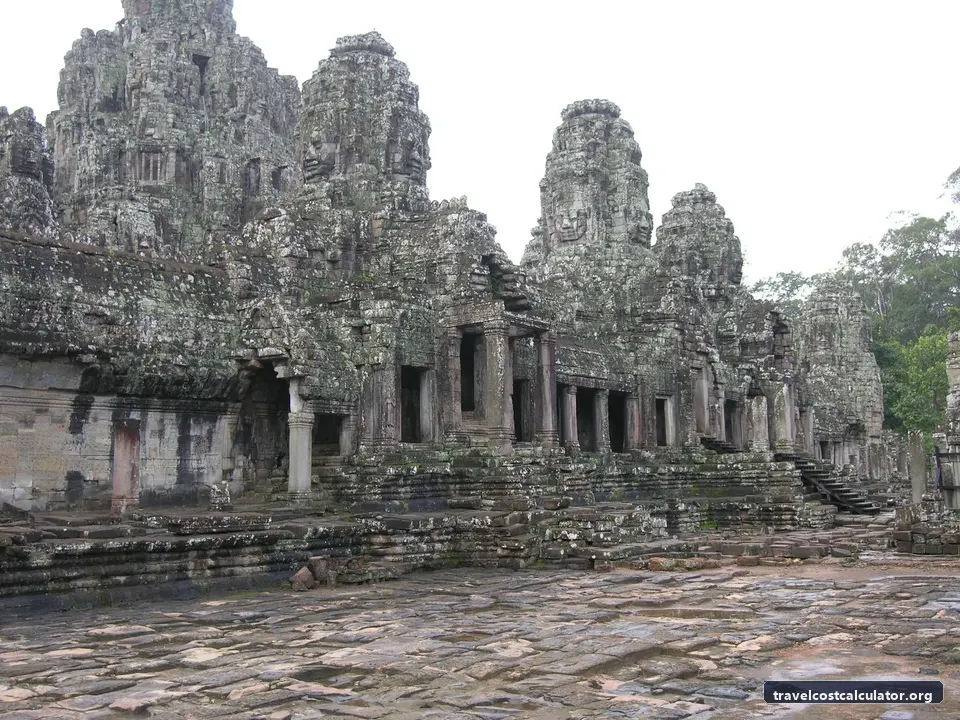
Mahayana & Theravada Buddhist Renaissance: Under the reign of King Jayavarman VII in the late 12th and early 13th centuries, the empire transitioned to Buddhism. This era yielded Angkor Thom, anchored by the enigmatic face-towers of Bayon, alongside atmospheric monastic complexes like Ta Prohm and Preah Khan.
🎟️ Entrance Fees, Opening Hours & Ticket Booking Tips
Visiting Angkor requires purchasing an official pass managed by Angkor Enterprise. In 2026, pricing remains standardized in U.S. Dollars (USD), though payments can also be settled in Cambodian Riel (KHR) or via major international credit cards.
2026 Angkor Pass Ticket Pricing
-
✦
1-Day Pass: $37 USD (approx. 151,700 KHR) – Valid for a single calendar day.
-
✦
3-Day Pass: $62 USD (approx. 254,200 KHR) – Valid for any 3 days within a 10-day window from the date of issue.
-
✦
7-Day Pass: $72 USD (approx. 295,200 KHR) – Valid for any 7 days within a 30-day window from the date of issue.
Note: Children under the age of 12 enter for free, but you must present their original passport at security checkpoints for verification.
Opening Hours & Site Access
-
✦
Angkor Wat & Phnom Bakheng: Open from 5:00 AM to 5:30 PM (to accommodate sunrise and sunset visitors).
-
✦
Banteay Srei: Open from 6:00 AM to 5:00 PM.
-
✦
All Other Temples (Bayon, Ta Prohm, Preah Khan, etc.): Open from 7:30 AM to 5:30 PM.
Pro Tips for Buying Your Ticket
To avoid long queues at the physical ticket center situated outside Siem Reap Travel Budget city center, purchase your pass online via the official Angkor Enterprise portal (angkor.gov.kh) prior to your arrival. You can display the PDF QR code directly on your mobile device at each temple entry gate. If you purchase a 1-Day Pass at the physical ticket office after 4:45 PM, it becomes valid for immediate entry to catch the sunset, plus the entire following day.
🚌 How to Get There & Local Transit Costs
The primary launchpad for exploring Angkor is the city of Siem Reap. All long-distance international and domestic travelers arrive via the state-of-the-art Siem Reap-Angkor International Airport (SAI), located approximately 45 kilometers east of the city center.
Step 1: Transport from SAI Airport to Siem Reap City Center
-
✦
Airport Express Shuttle Bus: $9 USD one-way (approx. 37,000 KHR). Buses run according to flight arrival schedules directly to the downtown bus hub.
-
✦
Official Airport Taxi/Private Transfer: $30 – $35 USD per vehicle (approx. 123,000 – 143,500 KHR). Takes around 50–60 minutes.
Step 2: Getting from Siem Reap to Angkor Archaeological Park
The southern gate of Angkor Wat lies roughly 6 kilometers north of Siem Reap's Pub Street area. Local transit within the park complex can be hired through ride-hailing apps (like Grab or PassApp) or directly through your hotel concierge.
-
✦
Traditional Tuk-Tuk (Remorque): The classic, open-air choice. Expect to pay $18 – $25 USD per day for the popular Small Circuit (Angkor Wat, Bayon, Ta Prohm) and $25 – $35 USD for the Grand Circuit or outer temples like Banteay Srei. Drivers wait for you outside each temple site.
-
✦
Private Air-Conditioned Car / SUV: Ideal for beating the extreme afternoon heat. Rates range between $40 – $60 USD per day depending on vehicle type and total distance covered.
-
✦
E-Bike / Scooter Rental: Rental e-bikes cost roughly $10 – $15 USD per day. Gasoline-powered scooter rentals for foreign tourists are restricted in some zones, making electric scooters the safer, hassle-free option.
-
✦
Guided Bicycle Tours: Quality mountain bike rentals cost around $5 – $8 USD per day. Cycling between temples is flat, but requires stamina due to high humidity.
📸 Best Photography Spots & Insider Visit Hacks
Top Photography Hotspots
-
✦
Angkor Wat Reflecting Pool (Sunrise): Stand along the edge of the northern (left) lotus pond inside the outer enclosure. Arrive by 5:00 AM to secure a front-row spot for the iconic silhouette against dramatic purple and golden skies.
-
✦
Ta Prohm (The "Tomb Raider" Temple): Capture the massive roots of the strangler fig and silk-cotton trees wrapping around ancient stone doorways. Best photographed between 7:30 AM and 8:30 AM, when soft morning sunbeams slice through the forest canopy before crowds arrive.
-
✦
Bayon Temple (Angkor Thom): Position yourself on the upper terrace during mid-afternoon (around 3:30 PM – 4:30 PM) for optimal directional lighting across the 216 smiling serene face-towers of Lokeshvara.
-
✦
Banteay Srei: Known as the "Citadel of Women," this 10th-century temple features exquisite, detailed carvings carved from pink sandstone. Visit around 8:00 AM when the morning sun illuminates the red-pink hues.
Insider Hacks to Avoid Crowds & Heat
-
✦
Run the "Reverse Circuit": Most tour buses follow a predictable routine: Sunrise at Angkor Wat -> Breakfast -> Bayon -> Ta Prohm. Beat them by heading straight to Ta Prohm at 7:30 AM when gates open. You will have the overgrown corridors virtually to yourself. Then, visit Angkor Wat between 12:30 PM and 2:30 PM, when tour groups return to town for lunch.
-
✦
Strict Dress Code Compliance: Angkor is an active religious shrine. Shoulders and knees MUST be covered. Tight leggings, sleeveless shirts, and sheer fabrics are prohibited. At the top level (Bakan Tower) of Angkor Wat, scarfs wrapped over shorts are frequently rejected; wear proper long trousers or a maxi skirt.
-
✦
Hydration & Seasonal Strategy: The dry season runs from November to April, with cool dry weather in Nov–Feb (peak tourist period). March to May brings scorching temperatures reaching up to 40°C (104°F). The green monsoon season (June to October) brings short afternoon downpours, but rewards travelers with lush emerald green foliage, brimming moats, dramatic skies, and 50% fewer crowds.
🏨 Nearby Accommodation & Daily Budget Allocation
Visitors stay in nearby Siem Reap, which offers world-class hospitality infrastructure ranging from social backpacker hostels to ultra-luxurious eco-resorts.
Recommended Accommodation Zones
-
✦
Wat Bo Area & Riverfront: Quiet, trendy, filled with excellent cafes, boutique hotels, and within walking distance of downtown. Ideal for mid-range and couples.
-
✦
Old Market & Pub Street: Action-packed, vibrant night markets, budget hostels, and budget dining. Perfect for solo travelers and backpackers.
-
✦
Airport Road & Charles de Gaulle Boulevard: Home to luxury 5-star resorts offering peaceful spa retreats after long temple treks.
Daily Budget Allocation Breakdown (Estimated 2026 Prices)
1. Backpacker / Budget Tier: ~$30 – $50 USD / day
-
✦
Dorm Bed or Budget Room: $8 – $15 USD
-
✦
Food & Drinks: $8 – $12 USD (Street food stalls, local Lok Lak or Amok dishes for $3–$5)
-
✦
Transport: $5 – $10 USD (Shared tuk-tuk or rented e-bike)
-
✦
Angkor Pass (pro-rated): ~$12 – $20 USD/day
2. Mid-Range Traveler Tier: ~$80 – $150 USD / day
-
✦
Boutique Hotel with Pool: $40 – $75 USD per night
-
✦
Dining: $20 – $35 USD (Sit-down Khmer and international fusion restaurants)
-
✦
Transport: $20 – $30 USD (Dedicated private tuk-tuk driver for the day)
-
✦
Guided Tours & Extras: $15 – $25 USD
3. Luxury / Premium Tier: ~$300 – $700+ USD / day
-
✦
5-Star Luxury Resort (e.g., Raffles, Phum Baitang, Amansara): $250 – $600+ USD per night
-
✦
Fine Dining: $50 – $100+ USD per person
-
✦
Transport: $60 – $120 USD (Private AC SUV with official licensed English-speaking historian guide)
Frequently Asked Questions
Essential visitor FAQs for Angkor
What is the entrance fee for Angkor in 2026?
How much time do you need to explore Angkor?
How do I get to Angkor from the nearest city?
📊 Heritage Quick Specs
Visiting Cambodia on a Budget?
Calculate your full daily travel budget for Cambodia — including hotel costs, local transport, food, and sightseeing expenses.
View Cambodia Daily Travel Costs →Explore more UNESCO World Heritage Sites
🏛️ All 1,200+ Heritage Sites →