
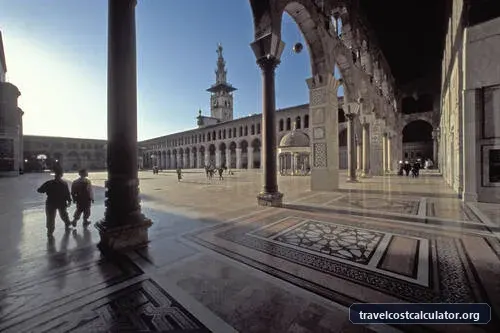
 Syria
Syria
Ancient City of Damascus
Founded in the 3rd millennium B.C., Damascus is one of the oldest cities in the Middle East.
Ancient City of Damascus
🏛️ Overview & Historical Significance
Stepping into the Ancient City of Damascus is akin to crossing an atmospheric portal straight into the origins of human civilization. Recognized continuously as one of the oldest inhabited cities on Earth—with urban settlement roots extending back to the 3rd millennium BC—Damascus was officially designated a UNESCO World Heritage site in 1979. Its inclusion on the World Heritage list recognizes its unmatched role as a crossroads of empires, architecture, and spiritual history in the Levant.
Encased within ancient Roman-era walls, the Old City contains over 125 historical monuments spanning distinct epochs: Aramaean, Hellenistic, Roman, Byzantine, Umayyad, Mamluk, and Ottoman. In the 8th century, Damascus served as the imperial capital of the Umayyad Caliphate, the first Islamic empire, which stretched from Spain to the borders of China. It was during this golden age that the city established its urban layout and architectural pinnacle: the legendary Umayyad Mosque (Great Mosque of Damascus), built on the sacred site of a Roman Temple of Jupiter and a Byzantine Basilica dedicated to John the Baptist.
Beyond its grand monuments, the architectural mastery of Damascus lies in its traditional domestic design. The streetscape is characterized by blank outer mud-brick and stone exterior walls that open into breathtaking inner courtyards featuring marble fountains, citrus trees, and ornate ablaq (alternating light and dark stone) masonry. In 2026, as heritage preservation efforts and cultural tourism continue to revitalize the city's historic core, visiting the Ancient City of Damascus remains one of the world's most profound cultural journeys.
🎟️ Entrance Fees, Opening Hours & Ticket Booking Tips
Navigating financial logistics in Syria requires pre-planning. Due to international banking sanctions that persist in 2026, credit and debit cards are not accepted anywhere. All ticket purchases, dining, and shopping inside the Old City must be paid in physical cash using Syrian Pounds (SYP) or US Dollars (USD) where permitted. Foreign visitors must carry crisp, undamaged USD (preferably printed after 2013) or Euros to convert at official exchange offices or banks upon entry.
While entering the old walled city district itself is completely free, individual historic sites require individual tickets. Below are the estimated ticket prices and operating hours for 2026:
-
✦
Umayyad Mosque: Entry fee for international visitors is approximately 40,000 SYP (~$3.00 – $4.00 USD). Open daily from 8:00 AM to 8:00 PM, except during active prayer times (especially Friday noon prayers). Abayas and head coverings are provided free at the visitor entrance for women.
-
✦
Al-Azem Palace (Museum of Popular Traditions): Entry is approximately 45,000 SYP (~$3.50 – $4.50 USD). Open Wednesday through Monday from 9:00 AM to 5:00 PM (Closed Tuesdays).
-
✦
Citadel of Damascus: Outer views are free; open sections of the fortress interior cost approximately 35,000 SYP (~$2.50 – $3.50 USD). Hours are generally 9:00 AM to 4:00 PM.
-
✦
Maktab Anbar & Historical Damascene Houses: Minor heritage mansions charge between 15,000 SYP and 25,000 SYP (~$1.00 – $2.00 USD).
Pro Booking Tip: There is no centralized online booking portal for tickets in Damascus. All tickets must be bought at the door in cash. Arrive at major sites like Al-Azem Palace right at opening time to complete ticket purchases smoothly before large local tour groups arrive.
🚌 How to Get There & Local Transit Costs
Most international travelers entering Syria in 2026 travel overland from Lebanon or arrive via direct flights into Damascus International Airport (DAM) from regional hubs such as Dubai, Amman Travel Budget, Cairo, or Doha Travel Budget.
Option 1: Overland Transfer from Beirut Travel Budget (Most Popular Route)
Crossing from Beirut, Lebanon, to Damascus remains the standard overland journey for foreign tourists, taking approximately 2.5 to 4 hours depending on border processing at the Masnaa/Jdeideh border control.
-
✦
Private Driver / Taxi from Beirut to Damascus Old City: Expect to pay $90 to $130 USD per vehicle one-way. This covers door-to-door transport including border waiting times.
-
✦
Shared Taxi (Service): Departs from Beirut’s Cola Station or Charles Helou Bus Station to Damascus (Sumariya Terminal). Costs roughly $25 to $35 USD per seat.
Option 2: From Damascus International Airport (DAM) to the Old City
The airport lies about 30 km (18 miles) southeast of the historic center.
-
✦
Airport Taxi: Yellow official airport taxis charge a fixed rate of approximately 200,000 to 250,000 SYP ($15.00 – $20.00 USD) to drop you off near Bab Sharqi or Bab al-Jabiyah gates.
-
✦
Pre-arranged Hotel Shuttle: Heritage hotels in the Old City frequently offer pick-up services ranging from $20.00 to $30.00 USD.
Getting Around the Old City
The Ancient City of Damascus is entirely pedestrianized within its narrow alleyways. Vehicles cannot pass through the ancient streets. You will explore fully on foot. If traveling between outer city gates (e.g., from Bab Sharqi to the National Museum outside the walls), local taxis cost around 20,000 to 30,000 SYP ($1.50 – $2.50 USD) per inner-city trip.
📸 Best Photography Spots & Insider Visit Hacks
Capturing the vibrant essence of Damascus requires an eye for detail, light, and architectural symmetry. The city is exceptionally photographic, blending ancient stone with modern street life.
Prime Photography Locations
-
✦
Courtyard of the Umayyad Mosque: Photographed best in the late afternoon (golden hour). The light reflects off the polished marble courtyard floor and illuminates the intricate 8th-century gold and green glass mosaics on the main façade and the Dome of the Treasury (Qubbat al-Khazna).
-
✦
Souk Al-Hamidiyah: Shoot down the grand central iron-vaulted aisle during mid-day when sunbeams pierce through the historical bullet holes in the corrugated roof, creating dramatic rays of light.
-
✦
Al-Azem Palace Courtyard: Visit around 10:00 AM for soft morning light filtering through the citrus tree canopy onto the striped ablaq stonework and central fountains.
-
✦
Rooftop Cafes near Bab Sharqi: Head to a rooftop café in the Christian Quarter at sunset for sweeping views over the tiled roofs, church bell towers, and iconic minarets set against Mount Qasioun in the background.
Insider Visit Hacks & Etiquette
-
✦
Best Time of Year: The ideal travel windows are Spring (March to May) and Autumn (September to November). Summer temperatures frequently exceed 38°C (100°F), while winter can bring near-freezing rain and chilly drafts inside historic stone buildings.
-
✦
Cultural Etiquette: Damascus is a welcoming city, but modest attire is expected. Shoulders and knees should be covered for all gender identities when walking through religious areas and traditional souks. Always ask for permission before taking close-up portraits of shopkeepers or locals.
-
✦
Bakdash Ice Cream Stop: Located inside Souk Al-Hamidiyah, stop at the legendary Bakdash shop to sample traditional Syrian Booza (mastic ice cream coated in crushed pistachios, pounded by hand with wooden mallets). A bowl costs under 20,000 SYP (~$1.50 USD).
🏨 Nearby Accommodation & Daily Budget Allocation
Staying inside the walls of the Old City in a lovingly restored 18th- or 19th-century Damascene mansion (Beit) offers an unmatched cultural immersion. Accommodations outside the walls consist mainly of modern high-rise hotels, but staying inside the gates allows you to walk through quiet, dimly lit stone alleys at night.
Recommended Accommodation Options in 2026
-
✦
Budget / Traditional Guesthouses: Located around the Bab Sharqi quarter. Simple rooms in authentic courtyard homes with shared or private bath facilities start at $35.00 – $55.00 USD per night.
-
✦
Mid-Range Heritage Boutique Hotels: Establishments such as Beit Al-Wali, Beit Al-Mamlouka, or Talisman Hotel offer luxurious courtyard suites, carved wooden ceilings, heated plunge pools, and lavish traditional breakfasts. Prices range from $100.00 to $180.00 USD per night.
Estimated Daily Budget Breakdown (per person in 2026)
Below is a realistic breakdown of daily expenses for exploring the Ancient City of Damascus:
-
✦
Budget Backpacker: $45 – $65 USD / day
- Accommodation (Budget Guesthouse): $20 - $25 (shared room basis)
-
✦
Meals (Falafel, Fatteh, Street Shawarma, Bakery Treats): $10 - $15
-
✦
Site Entrance Fees: $8 - $10
-
✦
Local Taxis / Incidentals: $7 - $15
- Accommodation (Boutique Heritage Mansion): $60 - $90 (per person double occupancy)
Plan to carry your full estimated daily budget in cash USD. Tipping is customary in restaurants and for local guides; setting aside 10% in cash for staff is widely appreciated.
Frequently Asked Questions
Essential visitor FAQs for Ancient City of Damascus
What is the entrance fee for Ancient City of Damascus?
How much time do you need to explore Ancient City of Damascus?
How do I get to Ancient City of Damascus from the nearest city?
📊 Heritage Quick Specs
Visiting Syria on a Budget?
Calculate your full daily travel budget for Syria — including hotel costs, local transport, food, and sightseeing expenses.
View Syria Daily Travel Costs →Explore more UNESCO World Heritage Sites
🏛️ All 1,200+ Heritage Sites →