
 China
China
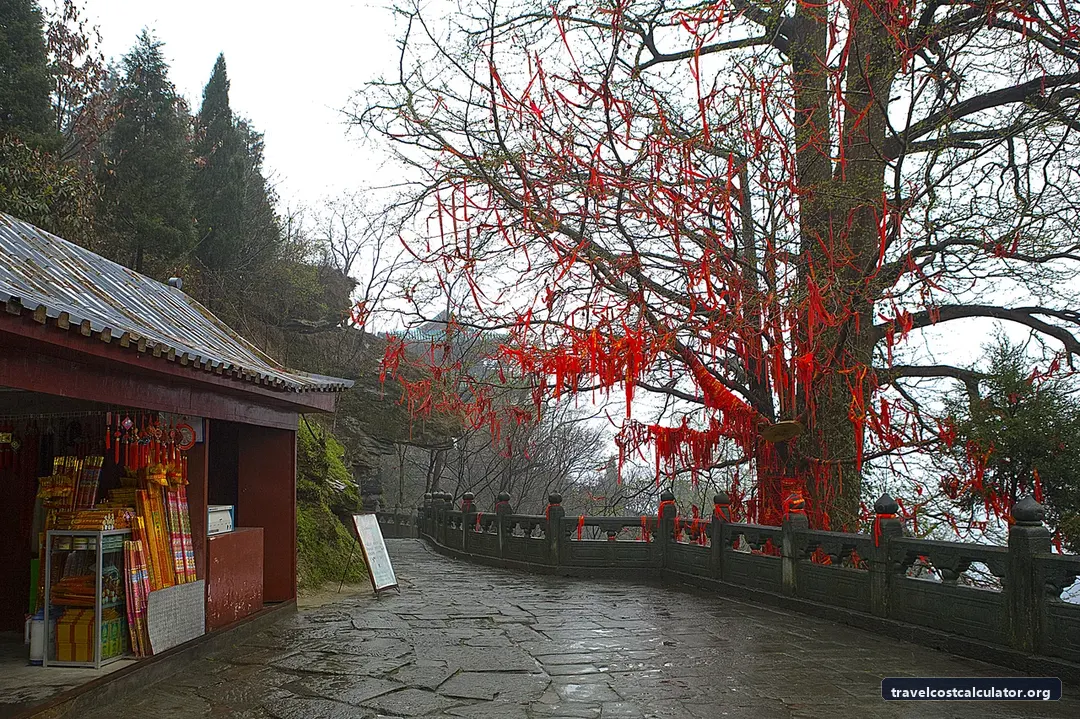
Ancient Building Complex in the Wudang Mountains
The palaces and temples which form the nucleus of this group of secular and religious buildings exemplify the architectural and artistic achievements of China's Yuan, Ming and Qing dynasties.
Ancient Building Complex in the Wudang Mountains
🏛️ Overview & Historical Significance
Perched dramatically along the misty ridges of Hubei Province, the Ancient Building Complex in the Wudang Mountains (Wudangshan) represents one of the crowning achievements of Chinese imperial architecture and Taoist spiritual heritage. Inscribed as a UNESCO World Heritage site in 1994, this vast mountain complex seamlessly weaves sacred shrines, palaces, and monasteries into an extraordinary natural landscape of 72 peak lines, deep ravines, and sheer cliffs.
While Taoist hermitages existed on Wudang Mountain as early as the Zhou Dynasty (1046–256 BCE) and expanded during the Tang and Song eras, the complex reached its architectural zenith during the Ming Dynasty under Emperor Yongle in the early 15th century. Seeking to legitimize his rule through divine patronage, Emperor Yongle dispatched over 300,000 soldiers, artisans, and laborers over a 12-year period to transform Wudang into the supreme royal Taoist sanctuary of the empire. The scale of construction rivaled the building of the Forbidden City in Beijing Travel Budget, giving rise to the saying: "In the north, the Forbidden City; in the south, Wudang Mountain."
UNESCO recognized the site for meeting Criteria (i), (ii), and (vi). The buildings exemplify the highest technical and aesthetic standards of Ming and Qing dynasty Chinese architecture spanning nearly 1,000 years. Furthermore, Wudang Mountain is revered worldwide as the birth cradle of Wudang Internal Martial Arts and Tai Chi (Taiji), famously attributed to the legendary Taoist master Zhang Sanfeng. Today, it remains an active center of Taoist worship, martial arts pilgrimage, and architectural wonder.
🎟️ Entrance Fees, Opening Hours & Ticket Booking Tips
Navigating the ticket structure at Wudang Mountain requires understanding that the core ticket includes both general entry and the mandatory internal scenic transit bus system. Additional small entry fees apply to specific sacred sites within the park.
2026 Standard Ticket Pricing Breakdown
-
✦
Main Scenic Area Combo Ticket (Entrance + Internal Shuttle Bus + Insurance): ¥235 RMB (~$32.50 USD) for Adults. Valid for 3 consecutive days within the scenic zone.
-
✦
Child / Senior Discounted Ticket: ¥120 RMB (~$16.50 USD) for children (1.2m–1.4m height) and seniors aged 60–69 (with valid passport/ID). Seniors 70+ pay only the shuttle bus fee of ¥105 RMB (~$14.50 USD).
-
✦
Golden Summit (Jindian / Peak Shrine) Extra Ticket: ¥20 RMB (~$2.80 USD) paid directly at the summit entrance gate.
-
✦
Purple Cloud Temple (Zixiao Gong) Extra Ticket: ¥15 RMB (~$2.10 USD) paid at the temple entrance.
-
✦
Tianzhu Peak Cable Car Fares (Optional):
- Qiongtai to Golden Summit (One-Way Up): ¥90 RMB (~$12.50 USD) Peak / ¥70 RMB (~$9.70 USD) Off-peak.
-
✦
Golden Summit to Qiongtai (One-Way Down): ¥80 RMB (~$11.10 USD) Peak / ¥60 RMB (~$8.30 USD) Off-peak.
-
✦
Round-Trip Cable Car: ¥170 RMB (~$23.60 USD) Peak / ¥130 RMB (~$18.00 USD) Off-peak.
Opening Hours (2026 Schedule)
-
✦
Peak Season (April 1 – November 30): 07:30 – 17:30 daily (Internal buses run until 18:00).
-
✦
Off-Peak Season (December 1 – March 31): 08:00 – 17:00 daily.
Insider Booking & Entry Hacks for 2026
China operates under a strict real-name ticketing system. International travelers must present an original **physical passport** when purchasing or collecting tickets. As of 2026, foreign visitors can pre-book tickets through the official WeChat Mini-Program (search for "武当山" / Wudangshan Official) or via international platforms like Trip.com using Alipay or international credit cards. If purchasing at the gate ticket office (Wudangshan Visitor Center at the mountain base), arrive by 08:00 to avoid long queues during peak national holiday periods.
🚌 How to Get There & Local Transit Costs
The primary gateway to the Wudang Mountains is Shiyan City in Hubei Province, which is well-connected by China's extensive High-Speed Rail (HSR) network and regional domestic flights.
Step 1: Arrival in Shiyan or Nearby Hubs
-
✦
Via High-Speed Rail (Recommended): Arrive at Wudangshan East Railway Station (Wudangshandong) or Shiyan East Railway Station (Shiyandong). Direct bullet trains run frequently from Wuhan (approx. 2 to 2.5 hours, ¥140–¥190 RMB / $19–$26 USD), Xi'an Travel Budget (approx. 2.5 hours), and Beijing (approx. 5.5 to 6 hours).
-
✦
Via Air: Shiyan Wudangshan Airport (WDS) offers regional domestic flights from major hubs including Shanghai Travel Budget, Beijing, Guangzhou, and Chengdu. A taxi from WDS airport to the Wudang Mountain Tourist Center costs around ¥50–¥70 RMB (~$7–$10 USD) and takes 25–30 minutes.
Step 2: Local Transit to the Wudang Scenic Area Center
-
✦
From Wudangshan East High-Speed Station: Take local Express Bus No. 301 direct to the Wudangshan Tourist Center (¥5 RMB / ~$0.70 USD, 20 minutes) or a direct Didi/Taxi ride (¥25–¥35 RMB / ~$3.50–$4.80 USD).
-
✦
From Shiyan East High-Speed Station: Take Bus No. 202 directly to the scenic gate (¥5 RMB / ~$0.70 USD, 50 minutes) or a taxi (¥80–¥100 RMB / ~$11–$14 USD).
Step 3: Navigating Inside the Scenic Area
Once through the main ticket turnstiles, board the official green scenic buses. The park splits into two major bus routes at the central junction of **Wuyatai (乌鸦台)**:
-
✦
Route A (Prince Slope line): Tourist Center ➔ Taizi Po (Prince Slope) ➔ Zixiao Gong (Purple Cloud) ➔ Nanyan Temple (South Cliff).
-
✦
Route B (Qiongtai line): Tourist Center ➔ Taizi Po ➔ Qiongtai Cable Car Station.
Note: Internal shuttle buses run continuously throughout operating hours and are included in your main ticket fare.
📸 Best Photography Spots & Insider Visit Hacks
Top Photography Locations
-
✦
The Golden Hall at Tianzhu Peak Summit (1,612m): Constructed entirely of gilded bronze in 1416, this shrine catches the morning sun magnificently. Capture the peak surrounded by mist early in the morning for the famous "Sea of Clouds" (Yunhai) shot.
-
✦
Nanyan Temple (South Cliff Temple): Built into the sheer mountain rockface. Don't miss the famous Dragon Head Incense Burner (Longtou Xiang) sticking out over a 1,000-meter drop (note: burning incense directly on the dragon head is now banned for safety, but photographing it is spectacular).
-
✦
Taizi Po (Prince Slope): Famous for the Jiu Qu Huanghe Qiang (Nine-Winding Yellow River Wall), featuring brilliant red wavy walls, green glazed roof tiles, and curved corridors that create hypnotic leading lines for architectural photography.
-
✦
Purple Cloud Temple (Zixiao Gong): Nestled underneath Heavenly Column Peak, this is the largest and best-preserved temple complex. Photograph Taoist monks in traditional blue robes walking across its grand stone staircases.
Insider Travel Hacks to Beat the Crowds & Bad Weather
-
✦
Avoid Domestic Peak Holidays: Strictly avoid Golden Week (first week of October), May Day holiday (first week of May), and the summer weekend rush. Visit during late September or late October to early November for optimal autumn foliage, crisp mountain air, and clear skies.
-
✦
Stay Overnight on the Mountain: To capture sunrise at the Golden Summit without catching an impossibly early morning bus, book accommodation inside the park near the Nanyan (South Cliff) or Wuyatai bus hubs. This allows you to hike up to Tianzhu Peak before the cable cars start operating for daytime tour groups.
-
✦
Hiking vs. Cable Car Strategy: Take the cable car up from Qiongtai to Tianzhu Peak in the morning to save your knees, then hike down the ancient stone pathway via the Ming Trail toward Nanyan Temple. The downhill hike takes 2 to 3 hours through lush bamboo forests and lesser-known Taoist shrines.
🏨 Nearby Accommodation & Daily Budget Allocation
To fully experience Wudang Mountain, a **2-day, 1-night itinerary** is highly recommended. You can choose to sleep at the foot of the mountain in Wudangshan Town (more hotel choices, lower prices, active evening dining) or stay inside the scenic area (convenient for early morning hikes and quieter nights).
Recommended Accommodation Styles (2026 Estimates)
-
✦
Budget Hostels & Guesthouses: Located at the mountain base in Wudang Town or near Wuyatai inside the park. Clean dorm beds or basic private rooms: ¥120 – ¥220 RMB ($17 – $30 USD) per night.
-
✦
Mid-Range Taoist Culture Hotels: Boutique guesthouses inside the scenic area (e.g., near Purple Cloud Temple or Nanyan Area) offering traditional tea rooms and zen aesthetic: ¥380 – ¥700 RMB ($53 – $97 USD) per night.
-
✦
Luxury & Wellness Resorts: 5-star mountain retreats located near the main entrance base offering private hot springs and Tai Chi instruction: ¥950 – ¥1,800 RMB ($130 – $250 USD) per night.
Daily Budget Allocation Table (Per Person in USD, 2026 Rates)
| Expense Category | Backpacker Budget Planner | Mid-Range Traveler | Luxury / Comfort |
|---|---|---|---|
| Accommodation | $20 USD | $65 USD | $180 USD |
| Tickets & Sightseeing (Averaged daily) | $18 USD | $35 USD (incl. cable car) | $50 USD (incl. round-trip cable car + private guide fee) |
| Food & Dining (Wild mountain herbs, tofu, local pork) | $15 USD | $30 USD | $70 USD |
| Local Transportation (Transit, Taxis) | $5 USD | $15 USD | $35 USD (private drivers) |
| ESTIMATED DAILY TOTAL | $58 USD | $145 USD | $335 USD |
Frequently Asked Questions
Essential visitor FAQs for Ancient Building Complex in the Wudang Mountains
What is the entrance fee for Ancient Building Complex in the Wudang Mountains?
How much time do you need to explore Ancient Building Complex in the Wudang Mountains?
How do I get to Ancient Building Complex in the Wudang Mountains from the nearest city?
📊 Heritage Quick Specs
Visiting China on a Budget?
Calculate your full daily travel budget for China — including hotel costs, local transport, food, and sightseeing expenses.
View China Daily Travel Costs →Explore more UNESCO World Heritage Sites
🏛️ All 1,200+ Heritage Sites →