
 India
India
Ajanta Caves
The first Buddhist cave monuments at Ajanta date from the 2nd and 1st centuries B.C. During the Gupta period (5th and 6th centuries A.D.), many more richly decorated caves were added to the original group. The ...
Ajanta Caves
🏛️ Overview & Historical Significance
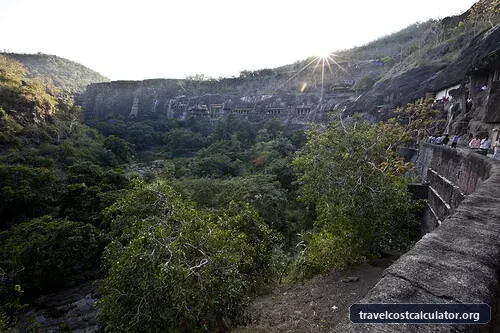
Carved meticulously into a steep, 75-meter (246-foot) horseshoe-shaped basalt cliff overlooking the meandering Waghora River in Maharashtra, India, the Ajanta Caves represent one of the crowning achievements of ancient human artistry and religious devotion. Designated as a UNESCO World Heritage Site in 1983, this complex of 30 rock-cut Buddhist cave monuments captures the zenith of ancient Indian mural painting and architectural sculpture.
The construction of Ajanta unfolded across two distinct historical periods separated by centuries of silence:
-
✦
First Phase (Satavahana Period, 2nd Century BCE – 1st Century BCE): The earliest caves (specifically Caves 9, 10, 12, 13, and 15A) were carved during the reign of the Satavahana Dynasty. These sanctuary halls (chaityagrihas) and monasteries (viharas) belong to the Theravada (Hinayana) tradition of Buddhism, where Buddha was represented through symbolic motifs such as footprints, stupas, and thrones rather than human figurative sculptures.
-
✦
Second Phase (Vakataka Period, 5th Century CE – 6th Century CE): Following centuries of dormancy, a brilliant revival occurred under the patronage of Emperor Harishena of the Vakataka Dynasty. This Mahayana phase saw the expansion of the complex into a vibrant monastic university adorned with elaborate, life-sized statues of the Buddha and breathtaking wall paintings depicting the Jataka Tales (stories of the Buddha's previous lives).
UNESCO recognized Ajanta for its unprecedented impact on artistic traditions across Asia. The tempera wall paintings—created using natural pigments such as lapis lazuli, red ochre, kaolin, and copper compounds bound with organic gums—display an astonishing mastery of perspective, anatomical grace, and expressive emotion. After the decline of the Vakataka Empire around 480 CE, the site was abandoned and swallowed by dense jungle growth for over 1,300 years until April 1819, when British officer John Smith stumbled upon Cave 10 while hunting tigers.
🎟️ Entrance Fees, Opening Hours & Ticket Booking Tips
Visiting the Ajanta Caves in 2026 requires advance planning to navigate regional ticketing structures and local conservation fees. Below is the updated breakdown of entry costs and visiting parameters:
2026 Estimated Entrance Pricing Breakdown
-
✦
Foreign Tourists: ₹600 INR (~$7.20 USD) when booked online via the official Archaeological Survey of India (ASI) portal, or ₹750 INR (~$9.00 USD) at physical payment kiosks.
-
✦
Domestic Indian Citizens & SAARC/BIMSTEC Visitors: ₹40 INR (~$0.48 USD) online / ₹50 INR (~$0.60 USD) at the ticket counter.
-
✦
Children (Under 15 Years): Free entry (valid passport/ID verification required).
-
✦
Mandatory Eco-Development Committee (EDC) Local Tax: ₹10 INR to ₹20 INR (~$0.12–$0.24 USD) per person, collected at the T-junction entrance amenities area.
-
✦
Green Electric Shuttle Bus (T-Junction to Cave Base): ₹30 INR (~$0.36 USD) for Non-AC buses; ₹45 INR (~$0.54 USD) for AC buses (one-way).
Opening Hours & Operational Logistics
The monument complex is open from 9:00 AM to 5:00 PM. CRITICAL NOTE: The Ajanta Caves are STRICTLY CLOSED ON MONDAYS year-round for conservation work and maintenance. Plan your travel itinerary around this schedule to avoid arriving at a closed site.
Pro Ticket Booking Tips for 2026
To avoid long wait times under the sun, book your tickets digitally through the ASI E-Ticketing Portal (asi.payumoney.com or through authorized Indian tourism portals) up to 7 days before your visit. Digital tickets generate a QR code that allows direct entry through the security turnstiles at the cave site base, bypassing the physical counter queues. Cash payments are accepted at the site, but contactless digital payments (UPI, international credit/debit cards) are preferred.
🚌 How to Get There & Local Transit Costs
The primary gateway to the Ajanta Caves is Chhatrapati Sambhajinagar (formerly Aurangabad), located approximately 100 kilometers (62 miles) south of the caves. Alternatively, travelers arriving by rail often access the site from Jalgaon Junction, situated roughly 60 kilometers (37 miles) north.
1. From Chhatrapati Sambhajinagar (Aurangabad)
-
✦
MSRTC State Transport Bus (Budget Option): Public buses depart every 30 minutes from the Central Bus Stand (CBS) in Chhatrapati Sambhajinagar heading toward Jalgaon or Silod. Ask to be dropped at the "Ajanta Caves T-Junction." One-way tickets cost between ₹160 INR and ₹220 INR ($1.90 – $2.60 USD) per person. Travel time is approximately 2.5 to 3 hours.
-
✦
Private Taxi / Ride-Hailing (Comfort Option): Renting a private, air-conditioned sedan for a full-day excursion (including return travel and waiting time) costs between ₹3,200 INR and ₹4,200 INR ($38 – $50 USD). SUV rentals (ideal for families) range from ₹4,500 INR to ₹6,000 INR ($54 – $72 USD).
2. From Jalgaon Junction Railway Station
If arriving via India’s central railway line, Jalgaon is geographically closer. From Jalgaon Station, you can take a local bus (approx. ₹80 INR / $0.95 USD) or hire an auto-rickshaw/private cab to the Ajanta T-Junction for ₹1,500 INR to ₹2,000 INR ($18 – $24 USD), taking about 1.5 hours.
3. Navigating the Last Mile: T-Junction to the Caves
Vehicular traffic stops at the Ajanta T-Junction Shopping & Amenities Complex to preserve the delicate caves from automotive emissions. From the T-Junction, you must board an eco-friendly electric shuttle bus operated by the state government for the final 4-kilometer stretch to the foot of the cliff. Buses run continuously every 10–15 minutes.
📸 Best Photography Spots & Insider Visit Hacks
Preserving world-famous frescoes while capturing memories requires adherence to strict conservation rules. Flash photography is strictly prohibited inside all caves to prevent the acceleration of pigment degradation. Tripods and commercial stabilizers require prior written permission from the ASI office.
Top Photography Locations
-
✦
The Ajanta Viewpoint (Horseshoe Curve): Located on the rim opposite the cliff, this spot offers the iconic panoramic shot of the entire semicircular gorge and the Waghora River below. Accessible via a marked 20-minute uphill hiking trail starting near Cave 8, or via a secondary road access point.
-
✦
Cave 1 (Padmapani & Vajrapani): Home to the world-renowned painting of the Bodhisattva Padmapani holding a blue lotus. Capture the subtle natural lighting falling across the entrance hall columns (requires high ISO setting).
-
✦
Cave 19 (Chaitya Hall Façade): Features an intricate exterior carved with large Buddha figures, stupa motifs, and stone arched windows (the classic chaitya arch).
-
✦
Cave 26 (Reclining Buddha): Houses an extraordinary 29-foot-long monolithic sculpture depicting the Mahaparinirvana (passing of the Buddha). Best photographed from the side angle to emphasize scale and sculptural depth.
Insider Hacks for an Optimal Visit
-
✦
Beat the Heat & Crowds: Arrive at the T-Junction shuttle stop by 8:30 AM to enter the caves right as the gates open at 9:00 AM. Tour buses generally arrive after 11:00 AM.
-
✦
Best Season to Visit: The winter season (October through March) offers pleasant weather with temperatures between 15°C and 30°C (59°F–86°F). The monsoon season (July to September) turns the surrounding valley vibrant green with temporary waterfalls flowing over the cliff edge, though humidity is high.
-
✦
Footwear Protocol: Shoes must be removed before stepping inside active shrine areas within individual caves. Wear high-quality slip-on shoes with comfortable socks to protect your feet from scorching sun-heated rock pathways between caves.
-
✦
Hire a Certified ASI Guide: Official guides holding ASI credentials can be hired near the ticket counter for ₹1,500 INR to ₹2,000 INR ($18 – $24 USD) per group. Their detailed explanations of Buddhist iconology and concealed architectural lighting details add immense value to your experience.
🏨 Nearby Accommodation & Daily Budget Allocation
Most visitors use Chhatrapati Sambhajinagar as their primary accommodation base due to its robust infrastructure, luxury hotels, and dining options. However, budget travelers and early risers can stay near Fardapur (the village closest to the Ajanta site).
Recommended Accommodation Options (2026 Rates)
-
✦
Budget ($15 – $35 USD / night): MTDC Resort Fardapur or local guesthouses near the T-Junction offer clean, basic rooms with air conditioning within a 5-minute drive of the shuttle bus terminal.
-
✦
Mid-Range ($55 – $95 USD / night): Hotel Amarpreet, Keys Select Hotel, or Ginger Chhatrapati Sambhajinagar (located in the main city hub, featuring modern amenities, pools, and on-site restaurants).
-
✦
Luxury ($140 – $250 USD / night): Vivanta Chhatrapati Sambhajinagar or Welcomhotel by ITC Hotels Rama International (offering 5-star spa services, fine dining, and full-day private tour logistics).
Daily Budget Allocation Estimates for 2026
To help you budget your trip effectively, here are estimated per-person daily expenses when visiting Ajanta Caves:
| Travel Style | Transport & Transit | Accommodation | Meals & Drinks | Tickets & Guide | Estimated Daily Total |
|---|---|---|---|---|---|
| Backpacker / Low-Budget | $4 - $6 (Public Bus) | $12 - $20 (Dorm/Guesthouse) | $6 - $10 (Local Thalis) | $8 - $10 (Entry + Shuttle) | $30 - $46 USD |
| Mid-Range Explorer | $20 - $30 (Shared Taxi) | $30 - $50 (3-Star Hotel) | $15 - $25 (Sit-down Dining) | $18 - $25 (Entry + Guide) | $83 - $130 USD |
| Luxury / Premium | $50 - $80 (Private SUV Driver) | $140 - $250 (5-Star Resort) | $40 - $70 (Fine Dining) | $30 - $45 (VIP Access/Guide) | $260 - $445 USD |
Frequently Asked Questions
Essential visitor FAQs for Ajanta Caves
What is the entrance fee for Ajanta Caves in 2026?
How much time do you need to explore Ajanta Caves?
How do I get to Ajanta Caves from the nearest city?
📊 Heritage Quick Specs
Visiting India on a Budget?
Calculate your full daily travel budget for India — including hotel costs, local transport, food, and sightseeing expenses.
View India Daily Travel Costs →Explore more UNESCO World Heritage Sites
🏛️ All 1,200+ Heritage Sites →