
 Travel Cost to Jerash, Jordan
Hashemite Kingdom of Jordan
Planning a trip to Jerash, Jordan? Whether you're a budget backpacker or prefer luxury travel, understanding the costs is essential. Based on our 2026 data, travelers can expect to spend around $72 to $216 per day depending on their travel style.
📖 About Jerash
Jerash or Jarash is a city in northern Jordan.
The city is the administrative center of the Jerash Governorate, and has a population of 50,745 as of 2015.
It is located 30.0 miles north of the capital city Amman.
Custom Trip Budget Estimator
Inflation-Adjusted Travel Benchmarks for Jordan
CPI Index Multiplier: 1.03x
ECB Exchange Rates & CPI Synced
📊 Estimated Budget for Jerash, Jordan
This is an estimated calculation based on regional averages. Actual costs may vary based on your specific location and choices.
🛂 Visa Requirements
Check if you need a visa for Jordan


Estimated Total Budget
$1,680
$120 per day × 7 days × 2 travelers
📊 Daily Budget Distribution
Accommodation
$59 per night
Food & Dining
$26 per day
Local Transport
$14 per day
Entertainment
Interactive Budget Customizer
Estimated Grand Total
Purchasing Power & Daily Expenses
Café & Beverage
Cappuccino / Coffee
Casual Dining
Fast Food Combo Meal
Local Transit
Taxi Fare (1 km)
Nightlife
Local Pint / Craft Beer
Supermarket
Mineral Water (1.5L)
Budget Tips for Jerash, Jordan
- Visit during Ramadan for a unique experience but plan meals
- Modest dress is appreciated, especially at religious sites
- Bargaining is expected in souks and markets
- Local buses are much cheaper than tourist transport
Best time to visit: October to April
Peak season: December to February
Spotted a recent price change in Jordan?
Help fellow travelers by reporting local price updates or travel tips.
Submit Local Price Update
Community report for Jordan
Jerash, Jordan Facts
🏛️ Capital
Amman
🌍 Continent
Asia
📐 Area
89,342 km²
📞 Phone Code
+962
💰 Currency
Jordanian dinar
د.ا (JOD)
🗺️ Region
Western Asia
🗣️ Languages Spoken:
UNESCO World Heritage Sites
7 official heritage landmarks in Jordan
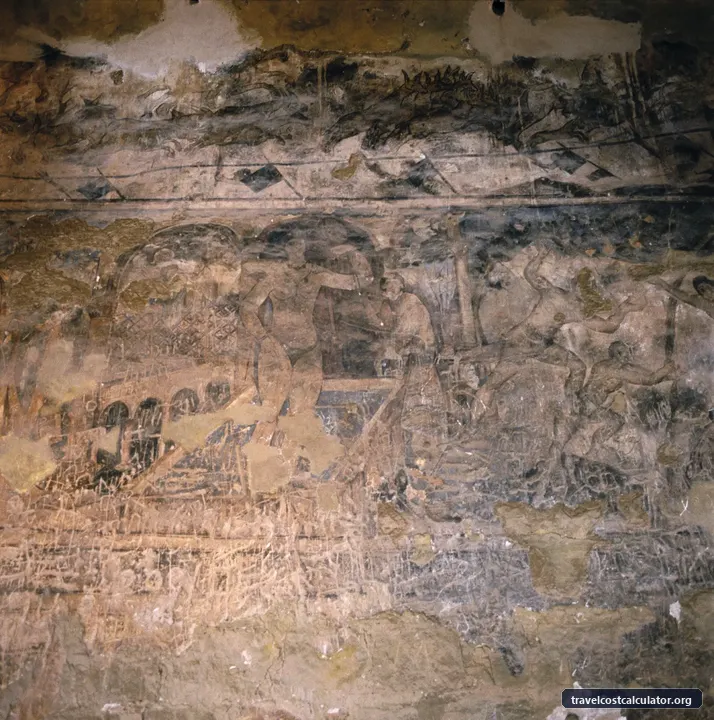
Quseir Amra
Built in the early 8th century, this exceptionally well-preserved desert castle was both a fortress with ...
Explore Guide→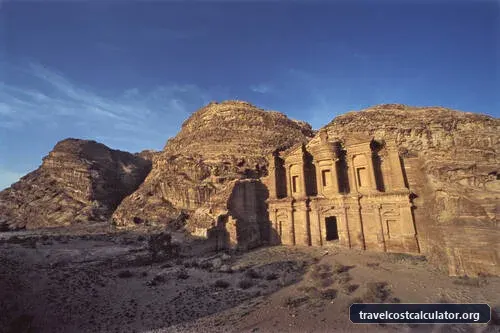
Petra
Inhabited since prehistoric times, this Nabataean caravan-city, situated between the Red Sea and the Dead...
Explore Guide→
Um er-Rasas (Kastrom Mefa'a)
Most of this archaeological site, which started as a Roman military camp and grew to become a town from t...
Explore Guide→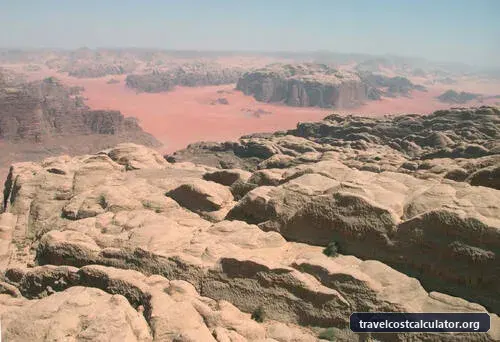
Wadi Rum Protected Area
The 74,000-hectare property, inscribed as a mixed natural and cultural site, is situated in southern Jord...
Explore Guide→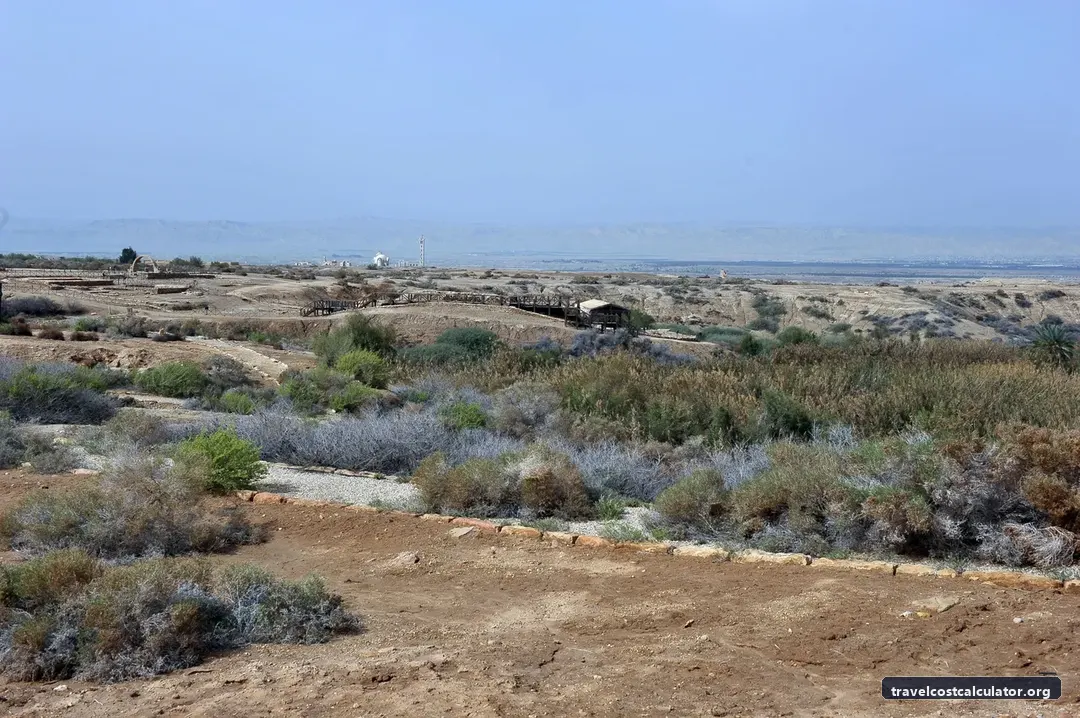
Baptism Site “Bethany Beyond the Jordan” (Al-Maghtas)
Situated on the eastern bank of the River Jordan, nine kilometres north of the Dead Sea, the archaeologic...
Explore Guide→
As-Salt - The Place of Tolerance and Urban Hospitality
Built on three closely-spaced hills in the Balqa highland of west-central Jordan, the city of As-Salt, wa...
Explore Guide→Travel Guide & Local Tips for Destination
⚠️ Universal adapter recommended
Boiled or bottled water recommended in major tourist areas
5-10% at sit-down restaurants is customary for good service.
Survival Phrasebook & Pronunciation Guide
Marhaban (مرحبا)
Shukran (شكرا)
Kam hatha? (كم هذا)
Ayna al-hammam? (أين الحمام)
Masa'ada! (مساعدة)
2026 Holidays in Jerash, Jordan
Loading...📅 Plan your trip around these dates
Data by API NinjasEconomic Overview
📊 Economic data helps estimate living costs
Data by API NinjasHow Much Does a Trip to Jerash, Jordan Cost in 2026?
Planning a travel budget for Jerash, Jordan, Jordan depends on your preferred travel style and duration. On average, a standard traveler spends around $120 per day covering hotel accommodation, dining at local restaurants, public transport, and popular sightseeing tickets. A typical 7-day vacation for two adults averages approximately $2,856.
Is Jerash, Jordan Expensive for Tourists?
Compared to global destination benchmarks, Jerash, Jordan is categorized as a mid-range moderately priced destination. Backpackers staying in hostels and using local street dining can reduce daily costs by up to 50–60%, while luxury travelers choosing 5-star hotels and private transfers should budget $300+ per day.
Compare & Explore Travel Guides
Compare Jerash, Jordan Cost
Popular Destinations
How Our Travel Cost Calculation Engine Works
Calculating an accurate travel budget requires analyzing the real cost of living across global destinations. Rather than relying on rigid static averages, our engine synthesizes 4 core economic data streams in real time.
Live Exchange Rates
Real-time currency rates for USD, EUR, GBP, TRY and 150+ global currencies.
Hotel & Yield Index
Seasonal price fluctuations for hostels, 3-star hotels, and luxury resorts.
Dining CPI Benchmarks
Local Consumer Price Indexes for street food, casual bistros, and fine dining.
Transit & Sightseeing
Metro passes, taxi rates, intercity trains, and UNESCO entry tickets.
Understanding the 3 Travel Style Tiers
Every traveler has different preferences. Customize your calculation based on your comfort level.
Backpacker Tier
Designed for cost-conscious adventurers looking to maximize travel days.
- ✓ Shared hostel dorms or budget homestays
- ✓ Street food markets & self-cooked meals
- ✓ Public buses & metro walking tours
- ✓ Free natural sights & public parks
Standard Tier
The classic vacation experience combining comfort and great value.
- ✓ Private 3-star hotel rooms or Airbnbs
- ✓ Sit-down dining at casual local bistros
- ✓ Unlimited city transit passes & occasional taxis
- ✓ Paid museum entries & guided walking tours
Luxury Tier
Unrestricted premium travel with zero compromise on luxury.
- ✓ 4 to 5-star luxury resorts & boutique suites
- ✓ Fine dining restaurants & cocktail lounges
- ✓ Private chauffeur, airport transfers & car rentals
- ✓ Private VIP tours & exclusive experiences
💡 5 Pro Strategies for Accurate Trip Budgeting
1. Account for Currency Arbitrage
Exchange rates fluctuate daily. Tracking strong home currency periods can boost your spending power abroad by up to 15%.
2. Factor in Hidden Municipal Taxes
Always add a 15% buffer for local occupancy taxes, city resort fees, and local tipping expectations that aren't included on menu prices.
3. Optimize Airport Ground Transit
Taxis from distant hubs can consume 20% of your transit budget. Research express train passes before landing.
4. Eliminate Foreign Credit Card Fees
Use travel credit cards without 3% foreign transaction fees and always choose local currency at foreign ATM machines.
Frequently Asked Questions (FAQ)
1. Does the calculator include international airfare?
The daily breakdown focuses strictly on destination ground costs (hotel, meals, local transit, activities). Flights vary based on your departure city and booking window. Use our Savings Planner to estimate flights.
2. How often are global destination prices updated?
Data is reviewed monthly by our travel team, incorporating updated CPI indexes, hotel aggregator pricing, and verified traveler cost reports.
3. How does group size affect the estimated total cost?
Traveling with 2 or more people significantly reduces per-person accommodation costs because hotel rooms and rental apartments are shared. Our engine automatically factors in shared room splits and group transit adjustments when you increase traveler count.
4. Can I switch currencies to view costs in my local money?
Yes! Use the currency selector in the top header navbar or inside the calculator settings panel to instantly convert all daily and total estimates into USD ($), EUR (€), GBP (£), or TRY (₺) at live interbank exchange rates.
5. How are the Backpacker, Standard, and Luxury travel styles calculated?
Each travel style uses tailored spending ratios. Backpacker tier calculates hostel dorm beds, local street food, and public transport. Standard tier calculates private 3-star hotels, casual sit-down restaurants, and metro passes. Luxury tier calculates 4 to 5-star resorts, fine dining, and private transfers.
Mastering Global Travel Budgeting: The 2026 Algorithmic Cost Framework
Statistical Macroeconomic Modeling, Purchasing Power Parity (PPP), and Multi-Tier Expense Planning
1. The Anatomy of Modern Travel Costs: The 4-Pillar Model
Every destination budget fundamentally breaks down into four core spending categories: (1) Accommodation, which accounts for 40% to 55% of baseline daily expenditure; (2) Food and Dining, representing 20% to 30% depending on dining style; (3) Local Urban Transit, making up 10% to 15%; and (4) Sightseeing, Attractions, and Incidental Culture, accounting for 10% to 20%. Our mathematical engine calculates these pillars independently using localized cost-of-living multipliers, ensuring that a surge in hotel rates (e.g., during summer in Amsterdam) does not distort base food and metro estimates.
2. Multi-Tier Budget Architecture: Backpacker, Standard, and Luxury
Travelers operate under vastly different financial parameters. Our engine models three standardized tiers:
• Backpacker Tier: Modeled around licensed hostel dorm beds ($15–$45/night in Europe, $5–$15 in Southeast Asia), hyper-local street food and grocery market cooking, public bus/subway networks, and free walking tours.
• Standard / Mid-Range Tier: Designed for the typical independent traveler, incorporating private 3-star boutique hotels or studio apartments ($80–$180/night), casual sit-down bistros, mixed public transit and occasional rideshares, and paid landmark entry passes.
• Luxury Tier: Engineered for premium comfort, tracking 4-star to 5-star international hotel chains and luxury villas ($250–$700+/night), multi-course fine dining with wine pairings, private airport chauffeur transfers, and skip-the-line VIP guided museum experiences.
3. Managing Foreign Currency Volatility & Dynamic Conversion Traps
One of the most insidious drains on any travel fund is the payment method itself. Dynamic Currency Conversion (DCC)—where a foreign card terminal or ATM asks if you want to be charged in your home currency—adds an arbitrary 3% to 8% merchant markup on top of the interbank exchange rate. Always select the local native currency when swiping cards or withdrawing cash abroad. Pairing this habit with multi-currency debit accounts (such as Wise or Revolut) effectively saves $150 to $400 on a typical two-week international vacation.
4. The 50/30/20 Travel Allocation Blueprint
To safeguard against unexpected mid-trip financial stress, professional travel planners recommend the 50/30/20 budgeting rule: Allocate 50% of your total projected holiday fund to non-negotiable fixed logistical costs (international flights, intercity trains, hotel bookings), 30% to flexible daily discretionary spending (dinners, nightlife, souvenirs, optional excursions), and retain 20% in an untouched liquid emergency buffer to handle medical copays, flight rescheduling fees, or emergency taxi rides.
Frequently Asked Questions & Practical Advice
Q: How often are the destination cost databases updated for 2026?
Our team conducts monthly dataset synchronizations incorporating official national statistical agency updates (TÜİK, Eurostat, US Bureau of Labor Statistics), verified Numbeo and Expatistan price points, and seasonal hotel aggregator pricing shifts.
Q: Does the daily cost calculator include international airfare?
No. The main calculator strictly models ground living expenses in your chosen destination. Because flight pricing depends heavily on your point of origin, ticket class, and booking lead time, we recommend pairing this tool with our dedicated Flight Cost Estimator for complete end-to-end trip projections.
Q: How does traveling with a partner or group reduce the per-person daily cost?
Accommodation represents the largest fixed single-traveler penalty. When sharing double rooms, rental apartments, or split taxi rides, couples and groups routinely achieve a 20% to 35% per-person reduction compared to solo travelers paying full room rates.
Q: How do seasonal shoulder months impact overall destination expenses?
Traveling during shoulder season (e.g., May or October in Southern Europe, or April and November in Japan) lowers hotel and flight prices by 30% to 50% compared to peak July/August without sacrificing favorable sightseeing weather.