
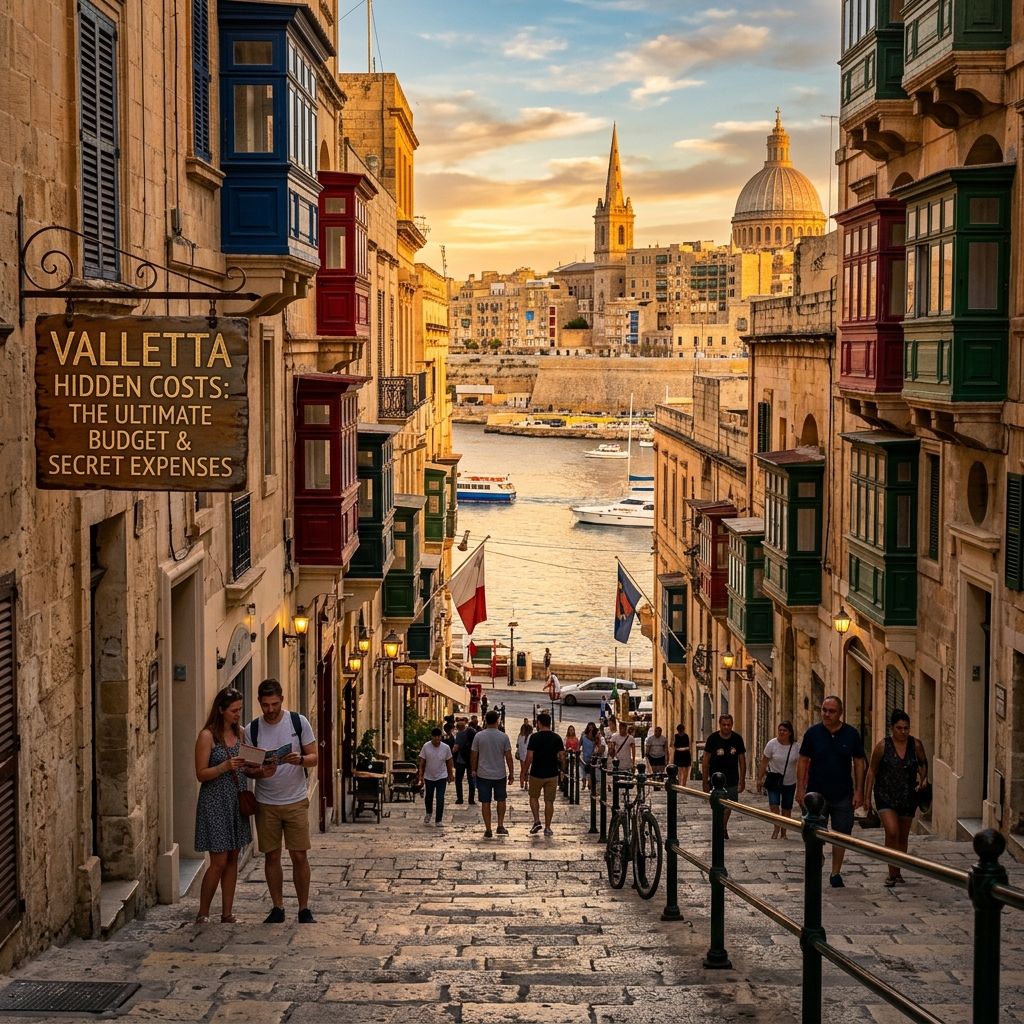
Navigating Valletta Travel Budget's Financial Landscape in 2026
Valletta, Malta’s tiny, UNESCO-listed capital, is a masterpiece of Baroque architecture, dramatic fortifications, and azure Mediterranean views. In 2026, it remains one of Europe’s most captivating micro-cities. However, because Valletta spans less than one square kilometer, many travelers assume budgeting for it is straightforward. Walk everywhere, grab a pastizzi on the go, and enjoy the island, right? Not quite.
Beneath Valletta's golden limestone exterior lies a web of micro-fees, tourist levies, transportation surcharges, and dining traps that can quietly erode your travel budget. Whether you are staying in a restored 16th-century palazzo or visiting on a day trip from neighboring Sliema, understanding the true cost of visiting Valletta in 2026 requires looking beyond headline hotel rates and flight tickets.
This comprehensive guide exposes the hidden expenses of Valletta so you can plan an airtight budget, avoid tourist tax traps, and stretch your Euros further in 2026.
Real Financial Benchmarks for Valletta in 2026
To establish a realistic starting point for your 2026 Malta trip, let’s look at the baseline daily expenditures across three primary travel styles. These numbers reflect average baseline costs before accounting for the hidden fees detailed later in this guide.
- Backpacker Tier: Approximately $52/night for accommodation (dorm bed or budget room outside the city gates), $29/day for food (Street Food & Meal Cost Index, pastizzerijas, self-catering), and $14/day for public transport. Total base daily spend: ~$95/day.
- Standard / Mid-Range Tier: Approximately $173/night for accommodation (3-star hotel or boutique Airbnb inside Valletta), $69/day for food (sit-down bistros, casual trattorias), and $29/day for transport (mix of ferries, taxis, and public buses). Total base daily spend: ~$271/day.
- Luxury Tier: Approximately $518/night for accommodation (5-star boutique palazzo or luxury harbor resort), $173/day for food (fine dining, Michelin-starred establishments, wine pairings), and $92/day for transport (private transfers, water taxis, high-end rentals). Total base daily spend: ~$783/day.
While these baseline figures provide a helpful framework, unexpected localized expenses can easily add 15% to 30% to your final invoice if you don’t prepare for them.
Hidden Expense #1: Accommodation Micro-Taxes & Logistical Surcharges
Booking a room in Valletta’s historic core comes with unique financial surprises that rarely appear on initial booking engine search results.
1. Malta’s Environmental Eco-Contribution Tax
In 2026, Malta strictly enforces its Environmental Eco-Contribution Tax. All guests aged 18 and older staying in any type of accommodation (hotels, guesthouses, self-catering apartments, and boutique rentals) are charged €0.50 per person, per night. While this fee is capped at €5.00 per continuous stay per accommodation establishment, it is almost always collected separately in cash or billed upon check-out, catching unprepared travelers off guard.
2. Historic Building Luggage & Accessibility Fees
Valletta's charming boutique hotels are frequently housed in 400-year-old heritage buildings. Many of these properties lack elevators due to historic preservation restrictions. If you arrive with heavy luggage, some self-catering properties or boutique guesthouses charge a mandatory "porterage fee" or check-in assistance fee ranging from €10 to €20, especially if you arrive after standard front-desk hours (typically after 7:00 PM).
3. High-Season Air Conditioning & Utility Surcharges
Electricity in Malta is among the most expensive in Southern Europe. In 2026, several budget-to-mid-range holiday apartment hosts inside Valletta have instituted utility fair-use caps. If you leave the air conditioning running while exploring the city during hot summer afternoons, you may face automated overage charges on your security deposit ranging between €5 and €15 per day.
Hidden Expense #2: Restaurant Fine Print & Dining Pitfalls
Dining out in Valletta’s picturesque squares (such as St. George’s Square or Republic Square) comes with culinary delights—and subtle price hikes.
1. The "Pane e Coperto" (Bread & Service Cover) Surcharge
It is standard practice across many mid-range and fine-dining restaurants in Valletta to bring warm Maltese bread, bigilla (bean dip), and olives to your table as soon as you sit down. Unless explicitly marked as complimentary, this bread service carries a charge of €2.00 to €4.50 per person added directly to your final bill. If you do not want it, politely decline it immediately upon arrival.
2. The Bottled Water Obligation
Maltese tap water, while desalinated and safe for cooking, has a heavy mineral taste that most visitors find unpalatable. Restaurants in Valletta rarely serve free tap water. Expect to pay €3.50 to €5.50 for a large bottle of still or sparkling water with every meal. For a couple dining out twice daily, bottled water alone can add over $16/day to your food budget.
3. Dynamic Terrace Surcharges
Prime outdoor seating overlooking the Grand Harbour, Saint John's Co-Cathedral, or bustling pedestrian thoroughfares like Strait Street often comes with an unannounced premium. Some restaurants apply a 10% outdoor service charge or enforce higher minimum spend thresholds (often €35 to €50 per person) for terrace tables during peak evening hours.
Hidden Expense #3: Transportation & City Logistics Traps
Valletta is completely walkable, but entering, exiting, and navigating its perimeter involves non-obvious transportation fees.
1. Controlled Vehicular Access (CVA) & Taxi Drop-Off Premiums
Valletta operates an automated Controlled Vehicular Access (CVA) system using camera license-plate recognition to limit traffic inside the fortress walls. Taxis, Ubers, and Bolt rides entering the inner city during peak weekday hours incur direct congestion charges. Drivers routinely pass this fee (typically €3.00 to €6.00) onto the passenger. Furthermore, during traffic bottlenecks near Triton Fountain, rideshare apps apply high surge pricing.
2. The Barrakka Lift Surcharge Trap
The Barrakka Lift connects the Grand Harbour water level (where cruise ships and Three Cities ferries dock) to the Upper Barrakka Gardens at the top of the city walls. While riding the elevator down to the harbor is entirely free, riding it up costs €1.00 per person unless you hold a valid ferry ticket or public transport card. While one euro sounds negligible, families or group travelers taking multiple trips daily will see this add up.
3. Traditional Water Taxi ("Dghajsa") vs. Public Ferry Pricing
Crossing the Grand Harbour to Birgu (Vittoriosa) via public ferry costs €2.00 one-way (or €1.50 with a local card). However, traditional wooden dghajsa water taxis operate alongside the ferry lines. While a charming experience, pricing is negotiable and can quickly jump from €2.00 per person for a quick crossing to €20.00+ per boat if the boat operator offers an impromptu harbour tour without clear upfront pricing.
Hidden Expense #4: Sightseeing, Culture & Admission Add-Ons
Valletta's cultural sights are world-class, but ticket counter add-ons can quietly double your daily entertainment budget.
- Antigua Travel Budget-and-barbuda/st-johns" class="text-primary font-bold">St. John's Travel Budget Co-Cathedral Booking Fees: While mandatory admission is around €15.00 for adults, purchasing tickets online to skip the massive peak-hour lines carries an online convenience fee of €1.50 to €2.50 per ticket.
- Underground Valletta & Secret Tunnels: Standard museum entry cards (like the Heritage Malta Pass) often exclude specialized tours. Exploring the subterranean tunnels beneath Valletta requires a separate ticket costing approximately €15.00 to €22.00 per person, requiring advance booking.
- Temporary Exhibition Surcharges: Major hubs like MUŻA (National Community Art Museum) or the Grandmaster’s Palace routinely charge €3.00 to €7.00 extra on top of standard admission for seasonal, high-profile international exhibitions.
Hidden Expense #5: Financial & Tech Fees in 2026
Financial fees are among the most insidious Hidden Travel Expenses Guide in Southern Europe.
1. Euronet ATM Foreign Exchange Traps
Scattered throughout Valletta’s Republic Street and Merchant Street are bright yellow-and-blue Euronet ATMs. Avoid these whenever possible. Independent ATMs in Malta frequently charge direct usage fees of €4.95 to €6.50 per transaction, combined with aggressive Dynamic Currency Conversion (DCC) rates that inflate conversion margins by up to 13%. Always use bank-attached ATMs like Bank of Valletta (BOV) or HSBC Malta, and always select to be charged in Euros (€).
2. Non-EU Roaming & ETIAS Fees for 2026
Travelers visiting Malta from non-EU nations (such as the UK, US, Canada, or Australia) in 2026 must account for the mandatory ETIAS (European Travel Information and Authorization System) application fee, which costs €7.00 per applicant prior to departure. Additionally, buying a physical SIM card at Malta International Airport (MLA) carries a heavy airport convenience surcharge; buying an eSIM online prior to arrival can save up to 50% on data costs.
Summary of Valletta Hidden Expenses (2026 Estimates)
Here is a quick reference table of potential unexpected fees to factor into your 2026 trip budget:
- Malta Eco-Contribution Tax: €0.50/night (up to €5.00 per stay)
- Bread & Cover Charge (Coperto): €2.00 – €4.50 per person / meal
- Bottled Water (Restaurant): €3.50 – €5.50 per 750ml bottle
- CVA Taxi Inner-City Drop-Off Fee: €3.00 – €6.00 per ride
- Barrakka Lift (Ascending without ferry ticket): €1.00 per ride
- Euronet ATM Transaction Fee: €4.95 – €6.50 + high FX markup
- Online Museum Booking Convenience Fees: €1.50 – €2.50 per ticket
- Late Check-in / Luggage Assistance Fee: €10.00 – €20.00
Smart Money Strategies for Valletta
dodging these hidden costs doesn't mean sacrificing your experience. Follow these expert financial strategies while visiting Valletta in 2026:
First, grab lunch at local pastizzerijas. Buying traditional ricotta or pea pastizzi (costing just €0.50 to €1.20 each) provides a delicious, incredibly cheap lunch that balances out pricier sit-down dinners. Second, buy a Tallinja Card or ferry multi-day pass if you plan to explore the harbour cities extensively; this waives the Barrakka Lift fee and slashes ferry ticket prices. Finally, always carry a small amount of Euro cash for small bakeries, but use a fee-free credit or debit card (charged strictly in Euros) for larger purchases to sidestep DCC charges.