
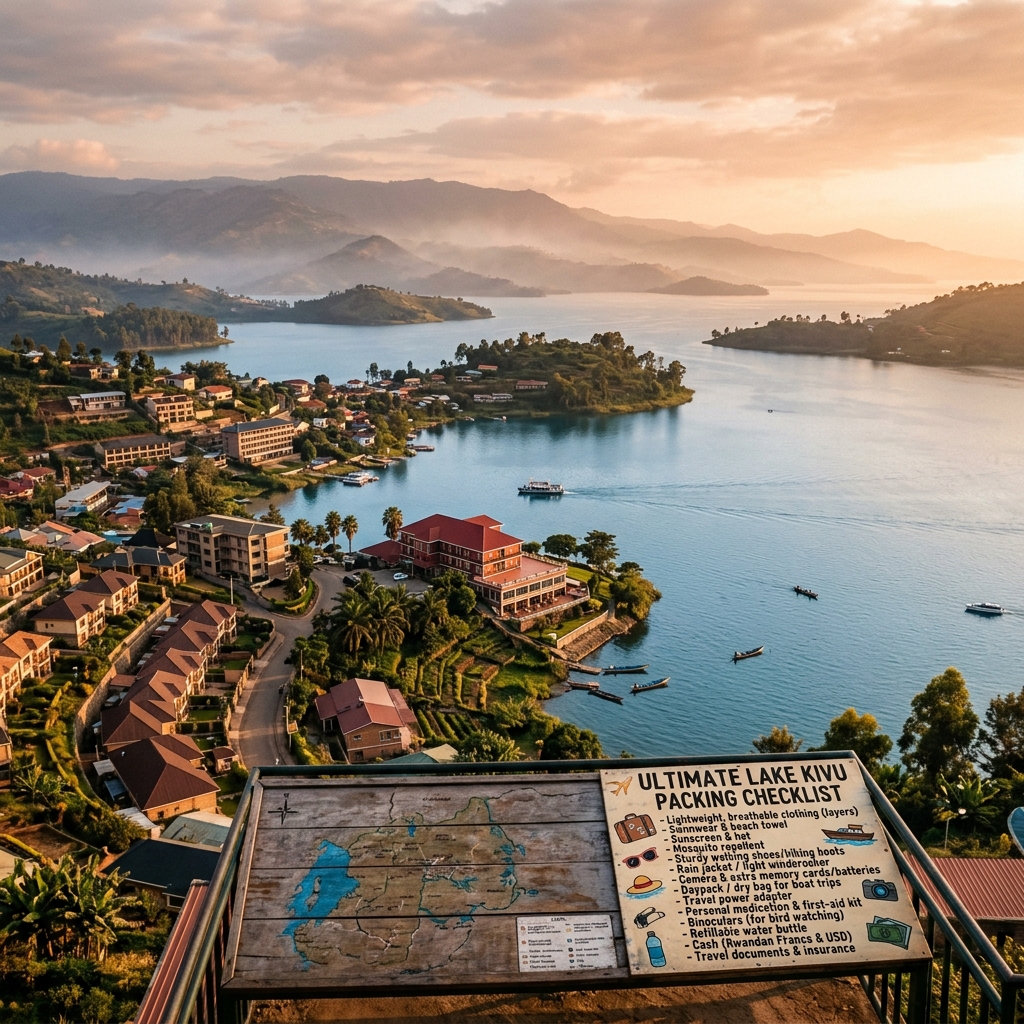
Stretching along Rwanda’s western border, Lake Kivu is one of Africa’s Great Lakes—a serene high-altitude inland sea framed by emerald terraced hills, coffee plantations, and volcanic peaks. Whether you are kayaking through the tranquil bays of Karongi (Kibuye), trekking the iconic Congo Nile Trail, or relaxing on the sandy shores of Rubavu (Gisenyi), Lake Kivu offers a drastically different rhythm from Kigali Travel Budget’s bustling streets or Volcanoes National Park Travel Budget’s rainforests.
However, traveling to Lake Kivu in 2026 requires careful financial planning and targeted preparation. Situated at an elevation of 1,463 meters (4,799 feet), the microclimate brings bright tropical sun by day and surprisingly cool lake breezes by night. To ensure you do not overspend or arrive under-equipped, this comprehensive 2026 Packing & Budget Checklist and budget blueprint covers every detail of your trip.
2026 Lake Kivu Travel Budget Benchmarks
Understanding your daily expenses is the foundation of a successful Rwandan journey. While Rwanda is often perceived as an exclusive luxury destination due to high gorilla trekking permits, Lake Kivu itself remains remarkably accessible across all budget tiers. Below are the standard daily benchmarks for traveling around Lake Kivu in 2026.
Backpacker Tier: ~$32 / day
Ideal for solo travelers, overland adventurers, and budget backpackers utilizing local transport and communal guesthouses.
- Accommodation: $17 per night (Dorm bed or budget eco-camp/guesthouse in Karongi or Rubavu).
- Food & Drinks: $10 per day (Local RWF-priced dining: sambaza fish, goat brochettes, rice, beans, and fresh fruits from local markets).
- Transport: $5 per day (Shared mini-buses/coasters between towns like Ritco buses, plus local moto-taxis).
Standard / Mid-Range Tier: ~$91 / day
Designed for couples or independent travelers seeking private lakeside rooms, guided day trips, and comfortable private transport segments.
- Accommodation: $58 per night (Mid-range lakeside hotel or charming boutique lodge with hot water and balcony views).
- Food & Drinks: $23 per day (Mix of lodge dining, local seafood restaurants, craft coffee, and bottled beverages).
- Transport: $10 per day (Combination of intercity express buses, boat transfers across bays, and frequent moto-taxis).
Luxury Tier: ~$262 / day
Tailored for high-end travelers wanting premium resort amenities, private chauffeur transfers, and exclusive private boat charters.
- Accommodation: $173 per night (Luxury lakefront resort or luxury safari lodge with swimming pool and private lake access).
- Food & Drinks: $58 per day (Gourmet multi-course meals, imported wines, fresh espresso, and high-end lodge dining).
- Transport: $31 per day (Private 4x4 vehicle rental with driver or private speedboats between Rubavu and Karongi).
Estimated Activity & Sightseeing Costs for 2026
While relaxing by the water is free, experiencing Lake Kivu’s best attractions requires budgeting for local tours and gear rentals. Expect the following rates in 2026:
- Guided Kayaking Tour (Karongi or Rubavu): $25 – $45 per person for a half-day excursion.
- Boat Trip to Napoleon Island (Bat Island): $30 – $60 total per boat (can be Split Travel Budget among group members).
- Congo Nile Trail Mountain Bike Rental: $20 – $35 per day.
- Coffee Plantation & Washing Station Tour: $15 – $30 per person including tastings.
- Night Fishing Boat Experience with Local Fishermen: $20 – $40 per person.
Essential Pre-Trip Preparation & Visa Rules (2026)
Before packing your bags, completing mandatory travel logistics is vital for smooth entry into Rwanda. The country maintains clear entry rules and strict environmental policies that impact what you can bring across the border.
1. Visa Requirements Checker for 2026
Rwanda offers convenient entry options. Citizens of all countries can obtain a 30-day tourist visa upon arrival at Kigali International Airport or land borders for $50 USD. Alternatively, you can apply online prior to departure via the official Irembo portal. If you plan to combine Lake Kivu with trips to Uganda or Kenya, apply for the East Africa Tourist Visa ($100 USD), which permits multi-entry travel across all three partner nations for 90 days.
2. Health & Vaccination Mandates
A Yellow Fever vaccination certificate is mandatory if you are arriving from or transiting through a yellow fever-endemic country. While Lake Kivu’s high altitude reduces mosquito density compared to lower tropical zones, malaria is still present in Rwanda; consult your travel clinic regarding prophylactic medication (such as Atovaquone/Proguanil or Doxycycline). Ensure routine vaccines (Hepatitis A, Typhoid, Tetanus) are updated for 2026.
3. Strict Plastic Bag Prohibition
Rwanda enforces one of the strictest bans on single-use non-biodegradable plastic bags in the world. Luggage is regularly scanned at Kigali International Airport. Replace all disposable plastic ziplock bags with reusable silicone pouches, dry bags, or cloth packing cubes prior to departure.
4. Currency & Cash Management
The local currency is the Rwandan Franc (RWF). While major luxury resorts accept international credit cards (Visa and Mastercard), mid-range eateries, boat captains, market vendors, and moto-taxi drivers accept cash only in RWF. Withdraw local currency at ATMs in Kigali, Rubavu, or Karongi. Keep crisp, unblemished USD bills printed after 2013 if carrying emergency hard currency, as older or damaged notes are routinely rejected by money exchangers.
The Complete Lake Kivu Packing Checklist
Packing for Lake Kivu requires balancing sunny daytime water activities with cool, high-altitude evenings and active land adventures. Use this complete checklist to ensure you do not leave essentials behind.
1. Clothing & Layering Systems
Rwandans generally dress smartly and modestly in public spaces. While swimwear is standard at resorts and beaches, cover up when walking through local villages or market centers.
- Lightweight, Breathable Shirts: 4–5 quick-dry synthetic or linen tops for humid daytime temperatures.
- Long-Sleeved Tops: 2 lightweight long-sleeve shirts (useful for evening insect protection and sun shield).
- Fleece Jacket or Lightweight Down: 1 warm mid-layer. Lake Kivu temperatures drop to 15°C (59°F) at night.
- Packable Rain Shell: 1 waterproof jacket (essential year-round, as tropical mountain showers occur even outside peak rainy seasons).
- Trekking Pants / Active Trousers: 2 pairs of durable hiking pants for the Congo Nile Trail or countryside walks.
- Casual Shorts / Skirts: 2 pairs for resort lounging and beach areas.
- Modest Casual Wear: 1–2 smart-casual outfits for dining in town or hotel restaurants.
- Swimwear: 2 quick-dry swimsuits (Lake Kivu is hippo, crocodile, and bilharzia-free, making it ideal for swimming).
- Underwear & Moisture-Wicking Socks: 5–7 pairs, including wool-blend hiking socks.
2. Footwear
- Sturdy Trail Runners or Light Hiking Boots: Mandatory if hiking sections of the Congo Nile Trail or exploring steep terraced hillsides.
- Water Shoes or Sport Sandals (e.g., Tevas/Chacos): Essential for kayaking, jumping off wooden boats, or navigating rocky shorelines.
- Casual Sneakers or Slip-ons: For evening dining and relaxed walking in towns like Gisenyi.
3. Water Sports & Outdoor Gear
- Waterproof Dry Bag (10L–20L): Critical for protecting cameras, phones, and cash during boat tours or kayaking trips.
- UV Protection Sun Hat: Wide-brimmed hat or baseball cap for long hours on open water.
- Polarized Sunglasses: To block severe water glare on the lake.
- Compact Microfiber Towel: Quick-drying towel for beach stops and unexpected swim spots.
- Reusable Water Bottle with Filter: Tap water is not safe to drink in Rwanda. Bring a insulated bottle with an integrated purifier (e.g., Grayl or LifeStraw) to minimize plastic waste.
4. Electronics & Tech
- Power Bank (10,000–20,000 mAh): Power outages can occur in rural lakeside villages along the Congo Nile Trail.
- Universal Plug Adapter: Rwanda primarily uses Plug Types C and G (230V / 50Hz).
- Action Camera or Waterproof Phone Case: For recording kayaking excursions and boat trips to Napoleon Island.
- Headlamp or Compact Torch: Crucial for navigating dimly lit lodge pathways or camping along the lake.
5. Health, Hygiene & Toiletries
- Reef-Safe / Eco-Friendly Sunscreen (SPF 50+): High altitude intensifies UV exposure.
- Insect Repellent: Spray containing DEET (20–30%) or Picaridin for evening outdoor dining.
- Personal First-Aid Kit: Include blister plasters, anti-diarrheal medication, rehydration salts, pain relievers, and motion sickness tablets (for bumpy boat rides).
- Biodegradable Toiletries: Eco-friendly soap and shampoo to protect fragile lakeside eco-systems.
- Hand Sanitizer & Wet Wipes: Useful during rural transit and trail trekking.
Money-Saving Hacks for Lake Kivu in 2026
Sticking to your target budget is easy when you adopt smart local travel tactics around the lake:
- Use Public Coaster Buses: Instead of hiring private taxis ($80–$120 between Kigali and Gisenyi), take reliable local coaster buses like Ritco or Volcano Express for under $5 USD per seat.
- Eat Fresh Local Cuisine: Try fresh sambaza (small fried lake sardines served with piri-piri sauce and fries) at local eateries. A massive plate costs $3–$5 compared to $18+ western dishes at high-end resorts.
- Book Local Boatmen Directly: Rather than arranging boat tours through luxury hotel desks (which add a heavy markup), walk to the public boat jetties in Karongi or Gisenyi to negotiate directly with licensed local boat captains.
- Travel During Shoulder Months: Visit in March, May, October, or November. Lodges frequently offer 20%–30% discounts on mid-range and luxury accommodation compared to the peak dry season (June–August).