
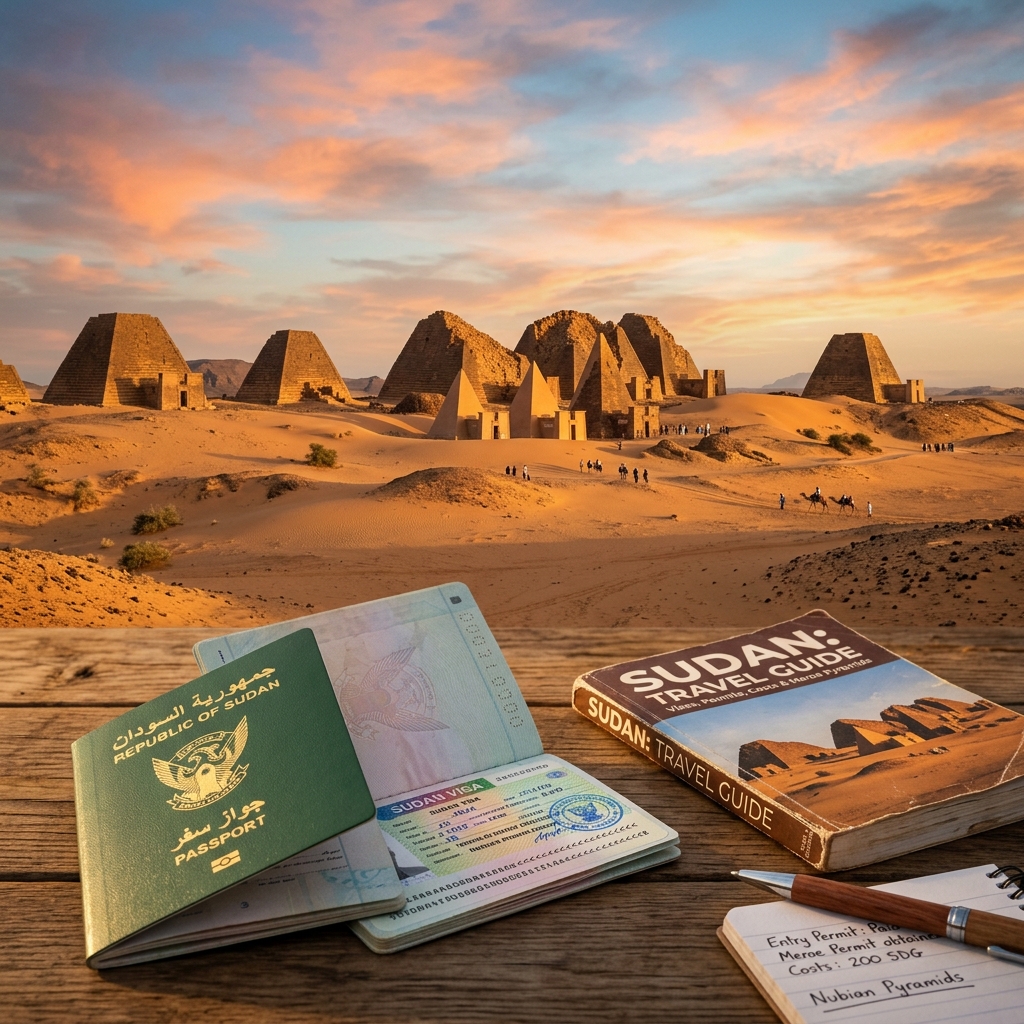
Unlocking the Kingdom of Kush: 2026 Travel Realities
Rising like sharp obsidian and sandstone daggers out of the windswept Bayuda Desert, the Nubian pyramids of Meroe Travel Budget remain one of the ancient world's most breathtaking, under-visited wonders. Serving as the heart of the Kingdom of Kush between 300 BCE and 350 CE, this UNESCO World Heritage site offers travelers an encounter with antiquity unmarred by tour buses and velvet ropes. However, visiting Meroe in 2026 requires meticulous bureaucratic preparation, strict financial planning, and a deep understanding of Sudanese entry logistics.
Traveling across northern and central Sudan requires navigability through an evolving visa landscape. Because Sudan has no widespread ATM connectivity linked to international networks like Visa or Mastercard due to long-standing financial infrastructure isolation, independent travelers must balance permit bureaucracy with physical cash management. Below is your comprehensive guide to hacking the Sudanese visa system and structuring your 2026 travel budget to Meroe.
2026 Sudanese Visa Hacks and Entry Strategies
Securing a Sudanese tourist visa has historically been a lesson in patience. In 2026, navigating the consulate system requires a tactical approach, whether you apply from your home country or leverage regional overland hubs.
Hack #1: The Aswan Consulate Route
If you are traveling through Northeast Africa, bypassing domestic embassies in Europe or North America can save weeks of processing time. The Sudanese Consulate in Aswan, Egypt, remains the most dependable outpost for issuing tourist visas. While traditional embassy processing in Washington or London Travel Budget can take upwards of six to eight weeks and demand extensive documentation, the Aswan consulate routinely issues visas in 3 to 5 business days. Ensure you arrive with pristine US dollar bills (printed 2021 or newer, with zero tears), two passport photos, and a confirmed local sponsor or licensed tour operator letter.
Hack #2: The Pre-Approval Entry Permit (LOI Fast-Track)
For those flying into Port Sudan Travel Budget (the primary international gateway and administrative transit center in 2026), your most efficient strategy is obtaining an entry permit arranged by a registered agency in advance. Rather than waiting for an embassy sticker in your home passport, a registered agency in Sudan submits your passport scan to the Ministry of Interior in Port Sudan. Within 7 to 10 days, they issue an official Letter of Introduction (LOI) or pre-approval certificate. You present this document at the airline check-in counter and purchase the physical entry visa stamp upon arrival for roughly $100 to $150 USD, depending on your nationality.
Hack #3: Decoupling Registration and Travel Permits
A critical mistake many first-time visitors make is assuming the visa stamp grants total freedom of movement. Upon crossing into Sudan, you must complete two subsequent bureaucratic steps within three days:
- Aliens Registration: You must register with the Aliens Police (available at Port Sudan, Atbara, or Shendi) within 72 hours of arrival. The fee is approximately $40–$50 USD. Keep the blue registration slip stapled safely into your passport.
- Travel & Photo Permits: While regional restrictions have fluctuated, carrying an official travel permit listing your planned destinations—specifically River Nile State, Shendi, and Meroe—is essential. You will pass multiple military and police checkpoints along the highway. Having six to ten photocopies of your passport, visa, registration slip, and itinerary ready to hand out will eliminate hours of roadside questioning.
2026 Daily Travel Budgets for Meroe
Sudan relies almost purely on cash transactions. You must carry all the foreign currency (clean, unblemished US Dollars or Euros) you intend to spend for your entire journey. Below are the verified 2026 financial benchmarks for an excursion to Meroe across three distinct travel tiers.
Backpacker Tier: $36 per day
Backpackers operating on this budget travel independently via public transport, rely on local food staples, and wild camp or stay in modest local rest houses (lokandas) in nearby Shendi or Kabushiya.
- Accommodation: $20 per night (Basic local lokanda in Shendi or wild camping under the stars near the desert perimeter with your own gear).
- Food & Water: $11 per day (Plates of traditional ful mudammas with sesame oil, flatbread, falafel, and bottled mineral water).
- Transport: $5 per day (Shared minibuses/hiaces between regional hubs, local tuk-tuks, and public transport drops near the highway junction).
Standard / Mid-Range Tier: $103 per day
The standard tier provides a reliable balance of comfort, security, and cultural access. It involves renting a private car for segments of the journey or joining an organized small convoy, staying in guesthouses with dependable electricity, and hiring site guides.
- Accommodation: $66 per night (Traditional Nubian-style private guesthouse or mid-tier hotel in Atbara or Shendi with fan/air-conditioning and private bathroom).
- Food & Water: $26 per day (Full sit-down meals featuring grilled Nile perch, spiced chicken, fresh salads, fresh juices, and ample tea with mint).
- Transport: $11 per day (Shared private vehicle hire amortized across a small group, or coordinated private intercity transfers from Atbara/Shendi).
Luxury Tier: $299 per day
High-end desert travel in Sudan is boutique and logistical rather than commercial luxury. It centers on curated expeditions, fixed desert glamping setups with ensuite facilities, air-conditioned 4x4 Land Cruisers, and private cooks.
- Accommodation: $198 per night (Meroe Camp luxury tented accommodation overlooking the pyramids, featuring verandas, private shaded structures, and generator-powered conveniences).
- Food & Water: $66 per day (Three full chef-prepared multi-course meals daily, desert high tea, imported non-alcoholic refreshments, and customized picnic spreads).
- Transport: $35 per day (Dedicated private 4x4 Toyota Land Cruiser with an experienced desert driver, fuel, and all regional movement coordination included).
Detailed Breakdown: Meroe Pyramids Sightseeing Costs (2026)
Beyond lodging and transport, budget for direct site access fees, local photography rights, and guide tipping. Keep crisp USD or local Sudanese Pounds (SDG) accessible:
- North and South Cemeteries Entry: The standard admission fee for international travelers to the Royal Cemetery of Meroe is approximately $20–$25 USD (payable in SDG at the daily official exchange rate at the gatehouse).
- Local Pyramid Guide: Hiring a local caretaker or site-certified Nubian guide costs roughly $15 to $20 USD for a 2-hour walking tour. Their insights into Kushite royal iconography and the destructive 1834 treasure hunts of Giuseppe Ferlini add immense value.
- Camel Ride Around the Dunes: Local camel drivers charge roughly $5 to $10 USD for a 45-minute ride across the dunes surrounding the pyramids during sunrise or sunset.
- Side Excursions to Naqa and Musawwarat es-Sufra: If you venture south toward the ruins of the Lion Temple of Apedemak and the Great Enclosure, budget an additional $15–$20 USD per site for separate entrance fees.
Essential Money and Logistics Advice for 2026
The Golden Currency Rule: Do not bring traveler's checks or rely on debit cards. Bring US Dollars printed in 2021 or later. Bills must be free of marks, tears, or stamps. Larger denominations ($50 and $100 bills) secure favorable exchange rates at official bank counters and foreign exchange bureaus in Port Sudan and Atbara.
Climate and Timing: The optimal window to visit Meroe spans November through February. By late March and into summer, temperatures routinely eclipse 45°C (113°F), accompanied by fierce haboob dust storms that close highways and scour camera sensors.
Connectivity: Buy a local SIM card (such as Zain or Sudani) upon landing. 4G connectivity is stable across major highway arteries, but desert coverage around the pyramids can drop to 3G or zero signal. Download offline topographic maps via maps.me or Google Maps beforehand.