
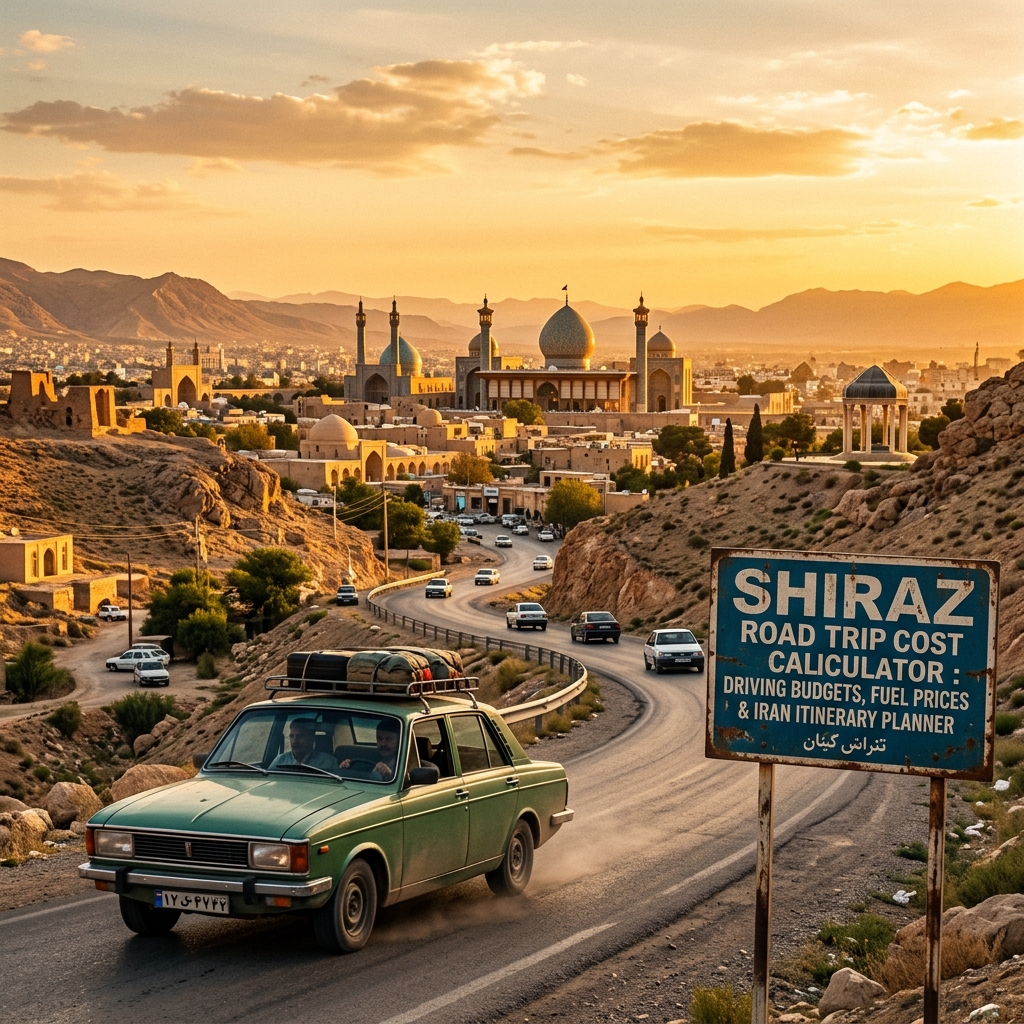
Embarking on a road trip across the historic landscapes of Iran toward Shiraz is one of the most rewarding overland journeys in the Middle East. As the cradle of Persian civilization, poetry, and wine heritage, Shiraz serves as the ultimate anchor for road trippers exploring the central plateau, the Zagros foothills, and iconic UNESCO World Heritage sites like Persepolis and Pasargadae. Driving through this region gives you the unparalleled freedom to pull over at ancient caravanserais, visit the glowing pink waters of Lake Maharloo at sunrise, and navigate hidden mountain passes at your own pace.
Planning an overland expedition in 2026 requires understanding current fuel logistics, currency realities, highway conditions, and realistic daily costs. Whether you are driving a self-drive rental, bringing your own overland vehicle via a Carnet de Passages, or hiring a dedicated private driver-guide, this 2026 driving cost guide breaks down every dollar, rial, and toman you will spend in Shiraz and the surrounding Fars Province.
2026 Shiraz Daily Travel & Driving Budgets
Travel costs in Iran remain exceptionally favorable for international travelers, though domestic inflation and exchange rate shifts require up-to-date benchmarks. Depending on your travel style and how you choose to hit the road, daily expenses fall into three clear budgetary tiers:
- Backpacker / Budget Tier: Approximately $59 per day total. This covers budget guesthouse dorms or private rooms in traditional homestays ($32/night), local street meals and bazaar eateries ($18/day), and shared overland transport or shared vehicle fuel/tolls ($9/day).
- Standard / Mid-Range Tier: Approximately $168 per day total. This includes a private room in a beautifully restored boutique traditional hotel ($107/night), full dining at atmospheric Persian garden restaurants ($43/day), and self-drive car rental Split Travel Budget between travelers or daily fuel, tolls, and parking ($18/day).
- Luxury / Private Driver Tier: Approximately $486 per day total. This tier provides luxury accommodation at premium 5-star properties like the Zandiyeh Hotel or Shiraz Grand Hotel ($322/night), fine dining and private garden banquets ($107/day), and a full-time private air-conditioned vehicle with an English-speaking driver-guide ($57/day).
Fuel Economics & Vehicle Rental Costs in 2026
Fuel in Iran remains among the least expensive in the world due to government energy subsidies. However, international motorists and tourists must understand the mechanics of the smart fuel card system when refueling along Iranian highways.
Gasoline (Benzin) Prices
Domestic motorists use subsidized electronic fuel cards, but as an international driver in 2026, you will generally purchase fuel at the non-quota commercial pump rate using the gas station attendant’s card. Regular gasoline (benzin-e mamooli) costs roughly $0.08 to $0.12 per liter (approximately $0.30 to $0.45 per US gallon) on the open tourist rate. Premium high-octane gasoline (benzin-e super) is slightly higher at approximately $0.15 to $0.20 per liter, though availability can be intermittent outside major metropolitan areas like Tehran Travel Budget, Isfahan Travel Budget, and Shiraz.
Car Rental & Self-Drive Options
Self-drive rentals for foreign passport holders are readily arranged through specialized Iranian travel agencies in Tehran, Isfahan, or Shiraz. A standard compact sedan (such as a Peugeot Pars, IKCO Dena, or Renault Logan/Tondar 90) costs between $28 and $45 per day for rentals exceeding five days. Modern crossover SUVs (such as Chery Tiggo or JAC models) range from $55 to $85 per day. Standard vehicle insurance and GPS/telematics are usually bundled, though a refundable cash deposit (typically $300 to $600) is required upon vehicle handover.
Hiring a Car with a Private Driver
For travelers hesitant to navigate aggressive urban traffic or unfamiliar Persian signage, hiring a licensed tourist car with a dedicated driver is one of the best value propositions in travel. For $50 to $70 per day, you secure a private vehicle, fuel, highway tolls, parking fees, and a dedicated local driver who doubles as a regional navigator for day trips to Persepolis, Necropolis, and the nomadic Qashqai pastures.
Highway Tolls, Parking, and Route Infrastructure
The road network leading into Shiraz is well-engineered, featuring modern dual-carriageway freeways and paved arterial routes. The major expressway connecting Isfahan to Shiraz (Route 65 and the new Shiraz-Isfahan Freeway) drastically cuts transit times across the Zagros terrain.
- Highway Tolls: Electronic tolling (AOTA) operates along major motorways. Individual toll gates cost between $0.25 and $1.50 per passage. If renting a vehicle, these tolls are settled in cash or deducted from your deposit upon return.
- City Parking in Shiraz: Central Shiraz—particularly around the Zand historical complex, Vakil Bazaar, and the Nasir al-Mulk Mosque—features congested, narrow alleys. Secure paid surface parking lots (Park-e Omoumi) charge approximately $0.50 to $1.20 for 3 to 4 hours. Most boutique heritage hotels offer private parking or direct access to supervised spaces.
- Road Conditions: Road surfaces along the main north-south tourism corridor are predominantly smooth asphalt. However, secondary roads venturing into rural Fars or mountain gorges can feature sudden speed bumps (dastandaz), free-roaming livestock, and heavy truck traffic.
Cost Breakdown: Major Road Trips from Shiraz
Shiraz is the perfect staging ground for multi-hour and multi-day overland loops. Here is what to budget for the most popular excursions in 2026:
1. The Classical Antiquity Route (Persepolis, Naqsh-e Rustam & Pasargadae)
This 280-kilometer round trip takes you to the ceremonial capital of the Achaemenid Empire. Total estimated driving distance: 280 km. Fuel cost: ~$3.00. Highway tolls: ~$1.20. Entrance tickets to all three UNESCO sites combined: ~$18.00 per person. Hiring a private driver for this standard 8-hour day trip runs approximately $40 to $55 complete.
2. The Pink Lake & Sarvestan Loop (Lake Maharloo & Sasanian Palace)
Located just 30 kilometers southeast of Shiraz along Route 86, Lake Maharloo is famous for its hyper-saline pink and crimson waters. Continuing another 60 kilometers brings you to the 5th-century Sasanian Palace of Sarvestan. Round trip distance: 185 km. Estimated fuel: ~$2.00. Sightseeing entrance: ~$5.00 per person. A half-day private excursion costs roughly $25 to $35.
3. The Zagros Nomadic Heartland (Qalat Village & Margoon Waterfall)
Head northwest into the Zagros foothills to explore the historic cliffside village of Qalat (50 km from Shiraz) or push onward to the lush cascades of Margoon Waterfall near Sepidan (150 km). Round trip distance: 310 km. Fuel cost: ~$3.50. Local eco-parking & valley entrance: ~$2.00. Full-day vehicle hire with driver: ~$50 to $65.
Accommodation & Dining Costs in Shiraz (2026)
When you park your car for the evening, Shiraz offers some of the most atmospheric traditional stays in the Middle East, centered around interior courtyards with pomegranate trees, fountains, and stained glass.
Lodging Estimates
- Traditional Hostels & Guesthouses: $25 to $35 per night for clean, welcoming rooms with shared or private en-suite baths.
- Restored Heritage Boutique Hotels: $85 to $130 per night. Stays like traditional merchant mansions provide an authentic 19th-century Qajar aesthetic with modern luxury amenities.
- Five-Star International Standard Hotels: $220 to $350+ per night for luxury suites with panoramic city views, wellness centers, and on-site valet parking.
Dining & Regional Specialties
Food in Shiraz is exceptionally affordable and flavorful. Budget roughly $18 to $45 per day to enjoy authentic regional gastronomy:
- Kalam Polo Shirazi: A signature local dish of fragrant rice cooked with cabbage, aromatic herbs, and tiny meatballs ($3.50 to $7.00 per plate).
- Faloodeh Shirazi: The city’s iconic frozen starch noodle dessert drizzled with fresh lime juice and sour cherry syrup ($0.80 to $1.50 per serving).
- Garden Restaurant Dinners: A full feast of mixed kebabs, saffron rice, fresh bread, salad Shirazi, and herbal distillates (Aragh-e Nastaran) at a courtyard restaurant costs $12.00 to $22.00 per person.
Essential Practical Tips for Driving in Iran (2026)
- Money & Currency Logistics: International Visa and Mastercard credit cards do not operate on the domestic Shetab banking network due to financial sanctions. You must bring crisp cash (USD or Euros) and exchange them upon arrival, or acquire an Iranian tourist debit card (such as MahCard or Daric Card) which can be loaded with foreign currency and tapped at every gas station, restaurant, and toll plaza.
- Navigation Apps: Google Maps operates well for highway routes, but domestic navigation apps like Neshan and Balad offer superior real-time speed trap warnings, lane guidance, and accurate routing through the intricate one-way street grids of Shiraz.
- Driving Culture: Iranian driving in major urban centers can feel chaotic to uninitiated Western travelers. Lane discipline is fluid, and motorbikes frequently weave through traffic. Maintain a defensive driving posture and avoid driving at night on unlit mountain passes where heavy cargo trucks frequently travel.
- International Driving Permit (IDP): To legally drive a rental or overland car, you must carry a valid International Driving Permit alongside your national driver’s license.
Conclusion
A road trip to Shiraz delivers an unmatched blend of deep antiquity, poetic culture, and staggering natural diversity at an extraordinarily accessible price point. In 2026, with daily driving and fuel expenses remaining among the lowest on earth, self-driving or hiring a private driver opens up the ancient wonders of Fars province without breaking your travel budget. Calculate your mileage, secure your tourist card, and prepare for an unforgettable Persian road adventure.