
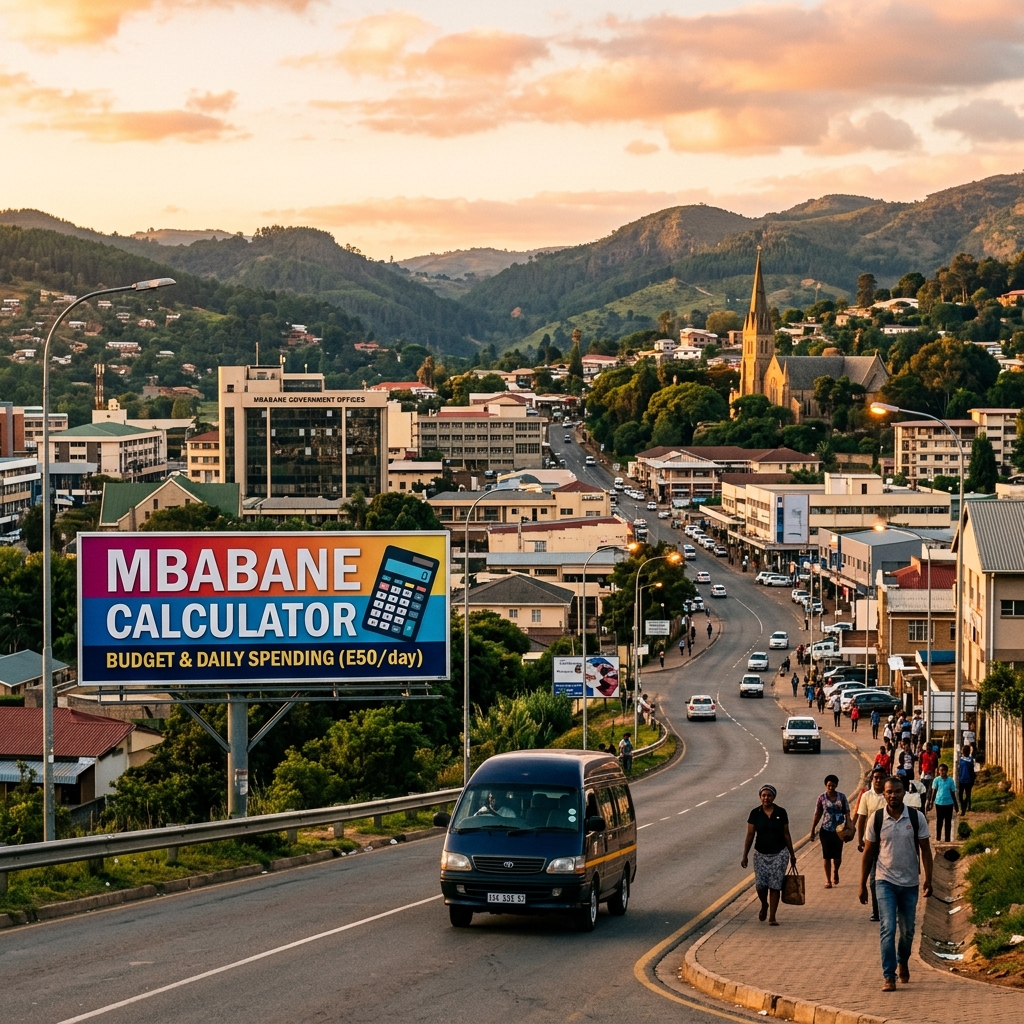
Perched high in the mist-shrouded Dlangeni Hills of western Eswatini, Mbabane Travel Budget is an unexpectedly tranquil, compact capital city. Far removed from the frenzied pace of southern Africa’s larger metropolitan hubs, Mbabane offers travelers crisp mountain air, rich Swati culture, and immediate access to the hiking trails of Sibebe Rock and the wildlife reserves of the Ezulwini Travel Budget Valley. For travelers calculating their 2026 journey, Mbabane remains one of the region's most financially accessible capitals, blending straightforward logistics with exceptional value.
Whether you are entering Eswatini via the scenic Oshoek border post from South Africa or arriving for a broader African road trip, understanding your daily financial baseline is vital. Eswatini’s currency, the Swazi Lilangeni (SZL), is pegged 1:1 to the South African Rand (ZAR), and both currencies circulate interchangeably throughout the city. In this comprehensive 2026 budget guide, we break down real-world expenses across backpacker, mid-range, and luxury travel tiers to help you map every cent of your trip.
Daily Travel Costs in Mbabane for 2026: Fast Overview
To accurately plan your trip using our Travel Cost Calculator metrics, your baseline daily expenses in Mbabane will generally align with one of three primary travel profiles. These figures represent everyday operational costs per person (assuming shared lodging costs for couples, or solo traveler baselines):
- Backpacker Tier: Approximately $33 per day (Accommodation: $18, Food & Drink: $10, Local Transport: $5).
- Standard / Mid-Range Tier: Approximately $94 per day (Accommodation: $60, Food & Dining: $24, Local Transport: $10).
- Luxury / Executive Tier: Approximately $273 per day (Accommodation: $181, Premium Dining: $60, Private Transport / Car Rental: $32).
Activity costs, wildlife safaris, and sovereign cross-border entry taxes add slightly to these daily allocations, but standard living costs remain predictable and low compared to international city standards.
Accommodation Costs in Mbabane (2026 Breakdown)
Lodging in Mbabane ranges from modest hillside guest lodges and backpacker dorms to panoramic mid-tier boutique hotels and full-service valley resorts.
Backpacker Stays ($18 / night)
Budget travelers in 2026 can find clean, basic hostel dorm beds and budget private rooms in guesthouses around central Mbabane and the nearby fringes of the Ezulwini Valley for approximately $18 per night (around 330 SZL). Popular backpacker bases offer shared kitchen facilities, communal fire pits, and basic Wi-Fi. While choices directly within the downtown commercial district are limited, nearby eco-cabins and community-run rest camps provide incredible views of the Highveld landscape without breaking your wallet.
Mid-Range Stays ($60 / night)
The standard travel tier offers exceptional value in Mbabane. For around $60 per night (approximately 1,100 SZL), you can secure a comfortable private room in established establishments like the Mountain Inn, Brackenhill Lodge, or executive bed-and-breakfasts dotted along the hillsides. These properties typically feature full English breakfasts, swimming pools overlooking the valley, secure parking, reliable high-speed fiber internet, and en-suite bathrooms. For solo professionals and couples, this tier represents the sweet spot of comfort and local hospitality.
Luxury & Executive Stays ($181 / night)
Luxury accommodation in and immediately adjacent to Mbabane commands roughly $181 per night (approximately 3,300 SZL). At this price point, you enter the tier of premier valley retreats, historic country estates like Forester's Arms (a short drive southwest in Mhlambanyatsi), or upscale suites at the Royal Villas and the Happy Valley Hotel nearby. Expect manicured private gardens, fine dining establishments on-site, deep soaking tubs, spa facilities, and personalized concierge services to arrange private safari drives and mountain expeditions.
Food and Dining Expenses
Dining in Mbabane reflects a blend of traditional Swati comfort dishes, South African braai culture, and international casual fare. Your Street Food & Meal Cost Index depends heavily on whether you shop at the fresh markets or frequent sit-down restaurants.
Budget Dining ($10 / day)
At $10 a day (roughly 185 SZL), budget travelers can eat hearty, authentic meals. Breakfast can easily be sourced from local bakeries or supermarkets like Shoprite and Pick n Pay at the Swazi Plaza (fresh bread rolls, fruit, and yogurt for $2 to $3). For lunch and dinner, local street-side vendors and butcheries serve massive plates of shisa nyama (flame-grilled beef or boerewors), pap (maize porridge), and chakalaka (spiced vegetable relish) for $3.50 to $4.00 per meal. Bottled mineral water and local soft drinks cost less than $1 each.
Mid-Range Dining ($24 / day)
A $24 daily budget (approx. 440 SZL) allows you to sit down for proper meals in Mbabane's top casual spots. Enjoy an artisan café breakfast with espresso at venues inside The New Mall or Mbabane Market for $5. A lunch of grilled trout, gourmet burgers, or wood-fired pizza runs between $7 and $9. In the evening, dinner at a hillside restaurant—paired with a locally brewed Sibebe Premium Lager—costs between $10 and $12 per person. Tipping in sit-down restaurants stands at a standard 10% to 15% for attentive service.
Upscale Dining ($60 / day)
For $60 per day (roughly 1,100 SZL), diners can experience multi-course culinary menus, high-end steakhouses, and imported South African wine pairings. Upscale dining in the Mbabane-Ezulwini corridor features prime venison cuts (such as kudu or impala steak), fresh Mozambique-style peri-peri prawns, artisanal cheese platters, and decadent desserts. An evening fine-dining experience with wine will typically cost between $35 and $45 per head, leaving plenty of room for leisurely café lunches and sundowner cocktails.
Transportation Costs in and Around Mbabane
Navigating Mbabane requires an understanding of its hilly terrain. Walking between separate neighborhoods is physically demanding, so motorized transit is essential.
Local Minibus Taxis / Kombis ($5 / day)
The most authentic, budget-friendly way to move around Mbabane is via the ubiquitous white minibuses known locally as *kombis*. A short hop across Mbabane or down the MR3 highway toward the Ezulwini Valley costs between 10 SZL and 20 SZL ($0.55 to $1.10). An active backpacker spending $5 a day can easily take multiple kombi trips, with change left over for quick city runs. However, kombis follow set routes, can get crowded, and generally cease regular service shortly after dusk.
Cabs and Short Rides ($10 / day)
Mid-range travelers relying on registered private sedan taxis for short hops around town will spend roughly $10 per day. A typical direct taxi ride between Mbabane’s city center and a hillside hotel runs between 70 SZL and 120 SZL ($4 to $7). Private taxis do not use digital meters, so always negotiate and confirm the fare with the driver before stepping inside.
Rental Cars and Private Chauffeurs ($32 / day)
Renting a car remains the single most practical way to explore Mbabane and the surrounding Kingdom of Eswatini. In 2026, standard economy vehicle rentals booked from King Mswati III International Airport (SHO) or picked up across the South African border cost roughly $25 to $32 per day, including insurance. Petrol costs in Eswatini run slightly cheaper than or equal to South African rates. This daily investment gives you absolute freedom to visit mountain passes, nature reserves, and cultural markets on your own schedule.
Sightseeing, Activities, and Excursion Costs (2026 Estimates)
Mbabane itself is primarily administrative and commercial, but world-class outdoor and cultural attractions sit right on its doorstep:
- Sibebe Rock Hiking: Located just 10 kilometers north of downtown Mbabane, Sibebe is the world’s second-largest monolith. Self-guided hiking trail permits from the community resort entrance cost roughly $5 (90 SZL) per person. Hiring an accredited local community guide costs around $15 to $20 total and is highly recommended.
- Mlilwane Wildlife Sanctuary: A 20-minute drive south of the capital, this sanctuary is famous for safe walking and mountain biking safaris among zebras, impalas, and warthogs. Day visitor conservation fees in 2026 stand at approximately $6 (110 SZL). Mountain bike rentals cost around $12 per hour.
- Mantenga Cultural Village & Nature Reserve: Experience traditional Swati dance performances and explore a reconstructed 19th-century homestead. Entry, including the lively cultural performance, costs roughly $10 (180 SZL).
- Mbabane Craft Market & Swazi Plaza: Free to wander. Hand-carved wooden sculptures, woven baskets, and soapstone crafts vary from $3 for small trinkets to $40+ for intricate woven textiles. Friendly, respectful bargaining is standard practice.
Estimated Total Trip Budgets
3-Day Weekend Exploration in Mbabane
A fast weekend trip focused on hiking Sibebe, shopping for crafts, and touring local reserves breaks down as follows:
- Backpacker: $33/day x 3 days + $15 activities = $114 total
- Mid-Range: $94/day x 3 days + $35 activities = $317 total
- Luxury: $273/day x 3 days + $90 activities = $909 total
7-Day Comprehensive Highveld & Valley Experience
A full week gives you time to thoroughly explore Mbabane, venture to Malolotja Nature Reserve's canopy tours, and relax in the Ezulwini Valley:
- Backpacker: $33/day x 7 days + $45 activities = $276 total
- Mid-Range: $94/day x 7 days + $95 activities = $753 total
- Luxury: $273/day x 7 days + $250 activities = $2,161 total
Insider Money-Saving Tips for Mbabane in 2026
Maximize your financial efficiency while staying in Mbabane with these local practical strategies:
- Carry South African Rand (ZAR) Cash: You do not need to convert ZAR to SZL prior to arrival. South African Rand banknotes are accepted everywhere at face value. However, note that while ZAR is legal tender in Eswatini, Swazi Lilangeni notes are not accepted back in South Africa. Spend your remaining SZL coins and notes before crossing the border.
- Pick up an MTN Eswatini eSIM: Avoid exorbitant roaming charges. Local connectivity is reliable throughout the city; 5GB of data in 2026 costs roughly $6 to $8, simplifying on-the-go navigation and communication.
- Prepare for the Cross-Border Road Tax: If driving a foreign-registered car (e.g., a South African rental) through the Ngwenya/Oshoek border, you must pay the Eswatini Ministry of Public Works road toll. In 2026, this fee is 100 SZL (approx. $5.50), payable via credit card or cash at the border post.
- Dine at Traditional Butcheries: For lunch, skip Western franchise chains in the shopping malls and head to a reputable neighborhood butchery offering braai services. You choose your cut of meat by weight, pay nominal preparation fees, and enjoy a massive feast at half the cost of a formal restaurant meal.
Conclusion
Mbabane offers a refreshing, authentic, and safe gateway to southern Africa that remains remarkably gentle on your travel wallet. In 2026, whether you choose to hike granite massifs on a backpacker shoe-string of $33 a day, or unwind at a luxury mountain resort for $273 a day, the capital provides memorable African mountain hospitality without the inflated price tags found in other regional tourist hubs. Use our cost calculator benchmarks to set your spending parameters, pack comfortable walking shoes, and enjoy the dramatic vistas of Eswatini.