
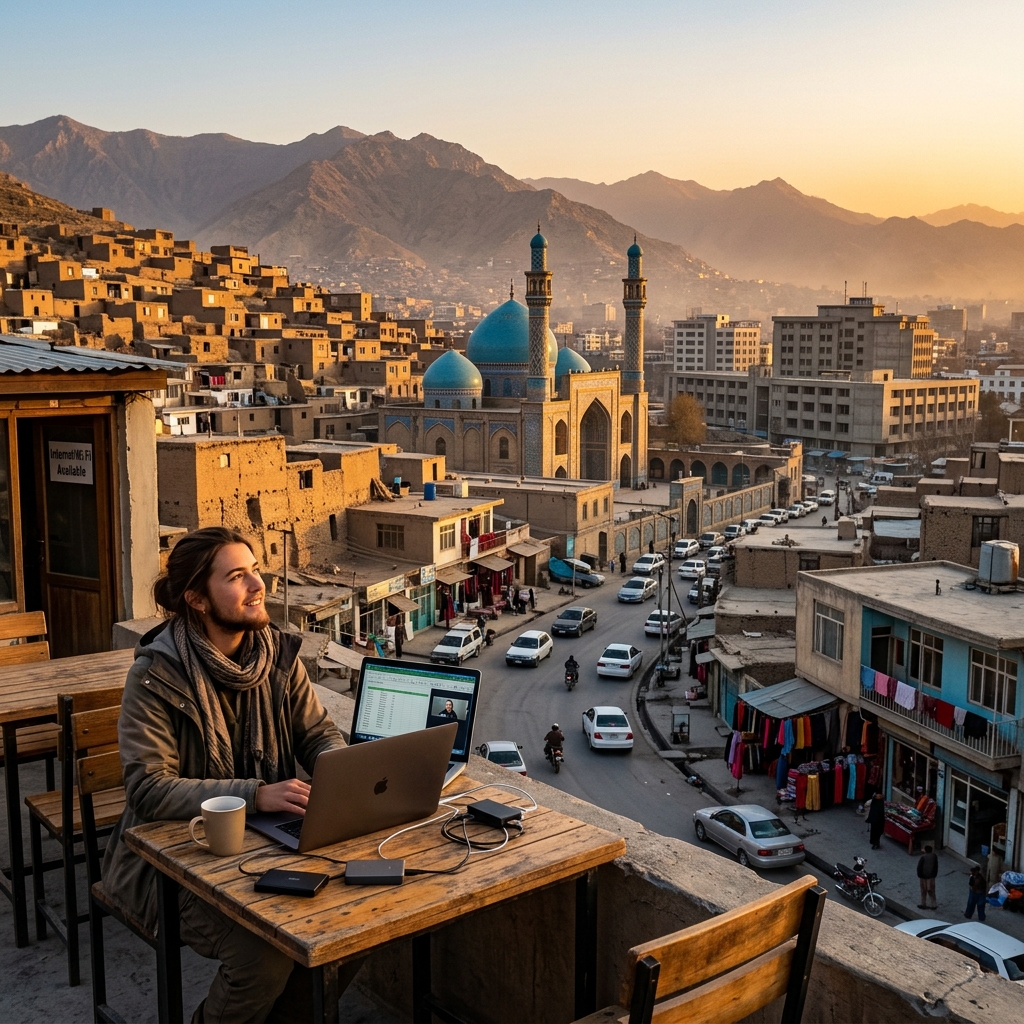
Frontier Remote Work in Kabul Travel Budget: The 2026 Landscape
Working remotely from Kabul in 2026 represents one of the most extreme, niche, and rewarding frontier experiences available to digital nomads. Known for its dramatically beautiful mountain backdrops, rich centuries-old heritage, and warm hospitality, Afghanistan's capital remains an atypical destination that demands exceptional advance preparation. It is not a place for novice travelers looking for a tropical beach or a buzzing co-working community; rather, it attracts adventurous remote professionals, independent journalists, conflict researchers, and cultural documentarians who can operate self-sufficiently.
Living and working in Kabul as a Digital Nomad Living Index requires navigating a unique mix of extreme budget affordances and high operational overheads. While everyday expenses like local produce, street-side kebabs, and short taxi rides are remarkably inexpensive, the essential logistics of frontier remote work—such as blast-protected accommodation, 24/7 dual-generator backup, high-speed satellite or dedicated fiber internet, and comprehensive international insurance—can elevate costs significantly. Understanding how to manage your financial budget alongside these logistical realities is crucial for a successful stay.
Daily & Monthly Nomad Financial Benchmarks (2026 Pricing)
To accurately plan a remote work stint in Kabul, financial expectations must be segmented by tier. The total cost of living varies wildly depending on the degree of security infrastructure, backup power reliability, and internet redundancy required for your professional setup.
1. Backpacker / Budget Nomad Tier
The budget tier caters to highly experienced frontier travelers who rely on local guesthouses, local SIM card data, and public neighborhood dining. At this tier, costs are extremely low, though you must accept lower internet reliability and intermittent utility outages.
- Accommodation: $18 / night ($540 / month) — Basic, local family-run guesthouses or simple private rooms in residential areas like Shar-e Naw with basic shared utilities.
- Food & Dining: $10 / day ($300 / month) — Local neighborhood eateries, fresh flatbread (naan), street-side kebabs, seasonal fruits, and traditional tea (chai).
- Transportation: $5 / day ($150 / month) — Shared street taxis and short negotiated yellow-taxi rides across the city center.
- Base Daily Financial Target: $33 / day (Approximately $990 / month base operational cost, excluding insurance and emergency funds).
2. Standard / Mid-Range Nomad Tier
The mid-range tier represents the sweet spot for professional remote workers who require consistent electricity, reliable high-speed Wi-Fi, gated security, and comfortable workspace arrangements.
- Accommodation: $60 / night ($1,800 / month) — Secure mid-tier hotels or private serviced suites offering dual-generator systems (24/7 power backup), dedicated fiber Wi-Fi, and perimeter security.
- Food & Dining: $24 / day ($720 / month) — Mix of hotel dining, mid-range local restaurants, specialized Afghan-Turkish cafes, and imported grocery staples.
- Transportation: $10 / day ($300 / month) — Vetted private yellow taxis, multi-stop hired drivers, and point-to-point airport transfers.
- Base Daily Financial Target: $94 / day (Approximately $2,820 / month base operational cost).
3. Luxury / High-Security Tier
This tier caters to international consultants, media crews, and corporate contractors requiring maximum physical security, diplomatic-grade amenities, private armored transport, and high-bandwidth satellite connections.
- Accommodation: $181 / night ($5,430 / month) — Premier high-security luxury establishments such as the Kabul Serena Hotel or heavily protected diplomatic-adjacent compounds featuring armed security details, spa facilities, full power redundancy, and high-speed enterprise internet.
- Food & Dining: $60 / day ($1,800 / month) — International hotel buffets, private catered meals, premium imported goods, and fine dining inside secured perimeters.
- Transportation: $32 / day ($960 / month) — Private vehicle with dedicated professional driver, high-clearance SUV rentals, and secure transit arrangements.
- Base Daily Financial Target: $273 / day (Approximately $8,190 / month base operational cost).
Nomad Infrastructure: Connectivity, Power & Banking Realities
1. Internet Reliability & VPN Protocols
Internet access in Kabul is variable and requires built-in redundancy for remote work. High-end hotels offer dedicated fiber optic connections reaching speeds between 15 Mbps and 40 Mbps. However, network interruptions can occur without notice. To maintain seamless connectivity, digital nomads must implement a multi-network mobile hotspot setup.
In 2026, the primary telecommunications providers in Afghanistan include Afghan Wireless (AWCC), Roshan, Etisalat, and MTN. Purchasing prepaid 4G SIM cards from at least two different providers is essential. Mobile data packages cost approximately $8 to $15 per 20 GB of high-speed data. Additionally, using a premium Virtual Private Network (VPN) featuring Obfuscated Servers and WireGuard protocols is mandatory for protecting sensitive client data and accessing global banking platforms and restricted communication tools.
2. Power Blackouts & Hardware Redundancies
Grid electricity in Kabul experiences frequent load-shedding and power outages. Standard local housing may only receive 6 to 12 hours of grid power daily. Mid-range and luxury accommodations run fuel generators to bridge grid failures. If staying in budget accommodation, remote workers must carry portable high-capacity power stations (e.g., 200Wh to 500Wh lithium power banks capable of charging laptops multiple times) along with heavy-duty surge protectors to safeguard electronics against voltage spikes.
3. Cash-Only Economy & Money Exchange System
The banking system in Afghanistan remains largely disconnected from global card networks. Foreign Visa, Mastercard, and American Express cards will NOT work at local ATMs or retail merchants in Kabul. You cannot rely on plastic or mobile payment apps.
- USD Cash: You must bring clean, unblemished, crisp US Dollar bills (printed post-2013, ideally $100 denominations) to cover your entire planned stay. High-denomination bills receive significantly better exchange rates.
- Local Currency (AFN): The local currency is the Afghan Afghani (AFN). Money exchange is handled at the famous Sarai Shahzada money market in central Kabul or through licensed money changers located near major commercial streets in Shar-e Naw.
- Hawala & Money Transfers: Western Union and MoneyGram operate limited cash pickup counters in Kabul. The traditional Hawala informal broker network remains widely used for international money transfers if emergency cash influxes are required.
Detailed Cost Breakdown by Category
Accommodation Realities
Housing is the single largest budget variable in Kabul. Budget guesthouses ($18/night) located in traditional quarters offer basic private rooms but usually lack continuous heating/cooling and uninterrupted internet. Mid-range secure hotels ($60/night) in Shar-e Naw provide gated security, hot water, daily breakfast, and generator-backed power suitable for Zoom calls. Premier international standard hotels ($181/night) provide enterprise security barriers, search checkpoints, high-speed fiber internet, and comprehensive international safety amenities.
Food & Dining Expenses
Dining out in Kabul is generally affordable and flavorful. Traditional Afghan cuisine centers around aromatic rice dishes, grilled meats, fresh flatbreads, cooked vegetables, and dairy.
- Street Food & Meal Cost Index & Local Eateries ($10/day): A large plate of Kabuli Pulao (steamed rice with lamb, caramelized carrots, and raisins) with fresh naan costs between $2.50 and $4.00. Freshly grilled chicken or beef kebabs cost around $3.00 to $5.00. Fresh pomegranate or apple juice from street stalls costs less than $1.00.
- Mid-Range Cafes ($24/day): Dining at secured cafes frequented by international workers or business travelers costs around $8.00 to $15.00 per main course. Espresso drinks and cappuccino cost approximately $2.00 to $3.50.
- High-End Dining ($60/day): Multi-course international buffets or fine dining at major luxury hotel restaurants cost between $25.00 and $45.00 per person.
Transportation & Local Mobility
Public buses exist but are generally not recommended for foreign remote workers due to security, language barriers, and complexity. Yellow street taxis are abundant throughout Kabul. A short taxi ride across central districts (e.g., Shar-e Naw to Karte Parwan) costs roughly 100 to 200 AFN ($1.50 to $3.00). Hiring a private taxi driver for a full day of multi-stop travel ranges from $25 to $40, while dedicated armored vehicle rentals or luxury SUV transfers command rates upwards of $100 to $200 per day.
Visas, Legal Regulations & Cultural Etiquette (2026)
Remote workers entering Afghanistan in 2026 must obtain a valid tourist or business visa prior to arrival from an Afghan embassy or consulate abroad (common application points include Dubai Travel Budget, Islamabad Travel Budget, Istanbul, or select diplomatic missions in Europe). Visa on arrival is generally not available for tourist purposes.
1. Travel Permits & Local Registration
Upon arriving in Kabul, travelers planning to visit cultural sights or move between provinces must register with the local authorities. Obtaining intra-country travel permits through the Ministry of Information and Culture (MoIC) in Kabul is standard procedure for visiting regions such as Bamyan or Panjshir. Always carry multiple physical passport photos and printed copies of your passport and visa.
2. Dress Codes & Social Customs
Adherence to local cultural regulations is strict and enforced:
- Men: Must dress modestly. Wearing local attire (Perahan Tunban) is widely recommended and appreciated. Shorts and sleeveless shirts are culturally inappropriate in public.
- Women: Must observe strict modesty rules in public spaces, including wearing full-length loose dark clothing (such as an Abaya) and a full head covering (Hijab). Female nomads should research current administrative decrees regarding travel, workspace access, and public mobility, as restrictions on women remain significant.
- Photography: Extremely sensitive. Never photograph military installations, checkpoints, government buildings, security personnel, or local women. Always request explicit permission before photographing individuals.
Pro-Tips for Frontier Nomads in Kabul
- Hardware Redundancy: Bring duplicate hardware for critical gear, including a secondary smartphone, extra laptop power bricks, multi-region adapters, and external hard drives containing offline software backups.
- Comprehensive Medical & Evacuation Insurance: Standard travel insurance policy covers will NOT cover Afghanistan. You must purchase specialized high-risk zone travel insurance that includes emergency medical evacuation coverage (e.g., via providers like High Risk Voyager or specialized Lloyd's underwriters).
- Local Fixer / Translator: Budget for hiring a trusted local fixer or translator for your first few days. A local guide helps you navigate registration procedures, money markets, and secure local transport efficiently.
- Cash Security Management: Distribute your USD cash reserves across multiple physical locations (e.g., hidden body belts, locked luggage compartments) rather than carrying large sums in your wallet.