
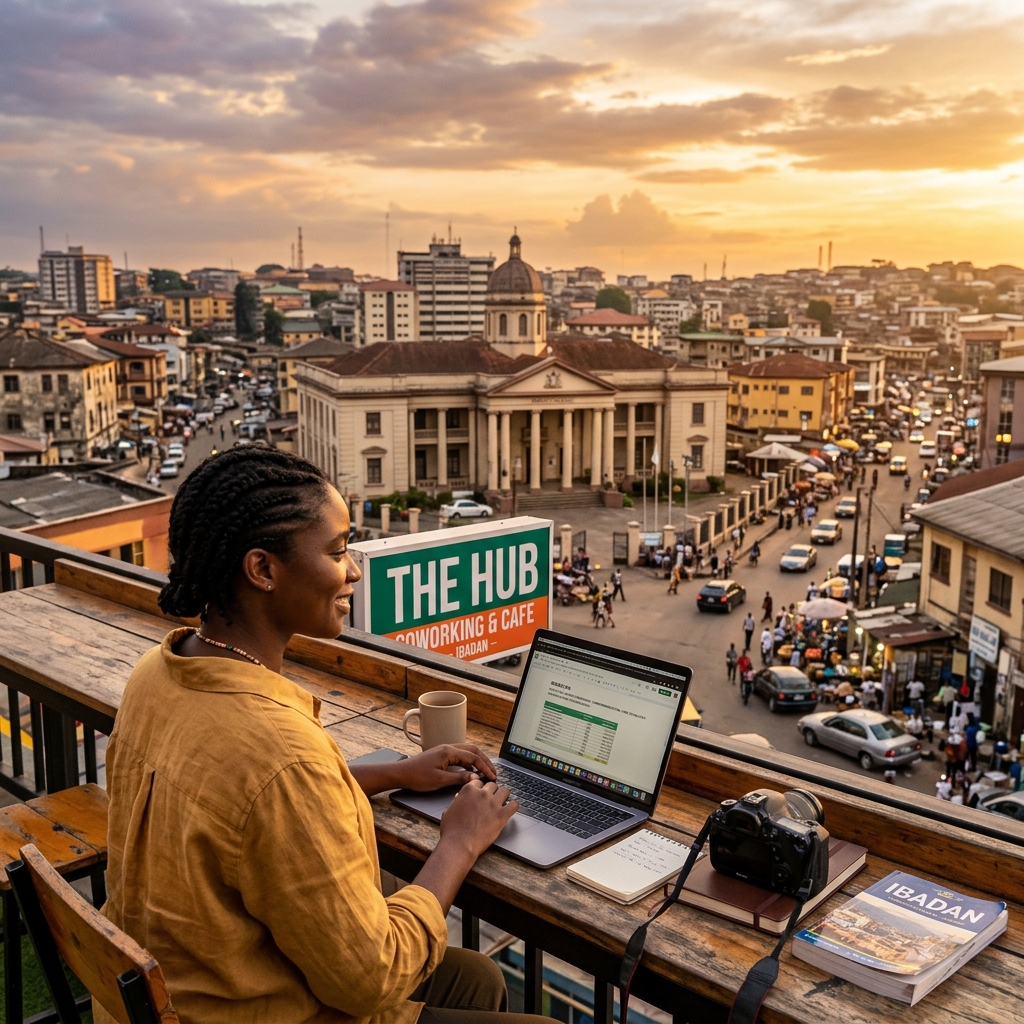
Introduction: Why Ibadan Travel Budget is West Africa's Emerging Nomad Haven in 2026
As remote work landscapes evolve in 2026, digital nomads are increasingly looking beyond saturated hubs like Bali, Lisbon, or Cape Town in search of authentic, highly affordable, and culturally vibrant alternatives. Enter Ibadan, the sprawling capital of Oyo State in southwestern Nigeria. Historically renowned as one of Africa's largest indigenous cities—famous for its iconic sea of red-rust rooftops—Ibadan has transformed into a strategic secondary tech hub in West Africa.
Positioned just a short ride away from Lagos Travel Budget via the modern high-speed railway, Ibadan offers location-independent professionals a unique value proposition: access to Nigeria's booming digital ecosystem and creative energy at a fraction of Lagos's cost of living. In 2026, with the rapid expansion of 5G networks, widespread adoption of Starlink satellite internet, and an influx of boutique serviced apartments featuring dedicated solar infrastructure, Ibadan is proving to be a powerhouse location for long-term remote workers.
Whether you are a budget-conscious freelancer looking to stretch your runway, a mid-range remote employee seeking green spaces and spacious housing, or an executive creative requiring high-end comfort, this guide breaks down every financial, logistical, and lifestyle metric you need to thrive in Ibadan.
2026 Financial Benchmarks: What Does Ibadan Cost?
Understanding your daily and monthly burn rate is essential before landing in Nigeria. While local prices fluctuate based on currency dynamics, settling into Ibadan remains remarkably affordable compared to global averages. Below are our verified 2026 financial benchmarks across three distinct nomad spending tiers.
Summary of Daily Expenses by Tier
- Backpacker / Budget Nomad Tier: Approximately $32 total per day (Accommodation: $17/night, Food: $10/day, Transport: $5/day).
- Standard / Mid-Range Nomad Tier: Approximately $91 total per day (Accommodation: $58/night, Food: $23/day, Transport: $10/day).
- Luxury / Executive Nomad Tier: Approximately $262 total per day (Accommodation: $173/night, Food: $58/day, Transport: $31/day).
Monthly Nomad Spending Estimates
While daily hotel rates provide flexibility, long-stay nomads typically negotiate monthly rates on short-let apartments or lease serviced flats, which significantly lowers effective daily accommodation costs. Here is what to expect for a 30-day stay in 2026:
- Budget Monthly Runway ($900 – $1,150 USD): Renting a private room in a shared apartment in student-friendly areas like Agbowo or suburban Bodija, eating local street delicacies like Amala, taking public transit, and working out of community hubs.
- Mid-Range Monthly Runway ($2,200 – $2,800 USD): Renting a fully serviced 1-bedroom short-let flat in Bodija or Ring Road with guaranteed solar back-up power, dining at mid-scale cafes, relying on ride-hailing apps, and maintaining a desk at a top coworking space.
- Luxury Monthly Runway ($6,000 – $8,000 USD): Living in a high-security duplex or luxury hotel in Agodi GRA or Iyaganku GRA, private daily chauffeur service, fine dining, and full access to private office suits with dedicated fiber connections.
Accommodation Strategy: Finding Power and Comfort
In Nigeria, your accommodation choice is directly linked to your productivity. The public electricity grid can experience frequent outages; therefore, your primary filter when booking lodging must be guaranteed secondary power—specifically hybrid solar inverter systems or 24/7 dual generators.
Top Nomad-Friendly Neighborhoods in Ibadan
- Bodija (Old & New Bodija): The undisputed champion for remote workers. Bodija is safe, leafy, central, and packed with modern coffee shops, supermarkets, and coworking hubs. Serviced apartments here average around $50 to $75 per night.
- Agodi GRA & Iyaganku GRA: Government Reserved Areas (GRAs) offer low density, quiet surroundings, maximum security, and luxury boutique hotels. Ideal for executive nomads willing to pay $150+ per night for total peace of mind.
- Ring Road / Oluyole: Vibrant commercial and residential sectors featuring affordable short-stay apartments, vibrant nightlife, and excellent proximity to shopping centers like Heritage Mall and Cocoa House.
Lodging Cost Breakdown (2026 Averages)
- Budget Tier ($17/night): Basic guesthouses, private rooms in shared residential apartments, or budget lodge setups. Power is usually provided during scheduled evening hours, so a personal power bank is essential.
- Mid-Range Tier ($58/night): Modern 1-bedroom short-let apartments equipped with 24/7 inverter systems, air conditioning, smart TVs, and gated security.
- Luxury Tier ($173/night): Full-service boutique hotel suites or private luxury villas in exclusive GRA compounds, complete with daily housekeeping, private chefs upon request, swimming pools, and uninterrupted power.
Work Infrastructure: Power, Internet, and Coworking Spaces
Maintaining a uninterrupted digital workflow in Ibadan requires a two-tiered approach to internet and energy management. By taking a few straightforward precautions, remote workers can comfortably execute client calls and upload heavy files without hassle.
Internet Speed & Connectivity Options
In 2026, cellular network infrastructure in Ibadan is fast and responsive. Mobile network operators such as MTN, Airtel, and Glo offer extensive 5G coverage across key neighborhoods like Bodija, Ring Road, Dugbe, and the University of Ibadan campus. Average 5G download speeds range between 80 Mbps and 250 Mbps.
For fixed setups, many modern serviced rentals and tech hubs use Starlink satellite terminals or direct fiber optic connections (via providers like IPNX and Spectranet). Pro-Tip: Always purchase a portable 5G MiFi device and keep SIM cards from two different networks (e.g., MTN and Airtel) as backups.
Top Coworking Hubs in Ibadan
- Wennovation Hub (South Campus / Dugbe): One of the pioneering tech spaces in Nigeria, offering flexible hot desks, high-speed fiber internet, and a active community of software developers and entrepreneurs. Daily passes start around $5–$8 USD.
- Hub One & Local Tech Spaces (Bodija Area): Modern facilities boasting reliable generator power, silent call booths, and collaborative lounge spaces tailored to remote freelancers.
- Cafe Chrysalis & Upscale Coffee Shops: Excellent for light work sessions, informal meetings, and creative brainstorming over local artisan coffee and pastries.
Food and Dining Expenses: From Street Amala to Fine Dining
Ibadan is widely recognized across West Africa as a culinary paradise, particularly famous for its rich, authentic Yoruba cuisine. Food costs here are a fraction of what you would pay in Lagos or Abuja Travel Budget.
Food Benchmarks Explained
- Budget ($10/day): Immersing yourself in the local food culture. Eating a traditional lunch of Amala with Gbegiri and Ewedu soup accompanied by tender goat meat or beef at famous local spots like Amala Skye (Bodija) costs under $2 to $3 USD per meal. Pair this with local fruits, roasted plantains (Boli), and home-cooked breakfasts.
- Mid-Range ($23/day): A blend of local delicacies and international dining. Includes breakfasts at neighborhood bakeries, lunch at mid-tier restaurants (serving Jollof rice, peppered chicken, and grilled fish), and dinner at continental bistros in Bodija or Ring Road.
- Luxury ($58/day): Fine-dining experiences at high-end hotel restaurants, international seafood grills, imported wines, and private chef services in your villa.
Transportation: Getting Around Ibadan Efficiently
Navigating Ibadan is straightforward once you understand the local transit hierarchy. The city is sprawling, so choosing the right transit method depends on your budget and urgency.
Transport Options & Cost Breakdown
- Ride-Hailing Apps (Uber, Bolt, Rida): The safest, most comfortable choice for digital nomads. A 20-minute ride across town in an air-conditioned car typically costs between $3 and $6 USD. Mid-range nomads spending around $10/day can comfortably take 2 to 3 rides daily.
- Private Chauffeur Hire ($31/day): Executive nomads can hire a dedicated car and driver for the entire day, eliminating wait times and ensuring seamless transit between meetings, coworking hubs, and evening events.
- Public Micra Taxis & Buses ($5/day budget): Ibadan's iconic small yellow Nissan Micra taxis cruise fixed routes throughout the city. A single jump from neighborhood to neighborhood costs less than $0.50 USD. While extremely cheap, they can be crowded and lack air conditioning.
- Intercity Travel: Reaching Ibadan from Lagos is best done via the modern Lagos-Ibadan Standard Gauge Railway. A premium or first-class train ticket costs between $10 and $18 USD, offering a smooth, scenic two-hour journey with power outlets and cold AC.
Sightseeing, Culture, and Weekend Lifestyle
When you close your laptop, Ibadan offers deep historical roots, striking natural viewpoints, and a relaxed, unhurried lifestyle.
- Bower's Tower: Situated on top of Oke-Are hill, this historic monument offers breathtaking 360-degree views over the vast expanse of Ibadan's brown roofs. Entrance is minimal ($1–$2 USD).
- Mapo Hall: The historic colonial-style city hall sitting atop Mapo Hill, offering a deep dive into the political history of the Yoruba people.
- Agodi Gardens: A tranquil botanical garden and park located in the center of the city. Perfect for weekend picnics, outdoor reading, or walking along shaded paths. Entrance fees are roughly $1 to $2 USD.
- University of Ibadan (UI): Africa’s premier academic institution features lush green grounds, historic architecture, a zoo, and a quiet atmosphere perfect for evening strolls.
Practical Tips for Digital Nomads in Ibadan (2026 Edition)
- Visa & Entry Requirements: Foreign nationals visiting Nigeria generally require an E-Visa or Visa on Arrival (VoA) approved prior to travel. Ensure your travel documentation explicitly covers your intended duration of stay.
- Banking & Currency: Nigeria operates largely on electronic transfers and debit cards, but cash is still handy for local markets and transit. Download local payment apps (such as Moniepoint, OPay, or Kuda) or use international multi-currency debit cards at major ATMs in Bodija and Dugbe.
- Health & Wellness: Drink bottled or filtered water exclusively. Ensure your routine travel vaccinations (including Yellow Fever) are up to date, and carry prophylactic malaria medication or standard mosquito repellents. Private healthcare clinics in Agodi GRA offer modern urgent care facilities.
- Safety Considerations: Ibadan is widely considered one of the safest major metropolitan areas in Nigeria. Violent crime rates are low compared to other regional capitals. Standard urban precautions apply: avoid displaying expensive laptops or cameras in unlit areas late at night, and use ride-hailing services for evening travel.