
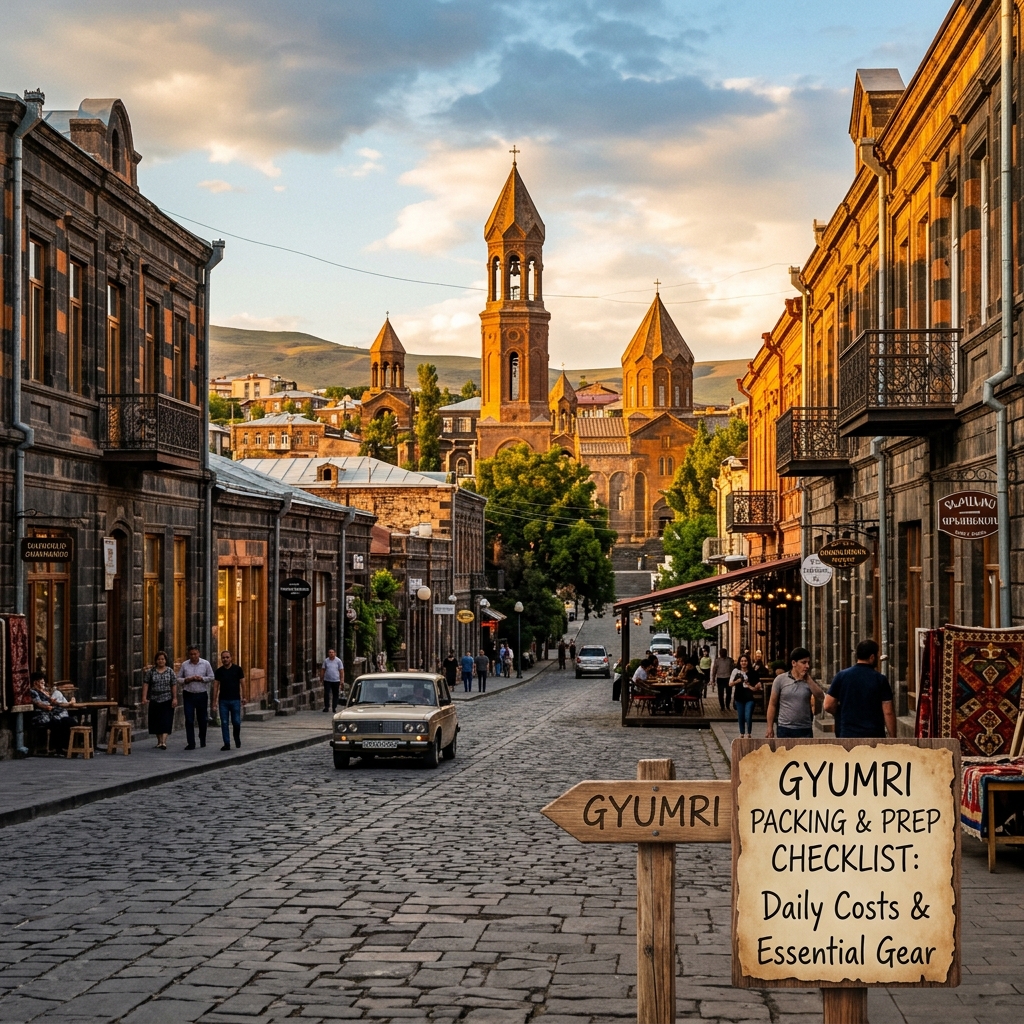
Introduction to Planning a Trip to Gyumri Travel Budget in 2026
As Armenia’s vibrant cultural capital, Gyumri offers travel enthusiasts a rich blend of historic 19th-century black tufa architecture, world-class artisanal workshops, and an authentic culinary landscape distinct from Yerevan Travel Budget. Located on the wind-swept Shirak Plain at an elevation of roughly 1,500 meters (4,920 feet) above sea level, Gyumri provides a unique travel experience that demands thoughtful preparation. Whether you are wandering through the historic Kumayri district, capturing photos at the Black Fortress (Sev Berd), or enjoying traditional Chanakh soup at a local tavern, having the right gear and financial plan is essential for an enjoyable visit in 2026.
Travelers arriving in Gyumri must prepare for two major factors: significant seasonal temperature swings and dynamic ground conditions. Because the city features historic cobblestone streets and high-altitude weather patterns, overpacking unnecessary items or failing to bring proper footwear can quickly impact your trip. This comprehensive packing and travel prep checklist breaks down the realistic costs of traveling to Gyumri in 2026, outlines seasonal gear requirements, and provides an actionable administrative planning strategy.
2026 Gyumri Travel Budget Benchmarks
To accurately prepare your wallet alongside your luggage, it helps to understand current expense levels in northern Armenia. Gyumri remains one of Eastern Europe's most affordable cultural destinations, providing incredible value across all travel styles. Below are the projected financial benchmarks for travelers visiting Gyumri in 2026.
Backpacker Tier
- Accommodation: $17 per night (Hostel dorm bed or budget guesthouse room near Vardanants Square)
- Food: $10 per day (Local bakeries, Street Food & Meal Cost Index such as ponchik, and casual taverns)
- Transport: $5 per day (City marshrutkas [minibuses] and occasional public bus trips)
- Total Daily Baseline: $32 per day
Standard / Mid-Range Tier
- Accommodation: $58 per night (Private room in a boutique tufa-stone hotel or modern apartment rental)
- Food: $23 per day (Sit-down meals at mid-range restaurants featuring traditional Shirak cuisine)
- Transport: $10 per day (Frequent use of ride-hailing apps such as GG or Yandex Taxi around the city)
- Total Daily Baseline: $91 per day
Luxury Tier
- Accommodation: $173 per night (High-end historic hotel or luxury suite with full amenities)
- Food: $58 per day (Fine dining, multi-course tasting menus paired with regional Armenian wines)
- Transport: $31 per day (Private chauffeured transfers, day trips to Marmashen Monastery, or full-day taxi rentals)
- Total Daily Baseline: $262 per day
Note: Sightseeing costs in Gyumri are generally very modest. Entrance fees to local museums (such as the Dzitoghtsyan Museum of National Architecture) usually range between $2 and $5 USD, making pre-trip budgeting straightforward.
Essential Seasonal Packing & Budget Checklist for Gyumri
Gyumri’s continental high-altitude climate means climate conditions vary dramatically depending on the season. Winter brings freezing temperatures and heavy snow, while summer offers bright sun with low humidity and warm afternoons. Packing efficiently requires targeted choices based on when you plan to travel in 2026.
1. Spring & Summer (May through September)
Summers in Gyumri are warm during the day, with temperatures frequently reaching 28°C to 32°C (82°F–90°F). However, because of the elevation, temperatures drop quickly once the sun sets over the Shirak valley.
- Breathable Daywear: Pack lightweight linen or moisture-wicking cotton shirts and light trousers or shorts.
- Evening Layers: A medium-weight fleece, denim jacket, or light sweater is necessary for cooler summer evenings.
- Sun Protection: The UV index at high altitudes is high. Bring a wide-brimmed hat, UV400 polarized sunglasses, and broad-spectrum SPF 50+ sunscreen.
- Light Rain Shell: Spring (especially May and June) can bring sudden afternoon showers. Pack a packable waterproof jacket.
2. Autumn & Winter (October through April)
Winters in Gyumri are notoriously cold, often dropping well below freezing (-10°C to -15°C / 14°F to 5°F). Snow carpeted across black tufa architecture is picturesque, but demands proper thermal gear.
- Thermal Base Layers: Merino wool or synthetic thermal tops and bottoms are mandatory for outdoor exploration.
- Heavy Outerwear: A windproof, insulated down parka rated for sub-zero temperatures.
- Cold-Weather Accessories: Fleece-lined beanies, insulated waterproof gloves, and a thermal neck gaiter or heavy scarf.
- Winter Footwear: Waterproof winter boots with heavy tread or microspikes for walking on icy, uneven pavement.
3. Culturally Respectful Attire
Armenia is home to historic Christian monuments and active places of worship, such as the Cathedral of the Holy Mother of God (Seven Wounds). Respectful dress is required when entering religious sites:
- For Everyone: Clothing that covers both shoulders and knees.
- For Women: A lightweight scarf or shawl packed in your daypack to cover your head when entering conservative monasteries or traditional chapels.
- For Men: Long trousers (pants) are strongly preferred over shorts inside churches.
Electronics, Tech, and Connectivity Prep
Staying connected while exploring Gyumri is simple if you prepare your tech gear ahead of time. Digital payment infrastructure is growing across Armenia in 2026, but reliable access to online maps and translation tools remains vital.
Power & Adapters
Armenia operates on a 230V supply voltage at 50Hz, using standard European Type C and Type F plugs (two round pins). If you are traveling from North America or the UK, pack at least one universal travel adapter with built-in surge protection. Carrying a compact 10,000mAh to 20,000mAh power bank is recommended, as cold winter weather can drain smartphone batteries faster during long walking tours.
eSIM vs. Local Physical SIM Cards
Mobile data in Armenia is fast and extremely affordable. In 2026, you have two primary options:
- eSIM: Purchase an international eSIM profile prior to arrival for instant connectivity when landing at Zvartnots International Airport (Yerevan) or Shirak Airport (Gyumri).
- Local Physical SIM: Buy a Travel eSIM & Data Calculator upon arrival from providers like Ucom, Viva-MTS, or Team Telecom. A monthly data package featuring 10GB–20GB of high-speed 5G/4G data typically costs between $5 and $10 USD.
Essential Smartphone Apps to Install
- GG Taxi & Yandex Go: These are the primary ride-hailing services in Armenia. They offer predictable pricing and eliminate language barriers when negotiating fares.
- Maps.me or Google Maps: Download offline maps of Gyumri and the surrounding Shirak region prior to your journey to navigate offline.
- Google Translate: Download Armenian and Russian language packs for offline text and camera translation of menus and street signs.
Financial & Administrative Prep: Visas, Cash, and Apps
A smooth trip to Gyumri relies on getting your documentation and payment methods in order before departure.
Visa Requirements Checker for 2026
Citizens of the United States, European Union member nations, the United Kingdom, Canada, Australia, and many other countries can enter Armenia visa-free for up to 180 days within a 12-month period. If you hold a passport from a country requiring a entry permit, apply easily through the official Ministry of Foreign Affairs E-VISA Armenia portal at least 7 to 10 days before your travel date.
Managing Currency & Payments (AMD)
The official currency of Armenia is the Armenian Dram (AMD). While mid-range hotels, modern restaurants, and retail shops in Gyumri accept major credit cards (Visa and Mastercard), cash remains essential for daily interactions.
- Cash for Daily Use: You will need physical Dram for small family-run guesthouses, local marshrutka rides, purchasing fresh fruit from street vendors, and tipping.
- ATM Usage: ATMs from major financial institutions (such as Ameriabank, ACBA Bank, or Ardshinbank) are readily available around Vardanants Square. Inform your home bank of your travel plans to prevent card blocks.
- Emergency Back-up: Carry $50 to $100 in crisp, undamaged US Dollars or Euros to exchange at local bank branches if needed.
Packing Checklist Summary: The Master List
1. Essential Documents & Financials
- Passport (valid for at least 6 months past planned departure date)
- Printed copy of travel insurance policy covering medical emergencies and high-altitude hiking
- Primary debit card and backup credit card
- Small stash of emergency hard currency (USD or EUR)
- Printed flight itineraries and guesthouse reservation details
2. Clothing & Footwear
- Sturdy, worn-in walking shoes or hiking boots with thick soles (essential for cobblestones)
- Moisture-wicking socks (merino wool preferred)
- Versatile layering options (t-shirts, long-sleeve shirts, mid-layer fleece)
- Weather-appropriate outer shell (waterproof windbreaker or heavy winter down jacket)
- Modest church attire (headscarf for women, trousers for men)
3. Health & Toiletries
- High-SPF sunscreen and lip balm with UV protection
- Personal medication supply plus basic first-aid kit (ibuprofen, anti-diarrheal tablets, blister plasters)
- Hydrating skin lotion (the dry mountain air can cause dry skin)
- Reusable water bottle with integrated filter or purification tablets
4. Tech & Gear
- Type C/F power adapter
- Portable power bank
- Smartphone loaded with offline maps, translation apps, and ride-hailing software
- Daypack (20L–30L capacity) for daytime city walks and day trips to nearby sites like Marmashen