
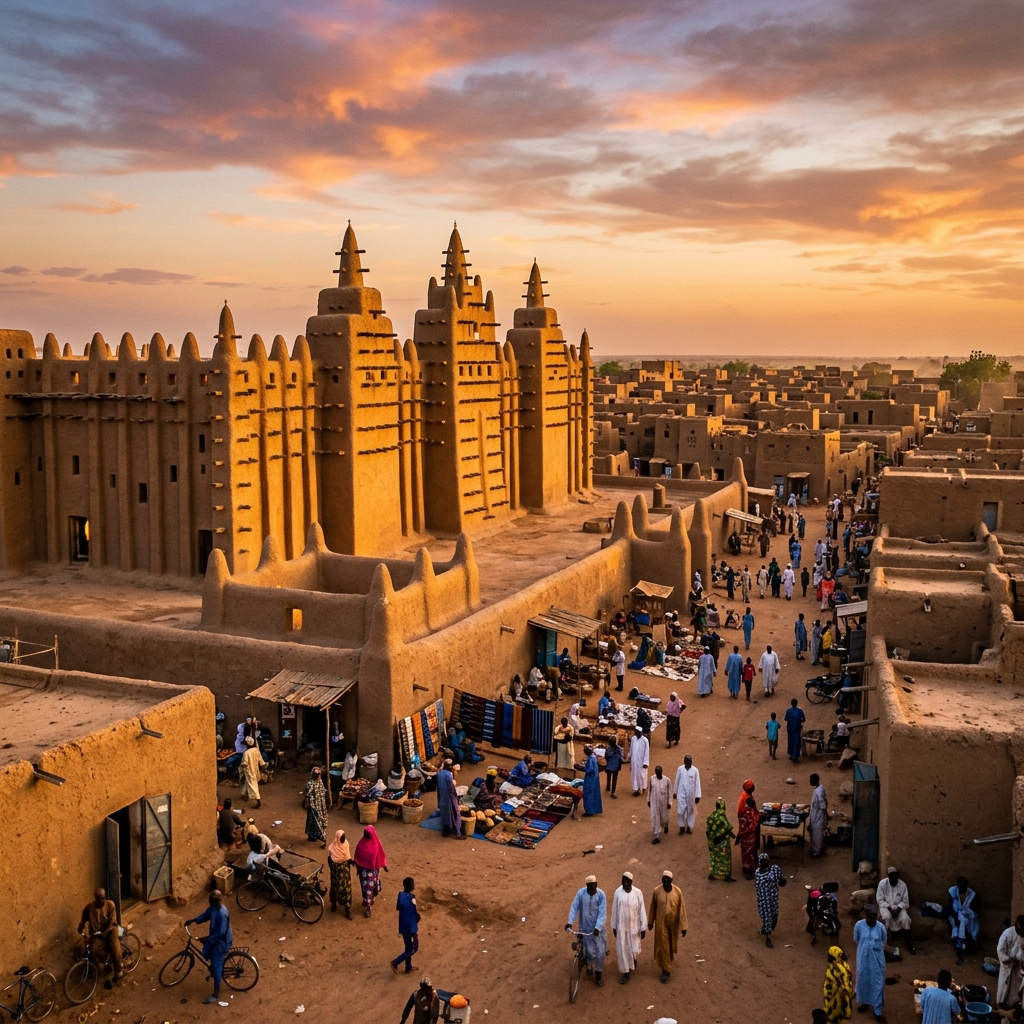
Rising dramatically from the floodplains of the Bani River, Djenné stands as one of West Africa’s most astounding cultural treasures. Famous for its magnificent Great Mosque—the largest mud-brick structure on Earth—this UNESCO World Heritage site offers an unforgettable journey into ancient Sahelian history, vibrant Monday markets, and centuries-old earthen architecture. However, reaching this remote jewel in 2026 requires strategic flight planning, smart routing, and a clear understanding of local ground transport economics.
Because Djenné does not have an active international airport, traveling here is a two-part equation: securing an efficient flight into Mali’s primary gateway, Modibo Keïta International Airport (BKO) in Bamako Travel Budget, and navigating the overland transit to Djenné. This 2026 budget guide and flight estimator breaks down airfare hacks, local expenses, and routing strategies to make your travel seamless and cost-effective.
2026 Flight Cost Estimator: Getting to Mali on a Budget
Flights to Bamako (BKO) represent the largest single expense for most travelers visiting Djenné. Airfare prices fluctuate depending on seasonality, booking windows, and regional connectivity across West Africa. Understanding how to leverage flight aggregators and regional hubs can save you hundreds of dollars.
Average Round-Trip Airfare to Bamako (BKO) in 2026
- From North America (NYC / IAD / YYZ): $950 – $1,450 (typically via Royal Air Maroc, Ethiopian Airlines, or Air France)
- From Europe (PAR / BRU / MAD / FRA): €550 – €920 (direct or one-stop options via Air France, Royal Air Maroc, or Turkish Airlines)
- From the Middle East & Asia (DXB / IST / DOH): $850 – $1,350 (frequently routed through Istanbul via Turkish Airlines)
- From West African Hubs (DSS / ABJ / ACC): $320 – $580 (serviced by ASKY Airlines, Air Sénégal, and Air Côte d'Ivoire)
Proven Flight Hacks for Reaching Djenné in 2026
To secure the lowest fares when planning your trip to Mali, standard searching methods are rarely enough. Implementing West African routing hacks can drastically reduce your overall long-haul airfare.
1. The Casablanca & Dakar Travel Budget Hub-Nesting Trick
Instead of booking a single long-haul ticket straight through to Bamako, check multi-ticket routing via regional hubs. Royal Air Maroc operates extensive connections through Casablanca (CMN), while Air Sénégal connects through Dakar (DSS). Airlines often run promotional fares from European or North American cities into Dakar or Casablanca. Booking an international budget fare into these hubs and combining it with a separate regional hopper ticket to Bamako can yield savings of up to 30%.
2. Capitalize on Ethiopian Airlines & Star Alliance Redemptions
In 2026, Ethiopian Airlines remains one of the most reliable carriers connecting North America and Asia to Bamako via Addis Ababa Travel Budget (ADD). If you hold frequent flyer miles with Star Alliance carriers (such as United MileagePlus or Air Canada Aeroplan), redemptions for flights to BKO often carry minimal fuel surcharges compared to European carriers. Booking award seats 8 to 11 months in advance offers the best availability.
3. Travel During the Sahelian Shoulder Seasons
Airfare peaks during the dry, cooler winter months (November through February), coinciding with cultural travel demand and domestic holidays. Flight prices drop significantly during the shoulder months of October and March. Navigating the region during these shoulder windows allows you to capitalize on lower flight rates while avoiding the extreme heat of April and May or the heavy rains of July and August.
Navigating Overland Transit: Bamako to Djenné
Once you land at Modibo Keïta International Airport in Bamako, you must make the 570-kilometer journey northeast to Djenné. Depending on your travel style and safety preference, several transit methods are available in 2026.
- Intercity Bus Services: Budget-conscious travelers rely on established coach services running from Bamako toward Mopti/Sévaré, dropping passengers off at the Djenné Crossroads (Djenné Carrefour). From the junction, local shared taxis cover the remaining 28 kilometers into town.
- Private 4x4 Vehicle Rental: Renting a private 4WD vehicle with a professional local driver is the preferred option for mid-range and luxury travelers. This provides flexibility, air conditioning, and direct transit without waiting for public bus transfers.
- River & Seasonal Transport: During the high-water season (September to November), traveling part of the route via river barge along the Niger and Bani Rivers offers an extraordinary, scenic alternative.
Comprehensive Daily Travel Budgets for Djenné (2026)
Every traveler operates on a different financial benchmark. Below is an authentic standard of daily operational costs in Djenné, categorized by travel tier. These figures reflect current 2026 economic benchmarks in Mali.
1. Backpacker Tier ($32 per day)
Designed for independent solo travelers and budget backpackers utilizing local transport, guesthouses, and Street Food & Meal Cost Index markets.
- Accommodation: $17 per night (basic local traditional guesthouse room with fan and shared facilities)
- Food & Drinks: $10 per day (local eateries serving rice with sauce, millet porridge, fresh fruit, and bottled water)
- Local Transport: $5 per day (shared bush taxis, local minibus transfers, and walking)
2. Standard / Mid-Range Tier ($91 per day)
Ideal for comfortable travelers seeking private rooms with air conditioning, traditional full-service dining, and guided city excursions.
- Accommodation: $58 per night (mid-range comfortable hotel or restored traditional mud-brick hotel like Auberge Le Tapama)
- Food & Drinks: $23 per day (three-course meals featuring local captain fish, grilled chicken, and soft drinks or beer)
- Local Transport: $10 per day (private town taxis, dedicated river ferry crossings, and local tuk-tuks)
3. Luxury Tier ($262 per day)
Crafted for premium travelers requiring private high-end accommodations, private local guides, driver services, and fine dining.
- Accommodation: $173 per night (premium boutique suites or high-standard private residence rentals)
- Food & Drinks: $58 per day (gourmet local and international dining prepared by dedicated hotel chefs)
- Local Transport: $31 per day (allocated portion of private 4x4 driver service within Djenné and surrounding villages)
Sightseeing & Cultural Expense Breakdown
Djenné is an open-air architectural museum. Planning your activity budget in advance ensures you cover essential sight entry fees, guide honorariums, and cultural donations.
- Official Djenné Tourist Guide Association: Hiring an accredited local guide is strongly recommended to navigate the historic district. Rates range between $20 and $35 per day for full-day guiding.
- The Great Mosque (Exterior & Architectural Zone): While non-Muslims are generally restricted from entering the interior prayer hall, local tourist contributions for guided exterior walking tours around the grand plaza cost around $10 to $15 per person.
- Djenné-Djeno Archaeological Site: Located roughly 3 kilometers south of the current town, entry and guide fees to visit this ancient pre-Islamic urban site run approximately $10 per person.
- Pirogue River Excursions: Renting a traditional wooden pirogue for a sunset trip along the Bani River costs around $15 to $25 per boat ride.
- The Famous Monday Market: Exploring the bustling market in front of the Great Mosque is free, but setting aside $10 to $30 for authentic handmade mud-cloth textiles (Bogolanfini) and bronze crafts is highly recommended.
Essential Financial & Logistics Tips for Mali in 2026
To avoid unexpected expenses and financial roadblocks while traveling in Mali, keep these practical financial rules in mind:
Cash is King (West African CFA Franc - XOF)
Mali operates almost entirely on a cash economy using the West African CFA Franc (XOF). Credit cards are rarely accepted outside international hotels in Bamako. ATMs in Djenné can be unreliable or out of service; you must carry sufficient cash in Euros (EUR) or US Dollars (USD) to exchange upon arrival in Bamako before heading inland. Euros enjoy a fixed exchange rate to the CFA Franc (1 EUR = 655.957 XOF), making Euro cash exchange the cheapest option.
2026 Entry & Visa Requirements Checker
All foreign visitors (excluding ECOWAS nationals) require a visa to enter Mali in 2026. Ensure you secure your visa through your nearest Malian embassy prior to booking non-refundable flights. A valid Yellow Fever vaccination certificate is mandatory for airport entry in Bamako.