
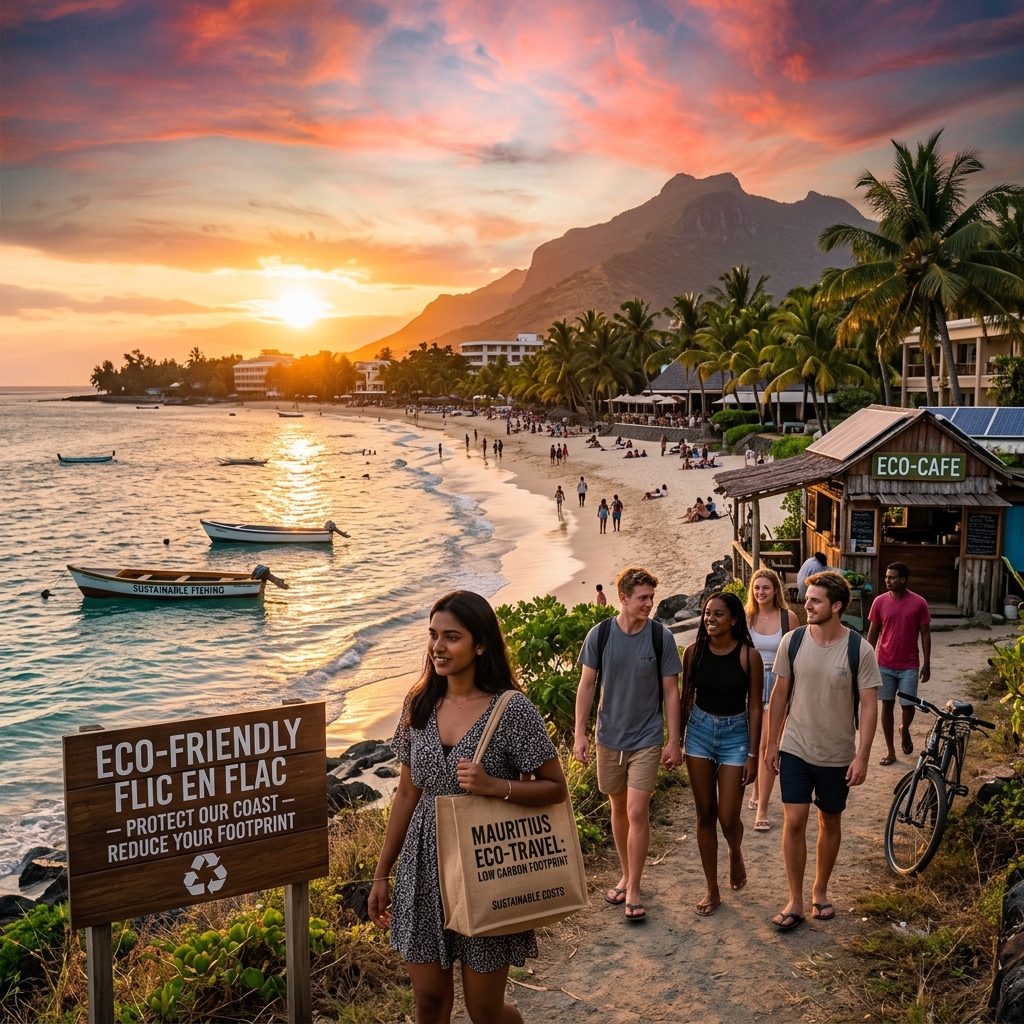
Flic en Flac Travel Budget 2026: Carbon Footprint Calculator Meets Tropical Paradise
Located on the sunny west coast of Mauritius, Flic en Flac has evolved from a sleepy fishing village into one of the island's most vibrant coastal hubs. Boasting miles of white sand, shallow turquoise lagoons protected by coral reefs, and views of rugged mountain peaks, it represents the ideal Mauritian escape. However, visiting an isolated island in the Indian Ocean comes with unique environmental and financial considerations. In 2026, eco-conscious travelers are increasingly looking to balance their financial expenditure with their ecological impact, ensuring that paradise remains pristine for generations to come.
Planning a trip to Flic en Flac using a Carbon Footprint Travel Cost Calculator strategy allows you to calculate both your monetary spend and your environmental output. Long-haul aviation accounts for the vast majority of carbon emissions on any trip to Mauritius, making low-impact choices on the ground essential for balancing your carbon balance sheet. Whether you are aiming for a budget backpacker itinerary, a comfortable mid-range holiday, or a sustainable luxury retreat, this guide breaks down real 2026 pricing, carbon reduction strategies, and practical travel tips for Flic en Flac.
Calculating Your Travel Footprint to Mauritius
Before stepping foot on the soft sands of Flic en Flac, your journey begins with transit. Reaching Sir Seewoosagur Ramgoolam International Airport (MRU) requires a long-haul flight for almost all international visitors. Understanding the carbon output of your flight is the first step toward true carbon-neutral travel planning.
- Long-Haul Flight Emissions (Europe/Asia to MRU): An economy return flight generates approximately 1.8 to 2.6 metric tonnes of CO2 equivalent (CO2e) per passenger. Premium cabins generate 2x to 3x more due to floor space allocation.
- Transatlantic Connection Emissions (North America to MRU): A multi-leg return itinerary can generate 3.2 to 4.5 metric tonnes of CO2e per passenger.
- 2026 Carbon Offset Cost: Offsetting carbon via certified Gold Standard or VCS (Verified Carbon Standard) projects costs between $15 and $25 per tonne in 2026. Expect to add $35 to $90 per person to your total travel budget for full flight offsets.
Once you arrive in Mauritius, your daily living habits determine your local carbon and financial footprint. By combining smart public transport choices, local dining, and eco-certified stays, you can minimize your daily carbon impact to under 15 kg of CO2e per day while keeping your daily budget strictly controlled.
Financial & Carbon Benchmarks for Flic en Flac (2026 Pricing)
To help you budget accurately, we have calculated the daily expenses for three distinct travel tiers in Flic en Flac for 2026. Each tier highlights how financial costs correspond directly to your environmental choices.
1. Backpacker / Eco-Saver Tier
This tier prioritizes low-impact travel, public transportation, staying in locally-owned guesthouses, and eating fresh Street Food & Meal Cost Index. It carries both the lowest monetary cost and the lowest daily carbon footprint.
- Accommodation: $17 per night (Local guesthouse, shared apartment, or eco-hostel room in Flic en Flac village).
- Food & Drinks: $10 per day (Street food stalls near the beach, public market produce, and authentic local eateries).
- Local Transport: $5 per day (Public buses around the west coast and coastal walking/cycling).
- Estimated Daily Cost: $32 per day
- Estimated Local Carbon Footprint: 8–12 kg CO2e / day
2. Standard / Mid-Range Tier
Designed for couples, small families, or digital nomads seeking private amenities, self-catering modern apartments, solar-assisted accommodation, and a mix of casual dining and guided tours.
- Accommodation: $58 per night (Private apartment, modern Airbnb, or 3-star boutique hotel near Flic en Flac beach).
- Food & Drinks: $23 per day (Casual beachfront restaurants, mid-range Creole bistros, and self-cooked local meals).
- Local Transport: $10 per day (Occasional shared taxis, localized car rentals, or electric scooter rentals).
- Estimated Daily Cost: $91 per day
- Estimated Local Carbon Footprint: 18–28 kg CO2e / day
3. Sustainable Luxury Tier
Tailored for travelers seeking high-end eco-resorts, private villas equipped with solar microgrids, fine seafood dining, and private low-emission transfers across the island.
- Accommodation: $173 per night (4-star or 5-star Green Key-certified eco-resort or high-end beach villa).
- Food & Drinks: $58 per day (Upscale resort dining, fresh ocean-to-table seafood, and imported sustainable wines).
- Local Transport: $31 per day (Private EV/hybrid driver service or premium efficient car rental).
- Estimated Daily Cost: $262 per day
- Estimated Local Carbon Footprint: 40–65 kg CO2e / day
Detailed Breakdown: Lodging, Dining, Transport & Activities
Eco-Friendly Accommodation in Flic en Flac
Accommodation choice plays a major role in your overall energy footprint. In 2026, many properties in Flic en Flac have adopted solar water heating, energy-efficient inverter air conditioning, and rainwater harvesting.
For budget travelers at $17 per night, local guesthouses located 5 to 10 minutes walk back from the main beach strip offer basic, low-energy fans or smart-metered A/C. Staying in locally owned family units ensures your travel dollars stay directly within the local Mauritian community. At the mid-range price point of $58 per night, modern self-catering apartments are abundant. Cooking your own meals reduces restaurant waste and lowers your energy consumption. If you opt for luxury at $173 per night, look for resorts in the Wolmar area (just south of Flic en Flac) holding environmental accreditations like EarthCheck or Green Key, which actively monitor water usage, waste diversion, and renewable power generation.
Sustainable Gastronomy: Eating Local in Flic en Flac
Imported food items shipped to Mauritius carry high embodied carbon due to maritime and air freight. Eating local, plant-forward Creole cuisine dramatically lowers your carbon footprint while offering unbeatable savings.
- Backpacker Food ($10/day): Enjoy local street staples along the Flic en Flac food truck strip near the public beach. Try dholl puri (lentil flatbreads), roti chaud, or boulettes (steamed dumplings) for $1.50–$3.00 per meal. Fresh tropical fruits like pineapples, mangoes, and lychees from local markets cost under $2.
- Mid-Range Dining ($23/day): Enjoy sit-down lunches at beachfront spots serving local fish curry, mine frit (fried noodles), and octopus salad ($7–$12 per dish). Buying fresh vegetables at the nearby Quatre Bornes market keeps groceries cheap and sustainable.
- Luxury Dining ($58/day): Fine dining along the lagoon features sustainably caught line fish, grilled red snapper, and organic farm-to-table Creole tasting menus ($30–$45 per main course). Avoid imported air-freighted beef or European cheeses to keep your carbon numbers lower.
Low-Carbon Transport Options in Flic en Flac
Navigating Flic en Flac and the surrounding Black River district efficiently requires choosing the right transit modes:
Public Buses ($5/day budget): The National Transport Corporation (NTC) and Rose Hill Transport operate regular bus routes connecting Flic en Flac to Port Louis Travel Budget, Quatre Bornes, and Curepipe. Rides cost between 30 and 50 MUR ($0.65–$1.10 USD). Buses are the single most carbon-efficient way to travel across Mauritius.
Bicycles & Electric Scooters ($10/day mid-range): Flic en Flac's coastal strip is flat and easily navigated on two wheels. Renting a standard bicycle ($6–$8/day) or an e-scooter ($12/day) provides maximum freedom with near-zero emissions.
Private Transfers & EV Rentals ($31/day luxury): If renting a vehicle, opt for a hybrid or compact electric vehicle (EV). Mauritius has expanded its public EV charging network across major coastal hubs in 2026. Electric car rentals start around $30–$40 per day, keeping emissions low compared to traditional gas SUVs.
Low-Impact Activities & Sightseeing Around Flic en Flac
Flic en Flac offers an incredible array of eco-friendly, low-carbon experiences that won't break your budget:
- Snorkeling the Reef Lagoon (Cost: Free / Carbon Footprint: Zero): The public beach of Flic en Flac is sheltered by a natural coral reef. Swimming out from shore eliminates the need for fossil-fuel-powered motorboats. Remember to use reef-safe (mineral) sunscreen to protect delicate coral habitats.
- Hiking Black River Gorges National Park (Cost: Free entry / Transport: $2-$10): Located just 25 minutes south of Flic en Flac, this 6,700-hectare national park protects native rainforests and endangered bird species like the Pink Pigeon. Hiking trails range from easy walks to challenging mountain climbs.
- Climbing Le Morne Travel Budget Brabant UNESCO Site (Cost: Free / Transport or Guide: $15-$40): A short drive south lies Le Morne, offering world-class trekking with breathtaking views of the underwater waterfall phenomenon. Choosing non-motorized mountain adventures keeps your impact minimal.
Pro Tips for Balancing Budget and Carbon in 2026
- Calculate Before You Fly: Use an online carbon calculator to quantify your flight emissions and pre-allocate carbon offset funds into your trip budget.
- Drink Filtered Tap Water: Plastic bottle waste is a major ecological issue on islands. Carry a stainless steel insulated water bottle with a built-in micro-filter to save up to $3 per day and eliminate single-use plastic waste.
- Support Marine Conservation Efforts: Consider visiting or donating to local Mauritian marine conservation non-profits working on coral restoration along the west coast.
- Shop at Local Weekly Markets: Head to the nearby Quatre Bornes or Vacoas markets for fresh produce, spices, and crafts. You'll avoid high supermarket markups on imported goods while supporting local farmers.