
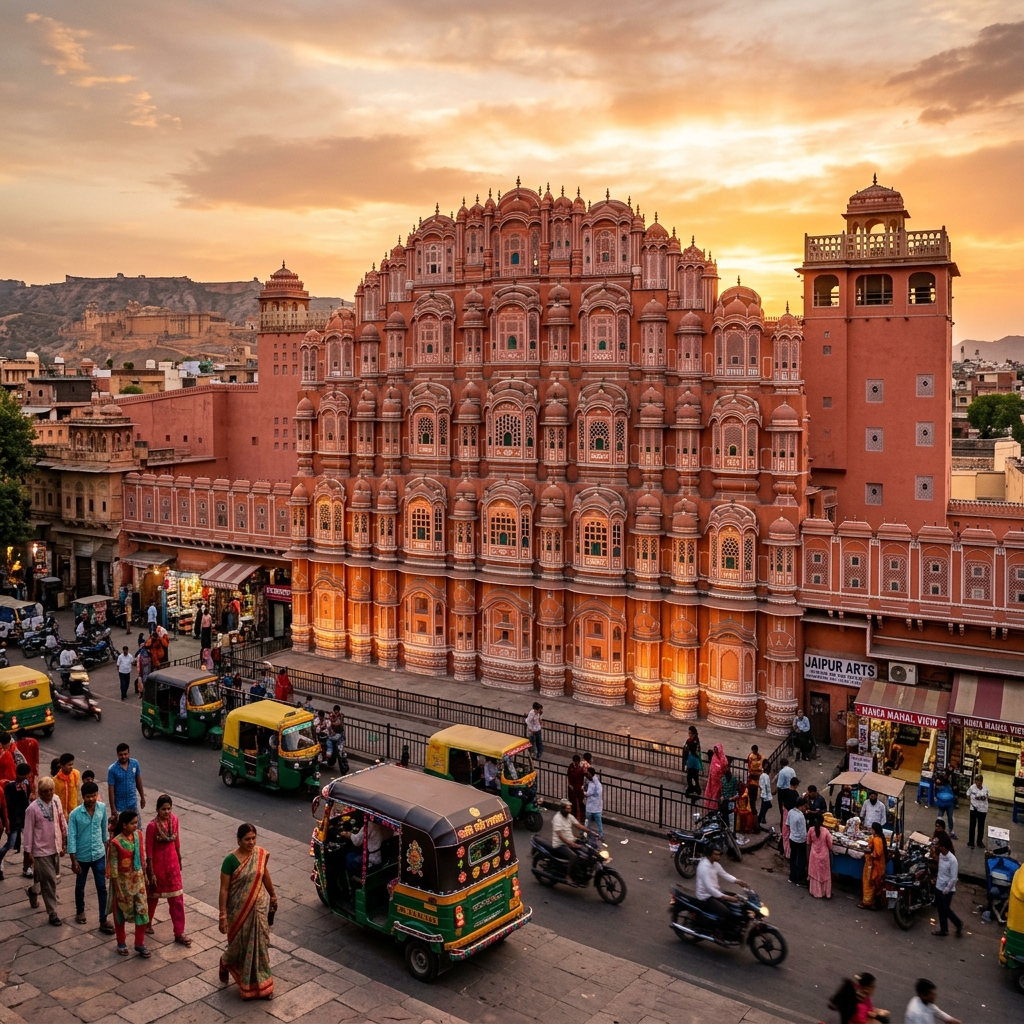
Unlocking Jaipur Travel Budget: The 2026 Seasonal Planning Overview
Known universally as India’s "Pink City," Jaipur is a vibrant tapestry of terracotta-hued facades, sprawling hill forts, and opulent royal history. However, your experience of this Rajasthani capital depends heavily on timing. Nestled on the semi-arid fringe of the Thar Desert, Jaipur experiences drastic meteorological shifts throughout the year. Visiting during the scorching pre-monsoon heat versus the crisp winter months will define not only your physical comfort but also your daily travel expenses, hotel availability, and sightseeing pace.
As tourism patterns evolve in 2026, traveling smart means balancing temperature against tourism density and accommodation pricing. Below, we break down the seasons, festival calendars, and real daily financial benchmarks to help you decide exactly when to visit Jaipur.
Jaipur by Season: Weather, Costs, and Crowd Dynamics
Peak Season: October to March (The Golden Window)
Weather: Daytime temperatures hover comfortably between 20°C and 28°C (68°F–82°F), dipping to crisp lows of 8°C to 12°C (46°F–54°F) at night during December and January. Skies are bright, dry, and crystal-clear.
Experience: This is prime sightseeing weather. Climbing the ramparts of Amer Fort, wandering the sprawling courtyards of the City Palace, and photographing Hawa Mahal can all be enjoyed under gentle sunshine. The city also hosts major cultural events like the renowned Jaipur Literature Festival in late January.
Financial Impact: High demand brings peak pricing. Heritage havelis and luxury hotels book out weeks in advance, and baseline rates reach their highest point of the year. Expect zero flexibility on hotel bargaining, though dining and local transport remain relatively stable.
Shoulder Season: July to September (The Monsoon Rejuvenation)
Weather: Temperatures moderate to around 30°C to 34°C (86°F–93°F). Rain arrives in dramatic, intermittent bursts rather than unrelenting daily downpours, transforming the rugged Aravalli Hills surrounding Jaipur into a lush, emerald landscape.
Experience: Photographers and budget-savvy explorers adore the monsoon. Watching mist settle over Nahargarh Fort or seeing the water levels rise around the submerged Jal Mahal palace offers a distinct perspective rarely seen in typical guidebooks. Outdoor walking tours require an umbrella and flexible scheduling, but crowds drop significantly.
Financial Impact: Excellent value. Mid-range boutique hotels and royal heritage properties frequently offer 25% to 40% discounts on published rates to keep occupancy stable.
Low Season: April to June (The Desert Summer)
Weather: Extreme heat dominates, with midday temperatures regularly soaring between 38°C and 44°C (100°F–111°F). Hot, dry winds known as the "Loo" sweep through the city in May and June.
Experience: Sightseeing during midday is physically taxing and generally discouraged. Travelers who brave the summer must structure their days strictly: visiting open-air forts at 7:30 AM, retreating to air-conditioned cafes or museums between 11:30 AM and 4:30 PM, and venturing out again around sunset.
Financial Impact: Rock-bottom rates. Luxury resorts with private plunge pools drop to a fraction of their peak winter costs, making this the best window for travelers seeking five-star royal pampering on a mid-range budget.
Daily Travel Cost Benchmarks for Jaipur (2026 Estimates)
Jaipur remains one of the most accessible cultural destinations in Asia, offering exceptional value across every tier. Here is what you should budget per person, per day in 2026 depending on your travel style:
Backpacker Tier
- Accommodation: $15 per night (social hostel dorm or budget guesthouse near the Old City or Bani Park).
- Food: $8 per day (Street Food & Meal Cost Index, roadside chai stalls, kachoris, and authentic thali joints like Rawat Mishthan Bhandar).
- Transport: $4 per day (shared auto-rickshaws, the modern Jaipur Metro, and occasional short e-rickshaw rides).
- Sightseeing: $5–$8 per day (leveraging the composite entry ticket covering major monuments like Amber Fort, Jantar Mantar, and Hawa Mahal).
- Total Daily Estimate: ~$27 to $35 per day.
Mid-Range Tier
- Accommodation: $50 per night (restored traditional Rajasthani heritage haveli with modern amenities and breakfast included).
- Food: $20 per day (sit-down multicuisine dining, rooftop restaurants overlooking the monuments, and boutique cafes in C-Scheme).
- Transport: $8 per day (pre-booked rideshare apps like Uber or Ola, dedicated auto-rickshaw hire for half-days).
- Sightseeing: $12–$18 per day (composite monument tickets, audio guides, and photography permits).
- Total Daily Estimate: ~$78 to $96 per day.
Luxury Tier
- Accommodation: $149+ per night (five-star royal palace properties, luxury boutique hotels, or heritage suites with spa facilities).
- Food: $50 per day (fine dining inside historic royal palaces, heritage thali feasts, and cocktail lounges).
- Transport: $26 per day (private air-conditioned vehicle with a dedicated professional chauffeur for full 8-hour city circuits).
- Sightseeing & Guides: $30–$50 per day (private licensed historians, fast-track access, and specialized block-printing craft workshops).
- Total Daily Estimate: ~$225 to $275+ per day.
The Festival Calendar: Timing Your Trip for Culture
Timing your trip around regional celebrations can elevate your Jaipur journey into an unforgettable sensory spectacle, though you must book logistics well in advance:
Jaipur Literature Festival (Late January)
Billed as the world's largest free literary gathering, this festival draws Nobel laureates, bestselling novelists, thinkers, and international visitors. The city fills with creative energy, evening musical showcases, and debate. Tip: Book hotel rooms at least 3 months in advance.
Holi and the Elephant Celebrations (March)
Celebrating the festival of colors inside Rajasthan’s historic capital is a bucket-list experience. Traditional organic powders (gulal) fill the courtyards, accompanied by folk music and dancing. If visiting during Holi, plan private events through reputable heritage hotels for a safe and celebratory environment.
Teej and Gangaur Festivals (April & August)
These traditional religious festivals feature massive, colorful street processions through the Old City. Idols of Goddess Parvati are carried through Tripoliya Gate accompanied by decorated camels, traditional brass bands, and Rajasthani dancers, providing an authentic look into local heritage.
Strategic Tips for Navigating Jaipur in 2026
- Buy the Composite Entry Ticket: The Department of Archaeology & Museums offers a combined ticket valid for two days that covers Amer Fort, Hawa Mahal, Jantar Mantar, Nahargarh Fort, and Albert Hall Museum. It saves significant time and money compared to individual entries.
- Master App-Based Transport: While colorful auto-rickshaws are iconic, street bargaining can be tiring. Utilizing app-based hailing services like Uber and Ola provides fixed pricing and integrated GPS, especially during late evenings.
- Reserve Sunrise at the Forts: For crowd-free photography, arrive at Nahargarh Fort or Amer Fort right as the gates open (typically 8:00 AM, though viewpoints are accessible earlier). The morning golden hour bouncing off the yellow sandstone is unmatched.
- Embrace the Digital Payment Era: India operates almost entirely on digital payments (UPI). While foreign cards work at major hotels and monuments, keep small cash denominations (₹100, ₹200, ₹500 notes) on hand for street snacks and craft bazaars.
The Verdict: When Should You Visit?
If pleasant temperatures and sightseeing comfort are your top priorities, November through February is indisputably the Best Time to Visit Planner Jaipur. However, if you are looking to stretch your travel funds, experience lush desert hills, and stay in converted royal palaces at a steep discount, the monsoon shoulder window of August and September provides an extraordinary balance of atmospheric beauty and financial value.